Fraud Prevention and Accountability Act
Summary
What This Bill Does
The Fraud Prevention and Accountability Act creates a permanent Treasury-centered fraud oversight structure. It codifies Bureau of the Fiscal Service functions around financial integrity, spending transparency, Do Not Pay administration, and a governmentwide data-analysis program that helps federal agencies, states administering federally funded programs, and nongovernmental disbursing entities detect fraud and prevent improper payments. Agencies must share data on known or suspected fraudulent entities and transactions with Treasury, screen potential awardees and payees against a centralized fraud database before awards or payments, screen relevant cyber activity before virtual identity or payment-information changes, and follow governmentwide standards for collecting, labeling, and sharing fraudulent payment data. The bill establishes the Office of the Inspector General for Fraud, Accountability, and Recovery in the Department of the Treasury, led by a Senate-confirmed Inspector General appointed based on integrity and expertise. That IG must coordinate oversight of covered funds, support agency inspectors general on request, detect and prevent fraud, waste, abuse, and mismanagement, identify cross-program risks, promote best practices and tools, coordinate with DOJ and Fiscal Service, and provide fraud analytics support. The bill accelerates the Pandemic Response Accountability Committee termination to December 31, 2028, transfers its contracts, data agreements, records, funds, personnel, and other assets to the new Treasury IG, and repeals the PRAC section on that date.
Who Benefits and How
Federal taxpayers benefit from a permanent fraud-recovery office and stronger Do Not Pay data analysis. Agency inspectors general benefit from Treasury IG support, cross-program risk identification, and shared analytics. Treasury Fiscal Service staff benefit from explicit authority for governmentwide fraud-data sharing and payment validation. DOJ fraud prosecutors benefit from coordinated referrals and fraud-risk information. State agencies administering federal funds benefit from access to Treasury data-analysis services and best practices. Congressional oversight committees benefit from a permanent successor to pandemic-response accountability infrastructure.
Who Bears the Burden and How
The Treasury Department must stand up the new Inspector General office, manage appointments, legal counsel, pay, staffing, data assets, and PRAC transfers. Agency heads must share known or suspected fraud data, screen payees and awardees, and screen cyber activity before identity or payment changes. Agency inspectors general must coordinate with the Treasury fraud IG when covered funds overlap. The Pandemic Response Accountability Committee must transfer assets and wind down earlier than the prior 2034 date. Entities flagged as fraudulent face greater screening and enforcement exposure. Federal program administrators must adapt to centralized fraud data standards and analytics.
Key Provisions
- Establishes a Treasury Inspector General for Fraud, Accountability, and Recovery.
- Preserves Bureau of the Fiscal Service functions for Do Not Pay, spending transparency, financial integrity, and fraud-prevention data analysis.
- Requires agencies to share known or suspected fraudulent entity and transaction data with Treasury.
- Requires awardee, payee, and cyber-activity screening against centralized fraud data before awards, payments, or payment-information changes.
- Directs the Treasury fraud IG to support agency inspectors general, coordinate with DOJ, and identify cross-program risks.
- Transfers Pandemic Response Accountability Committee assets and obligations to the Treasury fraud IG on December 31, 2028.
- Repeals the Pandemic Response Accountability Committee on December 31, 2028.
Evidence Chain:
This summary is generated from the full bill text using AI analysis. Expand "Detailed Analysis" below for identified beneficiaries/burden bearers with clause-level evidence links.
At a Glance
What This Bill Does
Creates a Treasury Office of the Inspector General for Fraud, Accountability, and Recovery, led by a Senate-confirmed Inspector General appointed without political-affiliation regard, to coordinate audits and investigations of covered funds, support agency inspectors general, identify cross-program fraud risks, promote best practices, and coordinate with DOJ and the Bureau of the Fiscal Service; preserves Fiscal Service financial-integrity and Do Not Pay functions, creates governmentwide data-analysis and fraud-data sharing responsibilities, requires agencies to share known or suspected fraudulent entity and transaction data, and transfers Pandemic Response Accountability Committee assets and obligations to the new Treasury IG on December 31, 2028 while repealing the PRAC.
Key Policy Areas
Fraud Prevention, Treasury, Inspectors General, Federal Spending
Primary Purpose
Creates a Treasury Office of the Inspector General for Fraud, Accountability, and Recovery, led by a Senate-confirmed Inspector General appointed without political-affiliation regard, to coordinate audits and investigations of covered funds, support agency inspectors general, identify cross-program fraud risks, promote best practices, and coordinate with DOJ and the Bureau of the Fiscal Service; preserves Fiscal Service financial-integrity and Do Not Pay functions, creates governmentwide data-analysis and fraud-data sharing responsibilities, requires agencies to share known or suspected fraudulent entity and transaction data, and transfers Pandemic Response Accountability Committee assets and obligations to the new Treasury IG on December 31, 2028 while repealing the PRAC.
Policy Domains
House resolution provisions
Identified Gains
- Federal taxpayers
- Agency inspectors general
- Treasury Fiscal Service staff
- DOJ fraud prosecutors
- State agencies administering federal funds
- Congressional oversight committees
Identified Costs
- Treasury Department
- Agency heads
- Agency inspectors general
- Pandemic Response Accountability Committee
- Entities flagged as fraudulent
- Federal program administrators
Sponsors
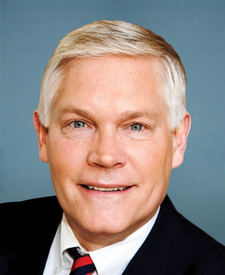
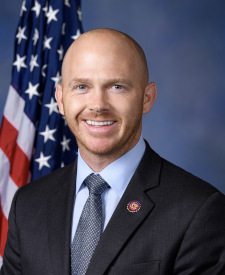
Legislative Progress
ReportedReceived in the Senate.
Motion to reconsider laid on the table Agreed to without …
On passage Passed by the Yeas and Nays: 240 - …
Passed/agreed to in House: On passage Passed by the Yeas …
Considered as unfinished business. (consideration: CR H4077-4078)
POSTPONED PROCEEDINGS - At the conclusion of debate on H.R. …
The previous question was ordered pursuant to the rule.
DEBATE - The House proceeded with one hour of debate …
Rule provides for consideration of H.R. 8312, H.R. 8464, H. …
Considered under the provisions of rule H. Res. 1345. (consideration: …
Stakeholder Effects
cui bono?How this legislation distributes effects. Mention counts reflect frequency, not effect magnitude.
Agency fraud prevention teams, Agency inspectors general, DOJ fraud prosecutors
Positive-direction: Agency inspectors general, DOJ fraud prosecutors, Taxpayers
Negative-direction: Agency fraud prevention teams, Entities flagged as fraudulent, Inspector General for Fraud Recovery, Treasury Department, Treasury Fiscal Service staff
Bill Structure & Actor Mappings
Who is "The Secretary" in each section?
- "ig"
- → Inspector General for Fraud, Accountability, and Recovery
- "doj"
- → Department of Justice
- "fiscal"
- → Bureau of the Fiscal Service
- "treasury"
- → Department of the Treasury
We use a combination of our own taxonomy and classification in addition to large language models to assess meaning and potential beneficiaries. High confidence means strong textual evidence. Always verify with the original bill text.
Learn more about our methodology