Semiconductor Controls Effectiveness Act of 2026
Summary
What This Bill Does
The Semiconductor Controls Effectiveness Act of 2026 creates a public and congressional evaluation process for semiconductor export controls on the People's Republic of China. Congress states that controls on semiconductor manufacturing equipment and advanced integrated circuits are critical to U.S. national security and the AI competition with China, that controls require rigorous data-driven evaluation, and that the public benefits from disclosure of real-world data and impact analysis. Within 360 days, the Assistant Secretary of State for Intelligence and Research, coordinating with the Under Secretary of Commerce for Industry and Security and the Director of National Intelligence, must report to Congress on the impact and effectiveness of U.S. semiconductor export controls on China. The report must inventory all U.S. controls concerning semiconductors and semiconductor manufacturing equipment destined for China; describe each control and when it was imposed; classify each as a technology, end-use, or end-user control; state whether it is unilateral or implemented by allies; provide quantitative evidence on intended goals, PRC military, intelligence, surveillance, advanced-integrated-circuit, indigenous semiconductor, AI, U.S. company revenue and market-share, and long-term technology-leadership effects; determine whether each control remains effective; and analyze whether foreign availability of comparable items, software, or technology undermines each control.
Who Benefits and How
Congressional export-control committees benefit from a detailed evidence-based report on whether semiconductor controls are working. U.S. semiconductor firms benefit from analysis of revenue, market-share, technology-leadership, and competitiveness effects. National-security policymakers benefit from data on PRC military, intelligence, surveillance, and AI impacts. Allied export-control partners benefit from clearer information about which controls are unilateral or internationally implemented. Public watchdogs benefit from disclosure of real-world control effects. BIS and State export-control officials benefit from a feedback loop on foreign availability and effectiveness.
Who Bears the Burden and How
The Assistant Secretary of State for Intelligence and Research must lead the report and gather detailed quantitative and qualitative evidence. Commerce export-control officials and the Director of National Intelligence must coordinate on inventory, effectiveness, and PRC capability analysis. PRC semiconductor firms face public scrutiny of how controls affect their military, surveillance, AI, and market capabilities. U.S. companies may face disclosure of revenue and market-share impacts. Foreign suppliers of comparable technology may be identified as undermining U.S. controls. Agency analysts must handle classified or sensitive information while producing a usable report.
Key Provisions
- Requires a 360-day report on the impact and effectiveness of semiconductor and advanced-computing export controls on China.
- Requires a comprehensive inventory of controls covering semiconductors and semiconductor manufacturing equipment destined for China.
- Requires classification of controls as technology, end-use, or end-user controls and identification of ally implementation.
- Requires quantitative analysis of effects on PRC military, intelligence, surveillance, semiconductor, AI, revenue, and market-share capabilities.
- Requires analysis of effects on U.S. company revenue, U.S. technology leadership, and global competitiveness.
- Requires evaluation of whether foreign availability undermines control effectiveness.
Evidence Chain:
This summary is generated from the full bill text using AI analysis. Expand "Detailed Analysis" below for identified beneficiaries/burden bearers with clause-level evidence links.
At a Glance
What This Bill Does
Requires the Assistant Secretary of State for Intelligence and Research, coordinating with the Under Secretary of Commerce for Industry and Security and the Director of National Intelligence, to report within 360 days on the impact and effectiveness of U.S. semiconductor and advanced-computing export controls on China, including a comprehensive inventory of controls, whether each is technology, end-use, or end-user based, ally implementation, effects on PRC military, intelligence, surveillance, semiconductor, AI, revenue, and market-share outcomes, impacts on U.S. companies and technology leadership, foreign availability, and whether each control remains effective.
Key Policy Areas
Semiconductors, Export Controls, China, National Security
Primary Purpose
Requires the Assistant Secretary of State for Intelligence and Research, coordinating with the Under Secretary of Commerce for Industry and Security and the Director of National Intelligence, to report within 360 days on the impact and effectiveness of U.S. semiconductor and advanced-computing export controls on China, including a comprehensive inventory of controls, whether each is technology, end-use, or end-user based, ally implementation, effects on PRC military, intelligence, surveillance, semiconductor, AI, revenue, and market-share outcomes, impacts on U.S. companies and technology leadership, foreign availability, and whether each control remains effective.
Policy Domains
House resolution provisions
Identified Gains
- Congressional export control committees
- House Foreign Affairs Committee
- Senate Banking Committee
- Department of Commerce
- Department of State
- U.S. semiconductor firms
- National security policymakers
- Allied export control partners
- Public export control watchdogs
- BIS export control officials
Identified Costs
- Assistant Secretary of State for Intelligence and Research
- Department of Commerce export officials
- Department of State intelligence staff
- Commerce export control officials
- Director of National Intelligence
- PRC semiconductor firms
- U.S. companies affected by controls
- Foreign suppliers of comparable technology
Sponsors


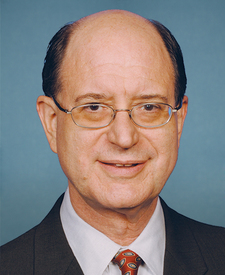
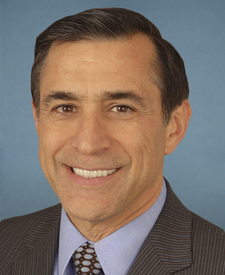
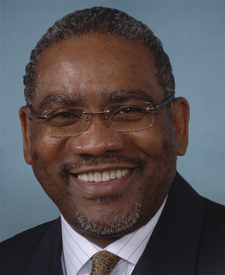
Legislative Progress
ReportedOrdered to be Reported (Amended) by the Yeas and Nays: …
Committee Consideration and Mark-up Session Held
Referred to the House Committee on Foreign Affairs.
Introduced in House
Mr. Stanton (for himself and Mr. Issa) introduced the following …
Stakeholder Effects
cui bono?How this legislation distributes effects. Mention counts reflect frequency, not effect magnitude.
Bill Structure & Actor Mappings
Who is "The Secretary" in each section?
- "dni"
- → Director of National Intelligence
- "commerce"
- → Under Secretary of Commerce for Industry and Security
- "state_inr"
- → Assistant Secretary of State for Intelligence and Research
We use a combination of our own taxonomy and classification in addition to large language models to assess meaning and potential beneficiaries. High confidence means strong textual evidence. Always verify with the original bill text.
Learn more about our methodology