HR7902-119

In Committee

Safeguarding Women from Chemical Abortion Act

119th Congress Introduced Mar 12, 2026

Summary

What This Bill Does

The Safeguarding Women from Chemical Abortion Act deems FDA approval withdrawn for brand-name mifepristone and generic versions indicated for termination of intrauterine pregnancy, effective 14 days after enactment. Introducing those drugs into interstate commerce is then treated as an unapproved-drug violation. Mifepristone is treated as misbranded if its label says it may be used alone or with another drug to terminate pregnancy.

Separately, 90 days after enactment, a manufacturer of covered mifepristone is liable to an individual for bodily injury or mental-health harm attributable in whole or in part to use of its product. The individual may sue in federal district court or a competent state court for compensatory damages, punitive damages, attorney fees, and costs.

The federal tort does not preempt a state law offering another remedy. A final rule of construction says the Act does not affect section 1461 of title 18.

The approval withdrawal applies to the abortion indication identified in the text. The bill does not create a tort claim against a prescriber or pharmacy in section 3, state a damages cap, or displace additional state remedies. The 14-day withdrawal and 90-day tort effective dates are distinct.

Who Benefits and How

Individuals who establish covered physical or mental harm gain a federal cause of action, broad causation language, multiple damages categories, and fee recovery. Plaintiffs' attorneys gain compensable cases. State-law claimants retain other remedies. People concerned about exposure to mifepristone for abortion may view withdrawal as reducing drug-related risk.

Who Bears the Burden and How

Brand and generic mifepristone manufacturers lose the abortion-indication market and face federal tort exposure, punitive damages, and litigation costs. Patients seeking medication abortion lose access to the covered approved drugs and may face travel, delay, continued-pregnancy, or procedural-alternative costs. Prescribers, pharmacies, and abortion providers lose a treatment option and related revenue. FDA must implement withdrawal, misbranding, and interstate-commerce enforcement. Federal and state courts receive new claims.

Key Provisions

  • Withdraws covered mifepristone approvals after 14 days.
  • Prohibits interstate introduction of the withdrawn drugs.
  • Treats abortion-use labeling as misbranding.
  • Creates manufacturer liability after 90 days.
  • Authorizes compensatory and punitive damages.
  • Provides attorney fees and litigation costs.
  • Preserves additional remedies available under state law.
  • Protects the continued legal effect of 18 U.S.C. 1461.

Evidence Chain:

This summary is generated from the full bill text using AI analysis. Expand "Detailed Analysis" below for identified beneficiaries/burden bearers with clause-level evidence links.

At a Glance

What This Bill Does

Withdraws federal approval of brand and generic mifepristone for terminating intrauterine pregnancy after 14 days, treats interstate sale and abortion labeling as federal violations, and after 90 days creates a federal manufacturer tort for physical or mental harm with compensatory damages, punitive damages, attorney fees, preserved state remedies, and no change to 18 U.S.C. 1461.

Key Policy Areas

Mifepristone Approval, Medication Abortion, Federal Drug Enforcement, Pharmaceutical Product Liability, Reproductive Health Access

Primary Purpose

Withdraws federal approval of brand and generic mifepristone for terminating intrauterine pregnancy after 14 days, treats interstate sale and abortion labeling as federal violations, and after 90 days creates a federal manufacturer tort for physical or mental harm with compensatory damages, punitive damages, attorney fees, preserved state remedies, and no change to 18 U.S.C. 1461.

Policy Domains

Mifepristone Approval Medication Abortion Federal Drug Enforcement Pharmaceutical Product Liability Reproductive Health Access

Sections 2 through 4 mifepristone withdrawal, tort, and construction

Identified Gains
  • Mifepristone users proving covered injury
  • Claimants seeking compensatory damages
  • Claimants seeking punitive damages
  • Plaintiffs attorneys bringing covered actions
  • State-law claimants retaining additional remedies
  • Patients avoiding covered drug exposure
Model: codex-gpt-5 | Version: bill_summary_v2 | Source: ih
Claimants seeking punitive damages:
Claimants seeking compensatory damages:
Patients avoiding covered drug exposure:
Mifepristone users proving covered injury:
Plaintiffs attorneys bringing covered actions:
State-law claimants retaining additional remedies:
Identified Costs
  • Brand-name mifepristone manufacturers
  • Generic mifepristone manufacturers
  • Patients seeking medication abortion
  • Clinics providing medication abortion
  • Pharmacies dispensing covered mifepristone
  • FDA drug-withdrawal enforcement staff
  • Courts hearing new manufacturer claims
  • Product-liability insurers covering manufacturers
Model: codex-gpt-5 | Version: bill_summary_v2 | Source: ih
Generic mifepristone manufacturers:
Patients seeking medication abortion:
Brand-name mifepristone manufacturers:
Clinics providing medication abortion:
FDA drug-withdrawal enforcement staff:
Courts hearing new manufacturer claims:
Pharmacies dispensing covered mifepristone:
Product-liability insurers covering manufacturers:

Legislative Progress

In Committee
Introduced Committee Passed
Mar 12, 2026

Referred to the Committee on Energy and Commerce, and in …

Mar 12, 2026

Introduced in House

Mar 12, 2026

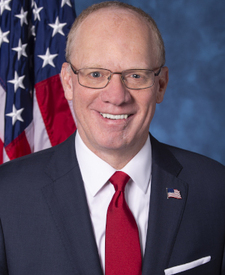
Mrs. Harshbarger introduced the following bill; which was referred to …

Stakeholder Effects

cui bono?

How this legislation distributes effects. Mention counts reflect frequency, not effect magnitude.

Professional Services
5 mentions across 1 clause
+4 positive -1 negative

Claimants seeking compensatory damages, Claimants seeking punitive damages, Manufacturer defense counsel

Positive-direction: Claimants seeking compensatory damages, Claimants seeking punitive damages, Plaintiffs attorneys bringing covered actions, State-law claimants retaining additional remedies

Negative-direction: Manufacturer defense counsel

Pharmaceuticals
3 mentions across 1 clause
-3 negative

Brand-name mifepristone manufacturers, Generic mifepristone manufacturers, Manufacturers facing fee-shifting exposure

Healthcare Beneficiaries
2 mentions across 1 clause
+2 positive

Injured users recovering litigation costs, Mifepristone users proving covered injury

Judiciary
2 mentions across 1 clause
-2 negative

Federal courts hearing covered claims, State courts hearing covered claims

Financial Services
1 mention across 1 clause
-1 negative

Manufacturer product-liability insurers

1/4
sections analyzed
Full impact breakdown

Bill Structure & Actor Mappings

Who is "The Secretary" in each section?

Domains
Mifepristone Approval Medication Abortion Federal Drug Enforcement Pharmaceutical Product Liability Reproductive Health Access
Actor Mappings
"court"
→ Federal or state court hearing a covered tort claim
"patient"
→ Patient seeking medication abortion
"claimant"
→ Individual suffering covered harm after using mifepristone
"regulator"
→ Food and Drug Administration
"manufacturer"
→ Manufacturer of brand or generic mifepristone

Note: {'scope_ids': ['mifepristone_withdrawal_and_tort'], 'description': 'The bill has distinct 14-day and 90-day effective dates; the tort runs against manufacturers rather than prescribers in its text, preserves other state remedies, and expressly leaves 18 U.S.C. 1461 unaffected.'}

Key Definitions

Terms defined in this bill

3 terms
"bodily injury or harm to mental health" §covered_harm

Physical, psychological, emotional, or physiological harm attributable in whole or in part to use of covered mifepristone.

"covered entity" §covered_entity

A person manufacturing covered mifepristone for introduction into interstate commerce.

"covered medication" §covered_medication

Brand or generic mifepristone approved with an indication for termination of intrauterine pregnancy.

We use a combination of our own taxonomy and classification in addition to large language models to assess meaning and potential beneficiaries. High confidence means strong textual evidence. Always verify with the original bill text.

Learn more about our methodology