Freedom from Mandates Act
Summary
What This Bill Does
The Freedom from Mandates Act declares that Executive Order 14042, concerning COVID-19 safety protocols for federal contractors, and Executive Order 14043, concerning federal-employee vaccination, have no force or effect. Both orders were already revoked by Executive Order 14174 on January 21, 2025, so this provision does not itself terminate an active order under current conditions. It would reinforce their legal inactivity but does not prevent a future President from issuing a different order unless another section reaches it.
The bill prospectively prohibits the Secretary of Labor from issuing a rule that requires employers to mandate COVID-19 vaccination or requires testing of unvaccinated employees. The large-employer OSHA COVID-19 vaccination-and-testing emergency temporary standard was withdrawn as enforceable in January 2022, and the separate healthcare COVID-19 rulemaking was terminated in January 2025. The prohibition therefore has limited immediate effect but creates a durable statutory restriction on future Labor Department rules.
The bill separately prohibits the Secretary of Health and Human Services from conditioning a healthcare provider's Medicare or Medicaid participation on an employee COVID-19 vaccination mandate or testing requirement for unvaccinated employees. HHS also could not otherwise penalize a provider for declining those requirements. CMS ended the federal healthcare-staff COVID-19 vaccination requirements in 2023, so this provision is likewise principally prospective.
The bill restricts specified federal officials. It does not prohibit a private employer or healthcare provider from voluntarily requiring COVID-19 vaccination or testing, does not override a state or local mandate, and does not bar federal rules addressing another disease or non-vaccine infection-control practices. It also does not create a private right of action or compensation.
Who Benefits and How
Employers and Medicare- or Medicaid-participating providers gain protection from the specified federal vaccination and testing conditions. Unvaccinated workers face lower risk of losing jobs or assignments because of a future federal rule. Federal contractors and employees receive symbolic and legal reinforcement that the two named executive orders are inactive.
Who Bears the Burden and How
The Labor Department, OSHA, HHS, and CMS lose tools for responding to a future COVID-19 emergency. Healthcare patients, nursing-home residents, medically vulnerable workers, and coworkers may face higher exposure risk if a federal vaccination or testing condition would otherwise have reduced transmission or severe disease. Occupational-health and testing vendors may lose future demand. The practical effect today remains limited because the named orders and prior agency mandates are already inactive.
Key Provisions
- Declares Executive Order 14042 without force.
- Declares Executive Order 14043 without force.
- Bars Labor rules requiring employer COVID-19 vaccination mandates.
- Bars Labor rules requiring testing of unvaccinated employees.
- Prohibits Medicare participation conditions based on those mandates.
- Prohibits Medicaid participation conditions based on those mandates.
- Bars HHS penalties for provider refusal.
- Restricts future federal agency action.
- Leaves private employer policies unchanged.
- Leaves voluntary provider policies unchanged.
- Leaves state and local mandates unchanged.
- Creates no private right of action.
- Provides no direct payment or tax benefit.
- Produces limited immediate change under current inactive mandates.
Evidence Chain:
This summary is generated from the full bill text using AI analysis. Expand "Detailed Analysis" below for identified beneficiaries/burden bearers with clause-level evidence links.
At a Glance
What This Bill Does
Nullifies two already-revoked federal COVID-19 executive orders and prospectively bars the Labor and Health and Human Services Secretaries from requiring employers or Medicare- and Medicaid-participating providers to mandate employee COVID-19 vaccination or testing of unvaccinated employees.
Key Policy Areas
COVID-19 Workplace Policy, Federal Employment, Federal Contracting, Occupational Safety, Medicare and Medicaid Participation
Primary Purpose
Nullifies two already-revoked federal COVID-19 executive orders and prospectively bars the Labor and Health and Human Services Secretaries from requiring employers or Medicare- and Medicaid-participating providers to mandate employee COVID-19 vaccination or testing of unvaccinated employees.
Policy Domains
Sections 2 through 4 named executive-order nullification and prospective Labor, Medicare, and Medicaid restrictions on employee COVID-19 vaccination and testing mandates
Identified Gains
- Employers opposing federal COVID mandates
- Unvaccinated private-sector employees
- Medicare-participating healthcare providers
- Medicaid-participating healthcare providers
- Unvaccinated healthcare employees
- Federal contractors covered by the revoked order
- Federal employees covered by the revoked order
Identified Costs
- Department of Labor rulemaking staff
- Occupational Safety and Health Administration
- Department of Health and Human Services
- Centers for Medicare and Medicaid Services
- Medically vulnerable employees
- Medicare patients
- Medicaid patients
- Nursing-home residents
- COVID-19 testing vendors
Sponsors


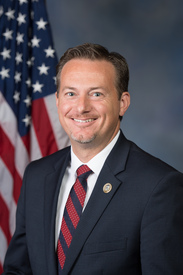

Legislative Progress
In CommitteeMr. Biggs of Arizona (for himself and Mr. Cloud) introduced …
Referred to the Committee on Oversight and Government Reform, and …
Introduced in House
Stakeholder Effects
cui bono?How this legislation distributes effects. Mention counts reflect frequency, not effect magnitude.
COVID-19 testing vendors, Medicaid patients, Medicaid-participating healthcare providers
Positive-direction: Medicaid-participating healthcare providers, Medicare-participating healthcare providers, Provider compliance officers, Unvaccinated healthcare employees
Negative-direction: COVID-19 testing vendors, Medicaid patients, Medically vulnerable employees, Medically vulnerable healthcare workers, Medicare patients, Occupational health providers
Employees exposed to workplace COVID-19, Employees objecting to COVID testing, Employer labor-compliance staff
Positive-direction: Employees objecting to COVID testing, Employer labor-compliance staff, Employers opposing federal COVID mandates, Unvaccinated private-sector employees
Negative-direction: Employees exposed to workplace COVID-19
Centers for Medicare and Medicaid Services, Department of Health and Human Services, Department of Labor rulemaking staff
State healthcare regulators, State workplace safety regulators
Bill Structure & Actor Mappings
Who is "The Secretary" in each section?
- "patient"
- → Person receiving care in a participating facility
- "employee"
- → Worker affected by a vaccination or testing policy
- "employer"
- → Employer that would otherwise receive a federal vaccination or testing mandate
- "provider"
- → Medicare- or Medicaid-participating healthcare provider
- "president"
- → President responsible for the named executive orders
- "hhs_secretary"
- → HHS Secretary barred from specified participation conditions and penalties
- "labor_secretary"
- → Labor Secretary barred from specified rules
Note: {'scope_ids': ['federal_covid_vaccine_and_testing_mandate_limits'], 'description': 'The two named orders and prior OSHA and CMS mandate programs are already inactive, making immediate effects narrow; the bill nonetheless creates prospective federal limits without restricting private, state, or local policies and without addressing other diseases or infection-control measures.'}
Key Definitions
Terms defined in this bill
Executive Orders 14042 and 14043, both of which were revoked before this bill's 2026 introduction.
The bar on a Labor Department rule requiring employers to mandate employee COVID-19 vaccination or testing of unvaccinated employees.
The bar on HHS participation conditions or penalties tied to provider employee COVID-19 vaccination or testing mandates.
We use a combination of our own taxonomy and classification in addition to large language models to assess meaning and potential beneficiaries. High confidence means strong textual evidence. Always verify with the original bill text.
Learn more about our methodology