Infant Formula Safety Modernization Act of 2026
Summary
What This Bill Does
The Infant Formula Safety Modernization Act requires FDA to issue final regulations within 90 days updating infant-formula good manufacturing practices. Manufacturers must test both manufacturing facilities and finished formula for pathogens and microorganisms designated by FDA. FDA's list must include Clostridium botulinum.
The rules must specify environmental-testing frequency, including testing in Zone 2 areas adjacent to formula exposure and Zone 3 areas farther away but capable of spreading contamination through people, equipment, or airflow. A manufacturer must notify FDA in writing within one business day after a positive finished-formula result, even when the product remains under the manufacturer's control. Manufacturers must retain positive facility and product test records for FDA inspections.
FDA must establish and enforce clear, consistent inspection and compliance standards for infant formula regardless of country of origin. After receiving a positive finished-product notice, HHS must notify specified House and Senate committees within one business day. The same congressional deadline applies after FDA issues an official-action-indicated or equivalent classification following a formula-facility inspection.
The bill adds testing, reporting, records, and oversight duties. It does not prescribe a recall trigger, testing method, or frequency directly; FDA must supply those details in the regulation.
Who Benefits and How
Infants and caregivers gain earlier detection and escalation of contamination risks. Pediatric providers, hospitals, and formula purchasers gain stronger assurance that facilities and finished products are tested. Congress gains rapid notice of positive results and serious inspection outcomes. Domestic producers gain a uniform standard applied to imported formula. Testing laboratories may gain demand for environmental and finished-product analysis.
Who Bears the Burden and How
Infant-formula manufacturers must expand sampling, laboratory testing, records, and one-day reporting. Imported-product manufacturers face the same compliance standard. FDA must complete rulemaking in 90 days, define pathogens and testing frequency, inspect consistently, review rapid notices, and alert Congress. Compliance costs may increase formula-production costs or interrupt supply when contamination is detected, although avoided outbreaks reduce larger safety and recall risks.
Key Provisions
- Requires final FDA regulations within 90 days.
- Requires testing of manufacturing facilities and finished infant formula.
- Adds Clostridium botulinum to the required pathogen list.
- Expands environmental testing to Zone 2 and Zone 3.
- Requires positive finished-product reports within one business day.
- Requires retention of positive facility and product test records.
- Establishes consistent standards regardless of product origin.
- Requires congressional notice within one business day of specified safety events.
Evidence Chain:
This summary is generated from the full bill text using AI analysis. Expand "Detailed Analysis" below for identified beneficiaries/burden bearers with clause-level evidence links.
At a Glance
What This Bill Does
Requires FDA within 90 days to strengthen infant-formula manufacturing rules with facility and finished-product pathogen testing, one-business-day positive-result reporting, record retention, uniform domestic and imported-product inspection standards, and one-business-day congressional notices for positive tests or serious inspection classifications.
Key Policy Areas
Infant Formula Safety, Food Manufacturing Standards, Pathogen Testing, FDA Inspections, Congressional Safety Oversight
Primary Purpose
Requires FDA within 90 days to strengthen infant-formula manufacturing rules with facility and finished-product pathogen testing, one-business-day positive-result reporting, record retention, uniform domestic and imported-product inspection standards, and one-business-day congressional notices for positive tests or serious inspection classifications.
Policy Domains
Section 2 infant-formula testing and notification controls
Identified Gains
- Infants consuming manufactured formula
- Caregivers purchasing infant formula
- Pediatric providers monitoring formula safety
- Hospitals purchasing infant formula
- Congressional committees receiving rapid notices
- Domestic manufacturers facing import parity
- Pathogen-testing laboratories
Identified Costs
- Infant-formula manufacturing facilities
- Imported-formula manufacturers
- Formula quality-control laboratories
- FDA infant-formula rulemaking staff
- FDA facility-inspection teams
- HHS congressional-notification staff
- Formula purchasers absorbing compliance costs
Sponsors
Legislative Progress
In CommitteeReferred to the House Committee on Energy and Commerce.
Introduced in House
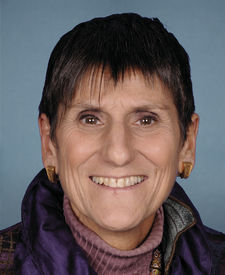
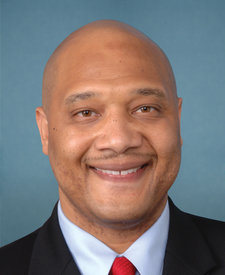
Ms. DeLauro (for herself, Mrs. Grijalva, Mr. Panetta, Ms. Jacobs, …
Stakeholder Effects
cui bono?How this legislation distributes effects. Mention counts reflect frequency, not effect magnitude.
Congressional committees receiving rapid notices, FDA facility-inspection teams, FDA infant-formula rulemaking staff
Positive-direction: Congressional committees receiving rapid notices
Negative-direction: FDA facility-inspection teams, FDA infant-formula rulemaking staff, HHS congressional-notification staff
Domestic manufacturers facing import parity, Imported-formula manufacturers, Infant-formula manufacturing facilities
Positive-direction: Domestic manufacturers facing import parity
Negative-direction: Imported-formula manufacturers, Infant-formula manufacturing facilities
Caregivers purchasing infant formula, Formula purchasers absorbing compliance costs
Positive-direction: Caregivers purchasing infant formula
Negative-direction: Formula purchasers absorbing compliance costs
Formula quality-control laboratories, Pathogen-testing laboratories
Infants consuming manufactured formula
Bill Structure & Actor Mappings
Who is "The Secretary" in each section?
- "consumer"
- → Infant consuming formula
- "regulator"
- → Secretary of Health and Human Services acting through FDA
- "laboratory"
- → Pathogen-testing laboratory
- "manufacturer"
- → Infant-formula manufacturer
- "oversight_recipient"
- → Appropriate congressional committee
Note: {'scope_ids': ['infant_formula_pathogen_controls'], 'description': 'The bill requires FDA to set the pathogen list, methods, and testing frequency through regulation; it creates rapid reporting and records duties but does not itself specify an automatic recall or public-notification trigger for every positive result.'}
Key Definitions
Terms defined in this bill
Non-food-contact areas directly adjacent to locations where infant formula could be exposed during manufacturing.
Processing-environment areas farther from direct exposure where contamination could move into Zone 2 through people, equipment, or airflow.
Written manufacturer notice to FDA within one business day after a designated pathogen or microorganism is detected in finished formula.
We use a combination of our own taxonomy and classification in addition to large language models to assess meaning and potential beneficiaries. High confidence means strong textual evidence. Always verify with the original bill text.
Learn more about our methodology