To amend the Unfunded Mandates Reform Act of 1995 to require the Director of the Office of Management and Budget to establish a limit for the total amount of additional unfunded regulatory costs that may be imposed in a fiscal year, and for other purposes.
Analysis under review: This bill has generated analysis that may be too generic or incomplete. Clause-level evidence remains available below.
Summary
What This Bill Does
This bill creates a "regulatory budget" that caps how much new regulatory costs federal agencies can impose each year on businesses, state governments, local governments, and tribal governments. The Director of the Office of Management and Budget (OMB) must set annual limits, and any agency rule that would exceed its limit cannot take effect without Congressional approval.
Who Benefits and How
Private sector businesses benefit significantly because this creates a hard cap on new regulatory compliance costs they face each year. State and local governments benefit similarly by having limits on unfunded mandates they must implement. Industries that typically face heavy regulation (manufacturing, energy, finance) gain protection from cumulative regulatory burden.
Who Bears the Burden and How
Federal regulatory agencies face new constraints on their rulemaking authority and must justify rules that would exceed limits. OMB faces significant new administrative burden to track, calculate, and report on regulatory costs across all agencies. Public interest groups and those who benefit from regulations (environmental protection, worker safety, consumer protection) may see fewer new protective regulations issued.
Key Provisions
- OMB must set annual limits on unfunded regulatory costs for all agencies collectively and each agency individually
- Rules exceeding limits cannot take effect without Congressional approval
- Emergency exemption available via Presidential Executive Order for health/safety, criminal law enforcement, national security, or trade agreements
- Annual reporting to Congress on regulatory cost administration
Evidence Chain:
This summary is generated from the full bill text using AI analysis. Expand "Detailed Analysis" below for identified beneficiaries/burden bearers.
At a Glance
What This Bill Does
Establishes a regulatory budgeting system requiring OMB to set annual limits on unfunded regulatory costs that federal agencies can impose, with Congressional approval required for rules exceeding those limits
Key Policy Areas
Government Regulation, Administrative Law, Federal-State Relations
Primary Purpose
Establishes a regulatory budgeting system requiring OMB to set annual limits on unfunded regulatory costs that federal agencies can impose, with Congressional approval required for rules exceeding those limits
Policy Domains
Section 2 - Regulatory Budgeting Amendments
Identified Gains
Contextual inference, no direct clause citation- Private sector businesses
- State governments
- Local governments
- Tribal governments
Contextual inference, no direct clause citation
Identified Costs
Contextual inference, no direct clause citation- Federal regulatory agencies
- Office of Management and Budget
Contextual inference, no direct clause citation
Section 210 - Regulatory Budgeting (New Section Added)
Identified Gains
Contextual inference, no direct clause citation- Private sector businesses
- State governments
- Local governments
- Tribal governments
- Congress
Contextual inference, no direct clause citation
Identified Costs
Contextual inference, no direct clause citation- Federal regulatory agencies
- Office of Management and Budget
- Public interest beneficiaries of regulation
Contextual inference, no direct clause citation
Sponsors
Legislative Progress
ReportedReported from the Committee on Oversight and Accountability with an …
Committee on the Judiciary discharged; committed to the Committee of …
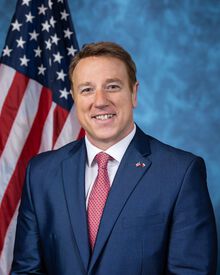
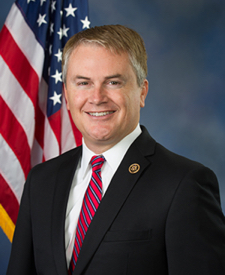
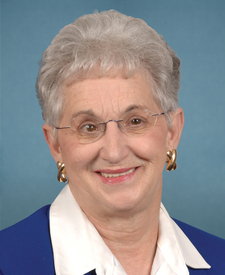
Mr. Fallon (for himself, Mr. Comer, and Ms. Foxx) introduced …
Stakeholder Effects
cui bono?How this legislation distributes effects. Mention counts reflect frequency, not effect magnitude.
Congress, Federal regulatory agencies, Local governments implementing federal mandates
Positive-direction: Local governments implementing federal mandates, State governments implementing federal mandates, Tribal governments implementing federal mandates
Negative-direction: Federal regulatory agencies, Office of Management and Budget
Private sector businesses subject to federal regulations
Bill Structure & Actor Mappings
Who is "The Secretary" in each section?
- "the_director"
- → Director of the Office of Management and Budget
- "the_head_of_an_agency"
- → Head of any federal agency that promulgates rules
- "the_director"
- → Director of the Office of Management and Budget
- "the_president"
- → President of the United States
- "the_head_of_an_agency"
- → Head of any federal agency that promulgates rules
Key Definitions
Terms defined in this bill
An unfunded regulatory cost that had not been required to be incurred by a State, local, or Tribal government, or the private sector, as a result of a Federal mandate in a rule during any preceding fiscal year
The Committee on Oversight and Accountability of the House of Representatives and the Committee on Homeland Security and Governmental Affairs of the Senate
A direct cost, or a quantifiable cost that can be estimated using the methods and concepts described in OMB Circular A-4 issued on September 17, 2003
All costs required to be incurred by a State, local, or Tribal government, or by the private sector as a result of all Federal mandates included in rules during all preceding fiscal years
The Director of the Office of Management and Budget
A cost required to be incurred by a State, local, or Tribal government, or by the private sector, as a result of a Federal mandate included in a rule
We use a combination of our own taxonomy and classification in addition to large language models to assess meaning and potential beneficiaries. High confidence means strong textual evidence. Always verify with the original bill text.
Learn more about our methodology