American Lending Fairness Act of 2026
Summary
What This Bill Does
The American Lending Fairness Act gives a state a new express mechanism to reject specified federal interest-rate authority for institutions chartered by that state. A state may opt out by adopting a law or certifying that its voters approved a provision explicitly stating that the federal subsection should not apply to loans made by its state-chartered institutions.
After the state action, the referenced Federal Deposit Insurance Act rule no longer applies to later loans or loan commitments made by banks chartered by that state. The bill creates the same opt-out for state-chartered credit unions under the Federal Credit Union Act.
It repeals section 525 of the Depository Institutions Deregulation and Monetary Control Act of 1980 but provides that the new amendments govern the legal effect of a state law or certification adopted under that earlier section before enactment.
The federal bill does not itself set an interest-rate cap or require a state to opt out. The rates, remedies, and lending rules that apply after an opt-out depend on other state and federal law. Existing loans or commitments made before the state action are outside the prospective language.
Who Benefits and How
State legislatures and voters gain clearer authority to choose whether federal rate rules apply to their own state-chartered institutions. Borrowers in an opt-out state may receive the protection of otherwise applicable state limits. State consumer-protection regulators gain authority to enforce the resulting state framework. Federally chartered institutions are not placed within this state-charter opt-out.
Who Bears the Burden and How
State-chartered banks and credit unions in an opt-out state may lose federal interest-rate authority for future loans, must determine which rules apply, and may revise pricing or product availability. Higher-risk borrowers could face reduced credit access if lenders withdraw products. State officials must enact or certify a legally explicit opt-out. Courts, regulators, and compliance teams may need to resolve how earlier state actions operate under the new provisions.
Key Provisions
- Creates a state-law or voter-certification opt-out for state-chartered banks.
- Creates the same opt-out for state-chartered credit unions.
- Requires the state provision to reject federal application explicitly.
- Applies prospectively to loans or commitments after the state action.
- Repeals the 1980 Act's prior opt-out section.
- Preserves legal effect for qualifying earlier state actions.
- Sets no federal interest-rate cap.
- Requires no state to exercise the opt-out.
Evidence Chain:
This summary is generated from the full bill text using AI analysis. Expand "Detailed Analysis" below for identified beneficiaries/burden bearers with clause-level evidence links.
At a Glance
What This Bill Does
Allows a state, through legislation or a certified voter-approved provision, to opt its state-chartered banks and credit unions out of specified federal interest-rate authority for future loans, repeals the prior opt-out provision, and preserves the legal effect of qualifying earlier state actions.
Key Policy Areas
Consumer Lending, State-Chartered Banks, Credit Union Lending, Interest Rate Regulation, Federal-State Financial Law
Primary Purpose
Allows a state, through legislation or a certified voter-approved provision, to opt its state-chartered banks and credit unions out of specified federal interest-rate authority for future loans, repeals the prior opt-out provision, and preserves the legal effect of qualifying earlier state actions.
Policy Domains
Section 2 state opt-out from federal lending-rate authority
Identified Gains
- State voters choosing local lending rules
- State legislatures restoring rate authority
- Borrowers protected by opt-out state limits
- State consumer-finance regulators
- Consumer advocates seeking local rate controls
- Federally chartered lenders outside the opt-out
Identified Costs
- State-chartered banks in opt-out states
- State-chartered credit unions in opt-out states
- Lender compliance teams interpreting state rules
- Higher-risk borrowers facing reduced credit access
- State officials certifying voter provisions
- Courts resolving prior opt-out effects
- State regulators enforcing replacement rules
Sponsors
Legislative Progress
In CommitteeReferred to the House Committee on Financial Services.
Introduced in House
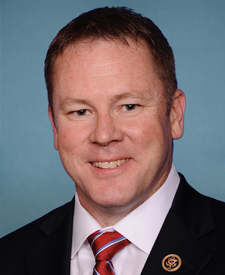
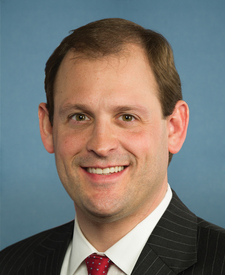
Mr. Davidson (for himself and Mr. Barr) introduced the following …
Stakeholder Effects
cui bono?How this legislation distributes effects. Mention counts reflect frequency, not effect magnitude.
State consumer-finance regulators, State legislatures restoring rate authority, State officials certifying voter provisions
Positive-direction: State consumer-finance regulators, State legislatures restoring rate authority
Negative-direction: State officials certifying voter provisions, State regulators enforcing replacement rules
Federally chartered lenders outside the opt-out, Lender compliance teams interpreting state rules, State-chartered banks in opt-out states
Positive-direction: Federally chartered lenders outside the opt-out
Negative-direction: Lender compliance teams interpreting state rules, State-chartered banks in opt-out states, State-chartered credit unions in opt-out states
Borrowers protected by opt-out state limits, Higher-risk borrowers facing reduced credit access
Positive-direction: Borrowers protected by opt-out state limits
Negative-direction: Higher-risk borrowers facing reduced credit access
Bill Structure & Actor Mappings
Who is "The Secretary" in each section?
- "bank"
- → State-chartered insured depository institution
- "borrower"
- → Borrower receiving a loan after an opt-out
- "regulator"
- → State financial regulator
- "credit_union"
- → State-chartered insured credit union
- "state_decision_maker"
- → State legislature or state electorate
Note: {'scope_ids': ['state_lending_rate_opt_out'], 'description': 'All lender and borrower effects are conditional on a state taking an explicit opt-out action; the bill itself sets no rate cap, does not require an opt-out, and does not retroactively change loans committed before the state action.'}
Key Definitions
Terms defined in this bill
A state law or certification adopted under the repealed 1980 Act provision before this bill's enactment and governed by the new amendments.
A state law or certified voter-approved provision explicitly rejecting application of the referenced federal subsection to loans by institutions chartered by that state.
A loan made, or committed to be made, after the date the state adopts or certifies its opt-out.
We use a combination of our own taxonomy and classification in addition to large language models to assess meaning and potential beneficiaries. High confidence means strong textual evidence. Always verify with the original bill text.
Learn more about our methodology