No Getting Rich in Congress Act
Summary
What This Bill Does
The No Getting Rich in Congress Act prohibits members of Congress, the President, Vice President, covered federal candidates, and their spouses and dependent children from directly or indirectly buying or selling securities, digital assets, commodities, futures, derivatives, and comparable interests unless held in a qualified blind trust. It excludes diversified publicly traded funds, federal and state or local government debt, precious metals from its commodity definition, and spouse or dependent employment compensation.
Covered candidates enter the regime when designating a political committee and leave upon suspension, withdrawal, concession, or taking office. Quarterly information must go to the supervising ethics office. The text's occupational exception refers only to the Vice President, while describing trades performed as the primary occupation of a spouse or dependent in investments not owned by a covered individual, an unusually narrow and potentially mistaken cross-reference.
For members, the President, and Vice President, the ethics office can order payment of transaction profit plus, when appropriate, three times the investment value. DOJ imposes the same structure on candidates, spouses, and dependents. Members and candidates cannot use official accounts or campaign and officeholder donations to pay. Violations and penalties are public. The penalty section mentions trading or ownership violations, although the operative section prohibits buying or selling rather than continued ownership, creating another mismatch.
Former members and former Senate-confirmed presidential appointees face a lifetime criminal ban on knowingly representing, aiding, or advising China, North Korea, Russia, Iran, or another State-designated country with intent to influence a federal decision. It does not bar all foreign work, domestic lobbying, or activity lacking the specified intent.
Spouses of members and Senate-confirmed officials must register within 45 days after implementation guidance or the official begins service, report covered advocacy quarterly, identify clients, issues, contacts, foreign interests, expenses, and client government interests, and remain covered for one year after office or marriage ends. Spouses already registered under the Lobbying Disclosure Act are exempt. The broad definition reaches use of official contacts and work over two or more quarters, but excludes undefined "reasonable advocacy work."
House and Senate offices must issue guidance within 180 days, support electronic public filing, verify reports, notify deficient filers, and refer unresolved cases after 60 days. The penalty text has a dangling clause for a knowing failure and then clearly authorizes up to five years and a fine only for knowing and corrupt noncompliance, creating uncertainty about ordinary knowing violations.
Members and spouses cannot serve as officers or board members of for-profit entities. A spouse already serving may finish the current term, cannot seek an officer role during it, and cannot serve another term while married to a member; the text provides no equivalent transition for a member. Continuing spouses report quarterly. Congressional gift rules are extended to spouses, except spouses registered under the Lobbying Disclosure Act.
Who Benefits and How
Voters, ethics offices, investigators, and watchdogs gain conflict restrictions and public records. Diversified funds and blind-trust providers remain lawful investment channels. U.S. national-security agencies gain a permanent tool against influence work for countries of concern.
Who Bears the Burden and How
Officeholders, candidates, spouses, and dependents lose trading choices and face quarterly proof and large penalties. Former officials lose covered foreign work. Senior-official spouses face broad registration and criminal exposure. Corporate boards lose covered members, while ethics offices, DOJ, congressional clerks, and prosecutors bear administration and interpretation of drafting conflicts.
Key Provisions
- Prohibits covered investment trading outside blind trusts.
- Covers members, the President, and Vice President.
- Covers federal candidates, spouses, and dependents.
- Exempts diversified publicly traded funds and government debt.
- Requires quarterly compliance materials.
- Requires disgorgement of transaction profits.
- Authorizes an additional three-times-value penalty.
- Prohibits official or campaign funds from paying penalties.
- Requires public violation and penalty records.
- Establishes a lifetime country-of-concern lobbying ban.
- Requires senior-official spouse registration.
- Requires quarterly public advocacy reports.
- Exempts spouses already registered as lobbyists.
- Extends spouse coverage for one year after official status ends.
- Bars congressional corporate-board service.
- Allows a limited existing spouse board term.
- Extends congressional gift rules to spouses.
- Leaves trade-versus-ownership and penalty-text conflicts.
Evidence Chain:
This summary is generated from the full bill text using AI analysis. Expand "Detailed Analysis" below for identified beneficiaries/burden bearers with clause-level evidence links.
At a Glance
What This Bill Does
Restricts investment trading by federal officeholders, candidates, spouses, and dependents outside qualified blind trusts, creates disgorgement and possible treble-value penalties, imposes a lifetime foreign-country lobbying ban on former members and Senate-confirmed appointees, requires senior-official spouse advocacy registration, bars congressional corporate-board service, and extends gift disclosure to congressional spouses.
Key Policy Areas
Federal Ethics, Investment Trading, Foreign Lobbying, Lobbying Disclosure, Congressional Conflicts of Interest
Primary Purpose
Restricts investment trading by federal officeholders, candidates, spouses, and dependents outside qualified blind trusts, creates disgorgement and possible treble-value penalties, imposes a lifetime foreign-country lobbying ban on former members and Senate-confirmed appointees, requires senior-official spouse advocacy registration, bars congressional corporate-board service, and extends gift disclosure to congressional spouses.
Policy Domains
Sections 2 through 6 covered investment definitions and trading restriction, quarterly compliance, disgorgement and value penalties, lifetime country-of-concern influence ban, senior-official spouse advocacy registration and enforcement, corporate-board prohibition and transition, and spouse gift rules
Identified Gains
- Voters seeking federal ethics safeguards
- Federal ethics oversight offices
- Government accountability organizations
- National-security investigators
- Diversified investment fund providers
- Qualified blind-trust providers
- Public users of advocacy disclosures
Identified Costs
- Members of Congress trading covered investments
- President holding covered investments
- Vice President holding covered investments
- Federal candidates trading covered investments
- Spouses of covered federal officials
- Dependent children of covered officials
- Former officials serving countries of concern
- For-profit boards using congressional members
- Federal ethics compliance staff
Sponsors
Legislative Progress
In CommitteeReferred to the Committee on House Administration, and in addition …
Introduced in House
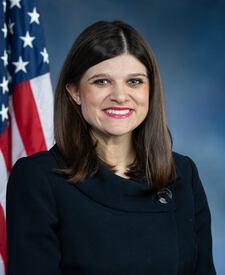
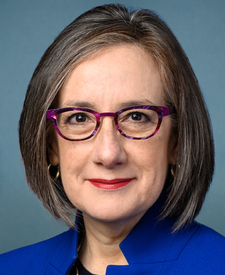
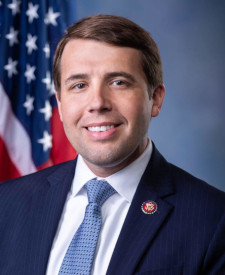
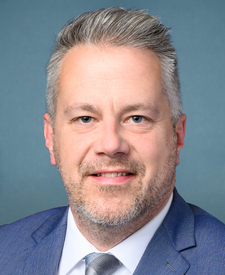
Ms. Stevens (for herself, Mr. Tran, Ms. Salinas, Mr. Sorensen, …
Stakeholder Effects
cui bono?How this legislation distributes effects. Mention counts reflect frequency, not effect magnitude.
Candidates violating investment restrictions, Clerk of the House of Representatives, Congressional ethics committees
Positive-direction: Congressional ethics committees, Federal ethics oversight offices, Federal officials targeted by foreign influence, United States national-security agencies
Negative-direction: Candidates violating investment restrictions, Clerk of the House of Representatives, Department of Justice civil-enforcement staff, Dependent children of covered officials, District of Columbia federal prosecutors, Family members violating investment restrictions, Federal candidates trading covered investments, Federal courts interpreting the penalty gap, Federal criminal prosecutors, Federal election candidates, Federal ethics compliance staff, Former Senate-confirmed appointees, House ethics compliance staff, Members of Congress, Members of Congress trading covered investments, Members serving on for-profit boards, Members violating investment restrictions, President holding covered investments, President of the United States, President violating investment restrictions, Secretary of the Senate, Senate ethics compliance staff, Spouses of House members receiving gifts, Spouses of Senators receiving gifts, Spouses of covered federal officials, Vice President holding covered investments, Vice President of the United States, Vice President violating investment restrictions
Clients using senior-official spouse access, Foreign lobbying firms, Former members serving countries of concern
Government accountability organizations, Public users of advocacy disclosures, Public users of board-service disclosures
Digital-asset trading platforms, Diversified investment fund providers, Qualified blind-trust providers
Positive-direction: Diversified investment fund providers, Qualified blind-trust providers
Negative-direction: Digital-asset trading platforms
Democratic People's Republic of Korea, Islamic Republic of Iran, People's Republic of China
Congressional spouses serving on boards, For-profit boards using congressional members, Spouses finishing existing board terms
Campaign committees unable to pay penalties
Bill Structure & Actor Mappings
Who is "The Secretary" in each section?
- "clerk"
- → House or Senate filing office implementing spouse reports
- "family"
- → Spouse or dependent child included in investment restrictions
- "candidate"
- → Federal candidate covered during the campaign period
- "officeholder"
- → Member, President, or Vice President subject to investment rules
- "ethics_office"
- → Supervising office receiving records and imposing penalties
- "former_official"
- → Former member or confirmed appointee subject to foreign lobbying ban
- "registered_spouse"
- → Senior-official spouse disclosing advocacy
Note: {'scope_ids': ['federal_official_investment_lobbying_and_board_ethics'], 'description': 'The investment rule bans transactions rather than clearly requiring divestment, yet penalties refer to ownership; its occupational exception cross-references only the Vice President; registered lobbyist spouses escape the new advocacy and gift rules; and the spouse-advocacy penalty language is incomplete for noncorrupt knowing violations.'}
Key Definitions
Terms defined in this bill
Client support seeking a preferred legislative or executive outcome outside undefined reasonable advocacy work, including official-contact use, multi-quarter work, or lobbying contacts.
China, North Korea, Russia, Iran, or another country designated by the Secretary of State.
A security, digital asset, commodity, future, derivative, or comparable interest, excluding specified diversified funds, government debt, and family employment compensation.
We use a combination of our own taxonomy and classification in addition to large language models to assess meaning and potential beneficiaries. High confidence means strong textual evidence. Always verify with the original bill text.
Learn more about our methodology