HR7840-119

In Committee

Event Contract Enforcement Act

119th Congress Introduced Mar 5, 2026

Summary

What This Bill Does

The Event Contract Enforcement Act rewrites the Commodity Exchange Act rule for event contracts. Beginning 180 days after enactment, a registered entity may not list or make available an agreement, contract, transaction, or swap in an excluded commodity when its payoff is based on an occurrence or contingency involving unlawful activity, terrorism, assassination, war, gaming, an election result, or conduct by any level or branch of federal, state, or local government.

The election category expressly covers votes in federal, state, and local elections, including ballot initiatives and referenda. The government-conduct category reaches actions by government instrumentalities and personnel, making it broader than election markets alone. Ordinary price, rate, value, or commodity-level changes described in the cross-referenced commodity definition remain outside the event-contingency rule.

The Commodity Futures Trading Commission may identify similar activity as contrary to the public interest by rule. "Gaming" includes any aspect of a live, simulated, or virtual physical or mental challenge or game of chance. A state may expressly exempt conduct in that state from the federal gaming category, but the text does not provide a state opt-out for election, war, terrorism, assassination, unlawful-activity, or government-conduct contracts.

Who Benefits and How

Election officials, public-integrity advocates, and government personnel gain protection from markets that monetize official outcomes or conduct. State-authorized gaming operators retain a path to event contracts when state law expressly exempts them. The CFTC gains clear categories and rulemaking authority for similar public-interest risks.

Who Bears the Burden and How

Prediction-market exchanges must delist or block covered contracts and redesign compliance systems within 180 days. Traders lose access to election, political, government-action, sports, game, and other covered markets. Market makers and data vendors lose related revenue. The CFTC must interpret broad terms, conduct rulemaking, and enforce the prohibition, while state legislatures must act expressly for the gaming exception to apply.

Key Provisions

  • Prohibits event contracts tied to unlawful activity.
  • Prohibits contracts tied to terrorism, assassination, or war.
  • Prohibits contracts tied to election results and referenda.
  • Prohibits contracts tied to government conduct or personnel.
  • Defines gaming to include physical, mental, simulated, and virtual challenges.
  • Authorizes state-law exemptions only for the gaming category.
  • Authorizes CFTC rules for similar contrary-to-public-interest activity.
  • Preserves ordinary commodity price and rate contracts.
  • Delays the prohibition for 180 days after enactment.

Evidence Chain:

This summary is generated from the full bill text using AI analysis. Expand "Detailed Analysis" below for identified beneficiaries/burden bearers with clause-level evidence links.

At a Glance

What This Bill Does

Prohibits registered commodity-market entities from listing event contracts tied to unlawful activity, terrorism, assassination, war, gaming, election results, or government conduct, while allowing a state-law gaming exemption and CFTC designation of similar contrary-to-public-interest activity.

Key Policy Areas

Prediction Markets, Commodity Derivatives, Election Contracts, Gaming Regulation, CFTC Oversight

Primary Purpose

Prohibits registered commodity-market entities from listing event contracts tied to unlawful activity, terrorism, assassination, war, gaming, election results, or government conduct, while allowing a state-law gaming exemption and CFTC designation of similar contrary-to-public-interest activity.

Policy Domains

Prediction Markets Commodity Derivatives Election Contracts Gaming Regulation CFTC Oversight

Section 2 event-contract categories, gaming exception, and effective date

Identified Gains
  • Election officials protected from outcome markets
  • Government personnel protected from conduct markets
  • Public-integrity advocates
  • State-authorized gaming operators
  • State gaming regulators preserving local authority
  • CFTC enforcement officials using clearer categories
Model: codex-gpt-5 | Version: bill_summary_v2 | Source: ih
Public-integrity advocates:
State-authorized gaming operators:
Election officials protected from outcome markets:
State gaming regulators preserving local authority:
CFTC enforcement officials using clearer categories:
Government personnel protected from conduct markets:
Identified Costs
  • Prediction-market exchanges
  • Election-contract traders
  • Government-event contract traders
  • Sports prediction-market operators
  • Event-contract market makers
  • Prediction-market data vendors
  • CFTC rulemaking staff
  • States seeking a gaming exemption
Model: codex-gpt-5 | Version: bill_summary_v2 | Source: ih
CFTC rulemaking staff:
Election-contract traders:
Prediction-market exchanges:
Event-contract market makers:
Prediction-market data vendors:
Government-event contract traders:
States seeking a gaming exemption:
Sports prediction-market operators:

Legislative Progress

In Committee
Introduced Committee Passed
Mar 18, 2026

Sponsor introductory remarks on measure. (CR H2588-2589)

Mar 5, 2026

Referred to the House Committee on Agriculture.

Mar 5, 2026

Introduced in House

Mar 5, 2026

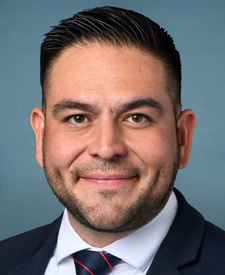
Mr. Moore of Utah (for himself and Mr. Carbajal) introduced …

Stakeholder Effects

cui bono?

How this legislation distributes effects. Mention counts reflect frequency, not effect magnitude.

Financial Services
4 mentions across 1 clause
-4 negative

Election-contract traders, Event-contract market makers, Government-event contract traders

State & Local Government
3 mentions across 1 clause
+2 positive -1 negative

Election officials, State gaming regulators, State legislatures seeking gaming exemptions

Positive-direction: Election officials, State gaming regulators

Negative-direction: State legislatures seeking gaming exemptions

Government
3 mentions across 1 clause
+1 positive -1 negative ~1 mixed

CFTC enforcement officials, CFTC event-contract rulemaking staff, Government personnel underlying event contracts

Positive-direction: Government personnel underlying event contracts

Negative-direction: CFTC event-contract rulemaking staff

Gaming
2 mentions across 1 clause
+1 positive -1 negative

Sports prediction-market operators, State-authorized gaming operators

Positive-direction: State-authorized gaming operators

Negative-direction: Sports prediction-market operators

Nonprofits
1 mention across 1 clause
+1 positive

Public-integrity advocacy organizations

Technology
1 mention across 1 clause
-1 negative

Prediction-market data vendors

1/2
sections analyzed
Full impact breakdown

Bill Structure & Actor Mappings

Who is "The Secretary" in each section?

Domains
Prediction Markets Commodity Derivatives Election Contracts Gaming Regulation CFTC Oversight
Actor Mappings
"state"
→ State expressly exempting gaming conduct
"trader"
→ Participant trading a covered prediction contract
"exchange"
→ Registered entity listing event contracts
"official"
→ Government official whose conduct could underlie a contract
"regulator"
→ Commodity Futures Trading Commission

Note: {'scope_ids': ['prohibited_event_contracts'], 'description': 'The state opt-out applies only to gaming, not election or government-conduct markets; ordinary commodity price variables remain outside the event rule, and CFTC authority over similar activity requires rulemaking.'}

Key Definitions

Terms defined in this bill

3 terms
"gaming" §gaming

Any aspect of a live, simulated, or virtual physical or mental challenge or game of chance.

"covered event contract" §event_contract

An excluded-commodity agreement, transaction, swap, or contract based on a nonprice occurrence, extent, or contingency in a prohibited category.

"state gaming exception" §state_exception

An exception from the federal gaming category when state law expressly exempts the conduct occurring in that state.

We use a combination of our own taxonomy and classification in addition to large language models to assess meaning and potential beneficiaries. High confidence means strong textual evidence. Always verify with the original bill text.

Learn more about our methodology