Supplemental Security Income Restoration Act of 2026
Summary
What This Bill Does
The Supplemental Security Income Restoration Act updates SSI eligibility and benefits after a delayed effective date. For 2026 it raises the statutory unearned-income exclusion from $240 to $1,892 annually, the earned-income exclusion from $780 to $6,149 annually, the individual resource ceiling to $10,000, and the couple ceiling to $20,000. Those amounts increase after 2026 with the CPI for Elderly Consumers and cannot decline below their 2026 level.
For calendar years after 2026, the annual Federal benefit rate for a person without an eligible spouse becomes the prior year's Federal poverty guideline for one person, reduced by countable income. The eligible-couple rate becomes exactly twice the individual rate, eliminating the lower combined rate commonly described as the SSI marriage penalty. Existing benefit-indexing language continues to govern earlier years.
The bill stops counting food, shelter, or other support and maintenance furnished in kind as income. It also excludes qualified retirement plans and eligible deferred-compensation plans from resources. It repeals the SSI ineligibility penalty for transferring resources below fair market value while preserving notice and information sharing about separate Medicaid transfer rules.
Specified state earned-income and child-tax-credit refunds receive expanded protection in SSI income or resource calculations. Indian general welfare benefits are excluded from both income and resources. The bill eliminates dedicated-account requirements for certain large past-due benefits and protects transferred balances from being counted across SSI and other federally financed Federal, state, or local programs. It also repeals the requirement to pay certain past-due SSI benefits in installments and extends the resource-exclusion period for specified payments from nine to 21 months.
Marriage for SSI would depend on an actual Title II marriage determination rather than broader SSI holding-out rules, with conforming gender-neutral terminology. Puerto Rico, the U.S. Virgin Islands, Guam, and American Samoa enter SSI, territorial payment caps are removed, and U.S. nationals receive conforming eligibility treatment. The Social Security Commissioner may waive or modify statutory SSI requirements as considered necessary to adapt the program to each territory.
The amendments take effect on the first day of the first calendar month beginning after the one-year period following enactment. The bill does not alter the medical definitions of disability or blindness, erase Medicaid's separate asset-transfer rule, or guarantee that territorial adaptations will be identical across jurisdictions.
Who Benefits and How
Older, blind, and disabled people gain higher benefits, larger income and asset cushions, inflation protection, and fewer reductions for shared housing, retirement savings, tax credits, Tribal benefits, or prior resource transfers. Eligible couples gain a full two-person rate. Residents of the four covered territories gain access to SSI, and recipients of large past-due awards gain faster and more flexible control of funds.
Who Bears the Burden and How
The Social Security Administration must recalculate eligibility and benefits, update systems, issue larger and lump-sum payments, revise marriage and resource rules, coordinate data with Medicaid, and build territorial administration. Federal taxpayers bear higher benefit and implementation costs. State Medicaid agencies must continue separate transfer-policy notifications and determinations, while territorial governments must coordinate transition from capped assistance structures.
Key Provisions
- Raises SSI income exclusions for 2026.
- Raises individual resources to $10,000 and couple resources to $20,000.
- Indexes eligibility amounts with CPI-E after 2026.
- Sets post-2026 individual benefits at the poverty guideline.
- Sets eligible-couple benefits at twice the individual rate.
- Excludes in-kind support and maintenance from income.
- Excludes qualified retirement accounts from resources.
- Repeals the SSI below-market resource-transfer penalty.
- Protects specified state tax-credit refunds.
- Excludes Indian general welfare benefits.
- Eliminates dedicated accounts for specified past-due benefits.
- Repeals installment payment requirements.
- Extends a resource exclusion from nine to 21 months.
- Narrows SSI marriage determinations to Title II findings.
- Extends SSI to four U.S. territories.
- Delays the Act's effective date by approximately one year.
Evidence Chain:
This summary is generated from the full bill text using AI analysis. Expand "Detailed Analysis" below for identified beneficiaries/burden bearers with clause-level evidence links.
At a Glance
What This Bill Does
Expands Supplemental Security Income by increasing and indexing income and resource exclusions, setting post-2026 benefits at the poverty guideline with a two-person couple rate, excluding in-kind support, retirement assets, tax credits, and Tribal welfare payments, easing lump-sum and transfer rules, and extending SSI to four U.S. territories after a one-year implementation delay.
Key Policy Areas
Supplemental Security Income, Disability and Aging Benefits, Means-Tested Program Eligibility, U.S. Territories, Social Security Administration
Primary Purpose
Expands Supplemental Security Income by increasing and indexing income and resource exclusions, setting post-2026 benefits at the poverty guideline with a two-person couple rate, excluding in-kind support, retirement assets, tax credits, and Tribal welfare payments, easing lump-sum and transfer rules, and extending SSI to four U.S. territories after a one-year implementation delay.
Policy Domains
Sections 2 through 14 income and resource exclusions, benefit rates, in-kind support, retirement assets, transfer rules, tax credits, Tribal benefits, past-due payments, marriage, territorial coverage, and delayed effective date
Identified Gains
- Older adults receiving Supplemental Security Income
- Blind people receiving Supplemental Security Income
- Disabled people receiving Supplemental Security Income
- Eligible SSI couples affected by the marriage penalty
- SSI recipients receiving in-kind support
- SSI applicants holding retirement accounts
- Tribal members receiving general welfare benefits
- Residents of Puerto Rico eligible for SSI
- Residents of the U.S. Virgin Islands eligible for SSI
- Residents of Guam eligible for SSI
- Residents of American Samoa eligible for SSI
Identified Costs
- Social Security Administration benefit staff
- Social Security Administration systems staff
- Federal taxpayers financing expanded SSI
- State Medicaid agencies reviewing resource transfers
- Territorial governments coordinating SSI transition
- Representative payees adapting to lump-sum rules
Sponsors
Legislative Progress
In CommitteeReferred to the House Committee on Ways and Means.
Introduced in House
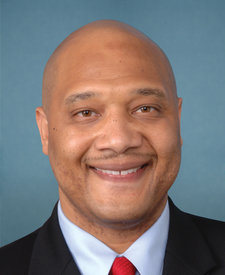
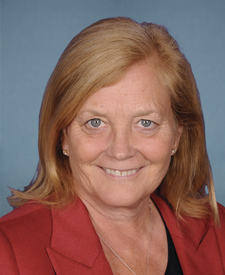
Mrs. Grijalva (for herself, Ms. Balint, Mr. Carson, Ms. Norton, …
Stakeholder Effects
cui bono?How this legislation distributes effects. Mention counts reflect frequency, not effect magnitude.
Blind people receiving Supplemental Security Income, Children receiving past-due SSI benefits, Disabled people receiving Supplemental Security Income
Positive-direction: Blind people receiving Supplemental Security Income, Children receiving past-due SSI benefits, Disabled people receiving Supplemental Security Income, Eligible SSI couples affected by the marriage penalty, Older adults receiving Supplemental Security Income, Recipients of large past-due SSI awards, Representative payees adapting to lump-sum rules, Residents of American Samoa eligible for SSI, Residents of Guam eligible for SSI, Residents of Puerto Rico eligible for SSI, Residents of the U.S. Virgin Islands eligible for SSI, SSI applicants transferring resources below market value, SSI recipients affected by prior transfer rules, United States nationals applying for SSI
Negative-direction: Recipients vulnerable to rapid benefit depletion
Federal benefit programs excluding transferred balances, SSI spouses receiving Tribal welfare benefits, Social Security Administration benefit staff
Positive-direction: SSI spouses receiving Tribal welfare benefits, Social Security Administration benefit staff, Social Security Administration payment staff, Social Security Administration systems staff, Tribal governments providing welfare benefits, Tribal members receiving general welfare benefits
Negative-direction: Federal benefit programs excluding transferred balances, Social Security Administration eligibility staff, Social Security Administration territorial staff
Federal taxpayers financing expanded SSI, Federal taxpayers financing expanded eligibility, Federal taxpayers financing territorial SSI
Federal taxpayers financing expanded SSI faces effects in multiple directions
Positive-direction: Low-income parents receiving state tax refunds, SSI recipients receiving state child tax credits, SSI recipients receiving state earned income tax credits
Negative-direction: Federal taxpayers financing expanded eligibility, Federal taxpayers financing territorial SSI
State Medicaid agencies reviewing resource transfers, State benefit programs excluding transferred balances, State tax agencies defining credit refunds
Positive-direction: State Medicaid agencies reviewing resource transfers
Negative-direction: State benefit programs excluding transferred balances, State tax agencies defining credit refunds
Retirement plan administrators serving SSI applicants, SSI applicants holding retirement accounts, SSI recipients preserving retirement savings
Medicaid applicants subject to separate transfer rules
Financial institutions holding SSI lump sums
Bill Structure & Actor Mappings
Who is "The Secretary" in each section?
- "taxpayer"
- → Federal taxpayer financing expanded benefits and administration
- "recipient"
- → Older, blind, or disabled person receiving or applying for SSI
- "territory"
- → Puerto Rico, U.S. Virgin Islands, Guam, or American Samoa entering SSI
- "commissioner"
- → Social Security Commissioner implementing benefit and territorial changes
- "eligible_couple"
- → Married pair whose combined benefit becomes twice the individual rate
- "medicaid_agency"
- → State agency retaining separate transfer-of-assets review
- "representative_payee"
- → Person managing past-due benefits for a recipient
Note: {'scope_ids': ['ssi_restoration_and_territories'], 'description': 'The bill substantially loosens SSI means testing and payment controls while retaining separate Medicaid transfer rules; territorial coverage is expanded nationally, but broad Commissioner waiver authority can adapt statutory requirements to local conditions.'}
Key Definitions
Terms defined in this bill
$10,000 for an individual and $20,000 for a person with an eligible spouse, indexed by CPI-E after 2026.
Application of Title XVI to Puerto Rico, the U.S. Virgin Islands, Guam, and American Samoa, subject to Commissioner adaptation authority.
The prior calendar year's poverty guideline for one person, with an eligible couple receiving twice that amount before countable-income reductions.
We use a combination of our own taxonomy and classification in addition to large language models to assess meaning and potential beneficiaries. High confidence means strong textual evidence. Always verify with the original bill text.
Learn more about our methodology