HR7802-119

In Committee

DISCLOSE Act of 2026

119th Congress Introduced Mar 4, 2026

Summary

What This Bill Does

The DISCLOSE Act of 2026 expands the Federal foreign-money ban beyond conventional contributions. It treats funding routed to political committees or other persons for expenditures, independent expenditures, and electioneering communications as covered contributions or donations. It reaches specified paid digital candidate communications, issue communications by covered foreign nationals during Federal election years, compensated internet advocacy, Federal judicial-nomination communications, and ballot initiatives or referenda involving foreign governments, foreign political parties, their agents, and sanctioned persons. Owners, officers, attorneys, and incorporation agents who intentionally use an entity to conceal prohibited foreign-national activity may face up to five years in prison.

The Comptroller General must study illicit foreign money after each four-year election cycle through the cycle associated with the 2036 presidential election, including available evidence about targeting of rural, minority, military, and veteran communities. FinCEN must provide information needed by the Federal Election Commission, and the two agencies must recommend any further enforcement authority.

Covered corporations, non-501(c)(3) tax-exempt organizations, labor organizations, specified political organizations, noncorporate LLCs, and certain political-committee accounts that spend more than $10,000 in an election reporting cycle must file disclosure statements within 24 hours of each threshold-crossing date. Reports identify the organization, certain beneficial owners, disbursements above $1,000, recipients, affected elections or candidates, and a noncoordination certification. Depending on whether a segregated account is used, the report also identifies persons providing at least $10,000 during the relevant period. Ordinary business receipts and investments are generally excluded. Donors can restrict funds in writing and require segregation, and a person can seek nondisclosure by presenting specific evidence of serious threats, harassment, or reprisals.

The disclosure rule follows covered transfers used, solicited, discussed, or reasonably expected to finance campaign-related disbursements. It excludes ordinary commercial or investment transactions and properly segregated restricted funds, and it contains affiliate-transfer rules. Federal judicial-nomination advertising is treated as campaign-related spending on a separate calendar-year cycle, regardless of the spender's intent. Paid broadcast, digital, print, outdoor, mass-mail, telephone-bank, and similar communications supporting or opposing a Federal judicial nominee are covered, while independent news content is generally excluded.

Campaign-finance challenges seeking declaratory or injunctive relief must proceed in the U.S. District Court for the District of Columbia, with appeals to the D.C. Circuit and expedited handling. Constitutional complaints must be delivered to the House and Senate. Members of Congress may intervene on either side and may bring constitutional challenges themselves. Related presidential public-financing statutes receive conforming cross-references, and older judicial-review provisions are repealed.

The Stand By Every Ad provisions require covered audio, video, digital, text, and graphic communications not authorized by candidates to carry an individual or organizational approval statement. Video and digital communications financed by covered campaign-related spending generally identify the five largest qualifying funders; audio communications identify the top two. Short communications may use a website or one-action adapted disclaimer. Text must be prominent, audio must be clear, and video disclosures generally remain visible for at least six seconds. Prerecorded political calls must deliver the applicable audio statement at the beginning. The Act does not newly subject otherwise exempt internet speakers to disclaimer duties.

Most spending-disclosure and advertising provisions apply beginning January 1, 2027, regardless of whether the FEC has completed regulations. The judicial-review title applies immediately. A severability clause preserves the remainder if a court invalidates one provision or application.

Who Benefits and How

Voters, journalists, election researchers, and people evaluating Federal judicial nominations gain faster access to the original sources, beneficial owners, recipients, and major funders behind covered political spending. Candidates and election administrators gain stronger tools against foreign influence. People receiving prerecorded political calls gain immediate sponsor identification. Donors facing serious threats may seek a targeted disclosure exemption.

Who Bears the Burden and How

Covered corporations, nonprofit advocacy organizations, labor organizations, political organizations, certain political committees, and their senior officers must trace funds, segregate restricted payments, certify independence, file rapid reports, and place detailed disclaimers. Large donors and beneficial owners may have names and addresses disclosed. Foreign governments, foreign political parties, agents, sanctioned persons, and concealment intermediaries face broader prohibitions or criminal exposure. The FEC, FinCEN, GAO, Federal courts, and congressional clerks receive enforcement, reporting, rulemaking, and litigation duties.

Key Provisions

  • Expands the foreign-money ban to additional election and digital activity.
  • Prohibits covered foreign participation in ballot initiatives and referenda.
  • Criminalizes intentional shell-entity concealment of prohibited foreign activity.
  • Requires recurring GAO studies of illicit foreign election money.
  • Requires 24-hour disclosure after covered spending exceeds $10,000.
  • Requires source, beneficial-owner, recipient, and candidate information.
  • Covers qualifying transfers between organizations and affiliates.
  • Extends disclosure to Federal judicial-nomination advocacy.
  • Requires FinCEN information sharing with the FEC.
  • Centralizes and expedites campaign-finance judicial review in D.C.
  • Requires sponsor statements and top-funder lists in covered advertising.
  • Applies disclaimer rules to prerecorded political calls.
  • Preserves existing exemptions for otherwise uncovered internet speakers.
  • Preserves surviving provisions through severability.

Evidence Chain:

This summary is generated from the full bill text using AI analysis. Expand "Detailed Analysis" below for identified beneficiaries/burden bearers with clause-level evidence links.

At a Glance

What This Bill Does

Closes foreign-money and anonymous-spending channels in Federal campaigns and judicial-nomination advocacy by expanding prohibited activity, requiring rapid source disclosure, standardizing sponsor and major-funder disclaimers, and centralizing expedited judicial review.

Key Policy Areas

Campaign Finance Disclosure, Foreign Influence in Elections, Political Advertising, Federal Judicial Nominations, Election Law Enforcement, Campaign Finance Litigation

Primary Purpose

Closes foreign-money and anonymous-spending channels in Federal campaigns and judicial-nomination advocacy by expanding prohibited activity, requiring rapid source disclosure, standardizing sponsor and major-funder disclaimers, and centralizing expedited judicial review.

Policy Domains

Campaign Finance Disclosure Foreign Influence in Elections Political Advertising Federal Judicial Nominations Election Law Enforcement Campaign Finance Litigation

Sections 1 through 501 foreign-money restrictions, source disclosure, judicial-nomination spending, enforcement coordination, judicial review, advertising disclaimers, effective dates, and severability

Identified Gains
  • Voters evaluating campaign spending
  • Journalists tracing political funding
  • Election researchers using disclosure filings
  • Federal candidates exposed to foreign influence
  • Judicial nominees subject to anonymous campaigns
  • Prerecorded-call recipients hearing sponsor statements
  • Federal Election Commission investigators
  • Donors qualifying for serious-threat exemptions
Model: codex-gpt-5 | Version: bill_summary_v2 | Source: ih
Voters evaluating campaign spending: , , , , , , , , , , ,
Journalists tracing political funding: , , , , , , , , , , ,
Federal Election Commission investigators: , , , , , , , , , , ,
Election researchers using disclosure filings: , , , , , , , , , , ,
Donors qualifying for serious-threat exemptions: , , , , , , , , , , ,
Federal candidates exposed to foreign influence: , , , , , , , , , , ,
Judicial nominees subject to anonymous campaigns: , , , , , , , , , , ,
Prerecorded-call recipients hearing sponsor statements: , , , , , , , , , , ,
Identified Costs
  • Covered corporations filing disclosure statements
  • Nonprofit advocacy organizations tracing donor funds
  • Labor organizations making covered disbursements
  • Political committees using nonconforming accounts
  • Major donors subject to public identification
  • Beneficial owners subject to public identification
  • Foreign agents financing election activity
  • Communication sponsors adding funder disclaimers
  • Federal Election Commission administrators
  • Financial Crimes Enforcement Network analysts
  • Government Accountability Office researchers
  • D.C. Federal courts expediting litigation
Model: codex-gpt-5 | Version: bill_summary_v2 | Source: ih
D.C. Federal courts expediting litigation: , , , , , , , , , , ,
Federal Election Commission administrators: , , , , , , , , , , ,
Foreign agents financing election activity: , , , , , , , , , , ,
Government Accountability Office researchers: , , , , , , , , , , ,
Financial Crimes Enforcement Network analysts: , , , , , , , , , , ,
Major donors subject to public identification: , , , , , , , , , , ,
Communication sponsors adding funder disclaimers: , , , , , , , , , , ,
Labor organizations making covered disbursements: , , , , , , , , , , ,
Covered corporations filing disclosure statements: , , , , , , , , , , ,
Political committees using nonconforming accounts: , , , , , , , , , , ,
Beneficial owners subject to public identification: , , , , , , , , , , ,
Nonprofit advocacy organizations tracing donor funds: , , , , , , , , , , ,

Legislative Progress

In Committee
Introduced Committee Passed
Mar 4, 2026

Referred to the Committee on House Administration, and in addition …

Mar 4, 2026

Introduced in House

Mar 4, 2026

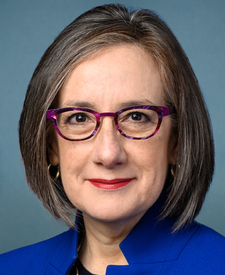
Mr. Pappas (for himself, Mr. Raskin, Mr. Morelle, Mr. Amo, …

Stakeholder Effects

cui bono?

How this legislation distributes effects. Mention counts reflect frequency, not effect magnitude.

Government
44 mentions across 23 clauses
+10 positive -25 negative ~1 mixed ?8 uncertain

Congressional election-law committees, Congressional election-law drafters, Courts interpreting internet disclaimer coverage

Federal Election Commission enforcement staff faces effects in multiple directions

Positive-direction: Congressional election-law committees, Courts interpreting internet disclaimer coverage, Federal Election Commission investigators, Members of Congress challenging election laws, Members of Congress defending election laws, Members of Congress intervening in litigation, Senators evaluating judicial nominees

Negative-direction: D.C. Circuit judges, D.C. District Court judges, D.C. Federal courts applying immediate review rules, Federal Election Commission chair, Federal Election Commission disclosure staff, Federal Election Commission filing administrators, Federal Election Commission implementation staff, Federal Election Commission litigation staff, Federal Election Commission rulemaking staff, Federal courts reviewing constitutional challenges, Federal criminal investigators, Federal judges transferring later-raised challenges, Financial Crimes Enforcement Network analysts, Government Accountability Office analysts, House Clerk receiving constitutional complaints, Justice Department prosecutors, Senate Secretary receiving constitutional complaints

Campaign Finance
21 mentions across 12 clauses
+2 positive -18 negative ?1 uncertain

Candidates targeted by foreign advocacy, Covered corporations making campaign disbursements, Covered foreign nationals buying political ads

Positive-direction: Candidates targeted by foreign advocacy, Organizations using restricted segregated funds

Negative-direction: Covered corporations making campaign disbursements, Covered foreign nationals buying political ads, Covered organizations applying surviving requirements, Covered organizations filing section 324 reports, Covered organizations preparing 2027 disclosures, Covered organizations reviewed through financial intelligence, Foreign agents financing ballot measures, Foreign nationals funding election advocacy, Foreign political parties financing ballot measures, Individuals sponsoring unaffiliated political ads, Major donors financing judicial-nomination advocacy, Major donors to covered spenders, Major funders identified in political ads, Organizations financing judicial-nomination advocacy, Political committees accepting nonconforming funds, Reportable donors supplying at least $10,000, Sponsors of prerecorded political calls, State ballot-measure committees

Civic Participation
14 mentions across 13 clauses
+13 positive ?1 uncertain

Local voters considering ballot measures, Minority communities targeted by foreign money, Rural communities targeted by foreign money

Business
11 mentions across 6 clauses
-11 negative

Beneficial owners identified in filings, Beneficial owners of covered entities, Chief executives certifying noncoordination

Professional Services
10 mentions across 9 clauses
+3 positive -4 negative ~1 mixed ?2 uncertain

Attorneys concealing foreign election activity, Campaign-finance challengers selecting a forum, Campaign-finance litigants filing after enactment

Positive-direction: Election-law litigants receiving faster decisions, Federal judicial nominees, Federal judicial nominees targeted by foreign advocacy

Negative-direction: Attorneys concealing foreign election activity, Campaign-finance challengers selecting a forum, Campaign-finance plaintiffs outside Washington, Entity attorneys concealing foreign election activity

Media & Entertainment
5 mentions across 4 clauses
+5 positive

Independent news publishers, Journalists tracing covered transfers, Small online publishers

Advertising
5 mentions across 4 clauses
-4 negative ~1 mixed

Election-advertising intermediaries receiving foreign funds, Foreign-funded digital advertising intermediaries, Organizations sponsoring unaffiliated political ads

International Affairs
2 mentions across 2 clauses
-1 negative ?1 uncertain

Foreign governments financing ballot measures, Foreign nationals discussed in the findings

23/27
sections analyzed
Full impact breakdown

Bill Structure & Actor Mappings

Who is "The Secretary" in each section?

Domains
Campaign Finance Disclosure Foreign Influence in Elections Political Advertising Federal Judicial Nominations Election Law Enforcement Campaign Finance Litigation
Actor Mappings
"fec"
→ Federal Election Commission administering disclosure, disclaimer, and foreign-money rules
"gao"
→ Government Accountability Office studying illicit foreign election money
"donors"
→ People or entities supplying reportable payments to covered spenders
"fincen"
→ Financial Crimes Enforcement Network sharing enforcement information
"voters"
→ Voters evaluating the sources and sponsors of political advocacy
"federal_courts"
→ D.C. Federal courts handling expedited campaign-finance challenges
"foreign_actors"
→ Foreign governments, foreign political parties, agents, and sanctioned persons subject to expanded prohibitions
"beneficial_owners"
→ Natural persons controlling or benefiting substantially from covered entities
"members_of_congress"
→ Members permitted to intervene in or initiate constitutional litigation
"political_committees"
→ Political committees and special accounts accepting funds outside ordinary contribution limits
"covered_organizations"
→ Corporations, labor organizations, political organizations, and non-501(c)(3) tax-exempt groups making covered disbursements
"communication_sponsors"
→ People and organizations paying for covered political advertisements or prerecorded calls

Note: {'scope_ids': ['campaign_finance_transparency'], 'description': 'The bill prioritizes traceable political spending and protection against foreign influence over donor anonymity and low-friction advocacy, while preserving ordinary-business exclusions, restricted segregated funds, serious-threat exemptions, news exemptions, short-format adaptations, and existing internet-speaker coverage limits.'}

Key Definitions

Terms defined in this bill

6 terms
"beneficial owner" §beneficial_owner

A natural person exercising substantial control or holding a substantial interest or economic benefit in an entity, with listed exceptions and an anti-evasion rule.

"covered transfer" §covered_transfer

A payment to another person linked by designation, solicitation, discussion, or reasonable knowledge to campaign-related disbursements, subject to commercial, restricted-fund, and affiliate rules.

"covered organization" §covered_organization

A covered corporation, noncorporate LLC, non-501(c)(3) tax-exempt organization, labor organization, specified section 527 organization, or qualifying political-committee account.

"covered foreign national" §covered_foreign_national

A foreign government or political party, a person acting under its direction or control, or a sanctioned person, with a scoped rule for U.S. citizens acting as agents.

"campaign-related disbursement" §campaign_related_disbursement

A covered independent expenditure, applicable public communication, electioneering communication, or covered transfer.

"Federal judicial nomination communication" §federal_judicial_nomination_communication

Specified paid public advertising that promotes, supports, attacks, or opposes a Federal judicial nomination or Senate confirmation, generally excluding independent news content.

We use a combination of our own taxonomy and classification in addition to large language models to assess meaning and potential beneficiaries. High confidence means strong textual evidence. Always verify with the original bill text.

Learn more about our methodology