HR7801-119

In Committee

Cloud LAB Act of 2026

119th Congress Introduced Mar 4, 2026

Summary

What This Bill Does

The Cloud LAB Act directs the National Science Foundation Director, in consultation with the Energy Secretary and the National Institute of Standards and Technology, to establish a pilot network of cloud laboratories. These facilities use automation and remote operation to conduct biological experiments. The network must connect public, private, and academic laboratories, catalog their capabilities, coordinate access, and promote data standards and best practices.

Supported laboratories must generate high-quality biological data for authorized artificial-intelligence and model-development research and provide access to instrumentation and data. Within 360 days, NSF must submit an implementation plan covering the laboratory landscape, locations, existing coordination, secure public data, access and payment models, free or minimal-cost access for nonproprietary research, industry input, intellectual-property terms, user engagement, security, and annual costs.

An advisory board must be established within 180 days. It includes federal, academic, biosafety, biosecurity, ethics, social-science, and industry expertise. The board recommends priorities, prevents duplication, helps define authorized researchers, and reports annually on operations, misuse, and cybersecurity. Its authority ends after 12 years.

Subject to appropriations, phase II must award at least two laboratories within two years, require operation within three years, and use awards lasting at least eight years. Phase III must begin within four years, add at least three laboratories, and use awards lasting at least six years. Annual congressional reporting begins after all phase-II awards, and the entire pilot authority sunsets after 12 years.

Who Benefits and How

Authorized researchers, smaller institutions, nonproprietary projects, artificial-intelligence developers, biotechnology companies, and cloud-laboratory operators gain shared experimental capacity and standardized biological data. Equipment, automation, cybersecurity, and data-platform vendors may gain contracts. Policymakers gain recurring operational and security reports.

Who Bears the Burden and How

NSF, DOE, NIST, the advisory board, and participating laboratories must build governance, security, access, payment, data, and reporting systems. Federal appropriations finance long-duration awards. Data and sample owners face intellectual-property and access risks. Unauthorized researchers may remain excluded, and biosecurity teams must manage the possibility that remote laboratories or released data are misused.

Key Provisions

  • Establishes a national cloud-laboratory pilot network.
  • Coordinates public, private, and academic facilities.
  • Provides biological data and instrumentation to authorized researchers.
  • Requires an implementation plan within 360 days.
  • Requires an advisory board within 180 days.
  • Requires free or minimal-cost nonproprietary access planning.
  • Establishes at least two phase-II laboratories.
  • Adds at least three phase-III laboratories.
  • Requires annual congressional reports.
  • Sunsets the pilot after 12 years.

Evidence Chain:

This summary is generated from the full bill text using AI analysis. Expand "Detailed Analysis" below for identified beneficiaries/burden bearers with clause-level evidence links.

At a Glance

What This Bill Does

Creates a 12-year National Science Foundation pilot network of automated cloud laboratories that supplies authorized researchers with biological data, instrumentation, and secure access for artificial-intelligence model development, subject to appropriations, phased awards, an advisory board, and recurring reports.

Key Policy Areas

Cloud Laboratories, Biological Research, Artificial Intelligence, National Science Foundation, Research Infrastructure

Primary Purpose

Creates a 12-year National Science Foundation pilot network of automated cloud laboratories that supplies authorized researchers with biological data, instrumentation, and secure access for artificial-intelligence model development, subject to appropriations, phased awards, an advisory board, and recurring reports.

Policy Domains

Cloud Laboratories Biological Research Artificial Intelligence National Science Foundation Research Infrastructure

Sections 2 and 3 definitions, pilot network, phased awards, oversight, and sunset

Identified Gains
  • Authorized biological researchers
  • Researchers at smaller institutions
  • Nonproprietary research projects
  • Artificial-intelligence model developers
  • Biotechnology companies using biological data
  • Cloud-laboratory award recipients
  • Laboratory automation vendors
  • Research data-platform providers
Model: codex-gpt-5 | Version: bill_summary_v2 | Source: ih
Laboratory automation vendors: ,
Nonproprietary research projects: ,
Research data-platform providers: ,
Authorized biological researchers: ,
Cloud-laboratory award recipients: ,
Researchers at smaller institutions: ,
Artificial-intelligence model developers: ,
Biotechnology companies using biological data: ,
Identified Costs
  • NSF pilot-program staff
  • DOE consultation staff
  • NIST standards staff
  • Cloud Laboratory Advisory Board members
  • Federal accounts funding laboratory awards
  • Participating laboratories meeting security conditions
  • Biological-data owners managing access rights
  • Biosecurity officials monitoring misuse
  • Researchers excluded by authorization rules
Model: codex-gpt-5 | Version: bill_summary_v2 | Source: ih
NIST standards staff: ,
DOE consultation staff: ,
NSF pilot-program staff: ,
Biosecurity officials monitoring misuse: ,
Cloud Laboratory Advisory Board members: ,
Federal accounts funding laboratory awards: ,
Researchers excluded by authorization rules: ,
Biological-data owners managing access rights: ,
Participating laboratories meeting security conditions: ,

Legislative Progress

In Committee
Introduced Committee Passed
Mar 4, 2026

Referred to the House Committee on Science, Space, and Technology.

Mar 4, 2026

Introduced in House

Mar 4, 2026

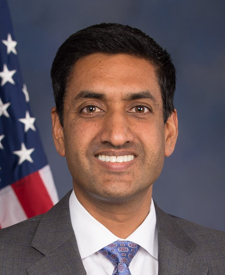
Mr. Obernolte (for himself, Mr. Khanna, Mr. Auchincloss, and Mr. …

Stakeholder Effects

cui bono?

How this legislation distributes effects. Mention counts reflect frequency, not effect magnitude.

Research & Science
10 mentions across 2 clauses
+5 positive -3 negative ~2 mixed

Authorized biological researchers, Biological-data owners, Biological-data owners managing access rights

Positive-direction: Authorized biological researchers, Cloud-laboratory award recipients, Cloud-laboratory operators, Nonproprietary research projects

Negative-direction: Participating laboratories meeting security conditions, Researchers excluded by authorization rules

Government
7 mentions across 2 clauses
-7 negative

Biosecurity officials monitoring misuse, Cloud Laboratory Advisory Board members, DOE consultation staff

Technology
4 mentions across 2 clauses
+3 positive -1 negative

Artificial-intelligence model developers, Cybersecurity teams protecting laboratory systems, Research data-platform providers

Positive-direction: Artificial-intelligence model developers, Research data-platform providers

Negative-direction: Cybersecurity teams protecting laboratory systems

Pharmaceuticals
2 mentions across 2 clauses
+1 positive ?1 uncertain

Biotechnology companies using biological data, Private cloud-laboratory companies

Education
2 mentions across 2 clauses
+1 positive ?1 uncertain

Academic laboratory administrators, Researchers at smaller institutions

Scientific Equipment
1 mention across 1 clause
+1 positive

Laboratory automation vendors

2/3
sections analyzed
Full impact breakdown

Bill Structure & Actor Mappings

Who is "The Secretary" in each section?

Domains
Cloud Laboratories Biological Research Artificial Intelligence National Science Foundation Research Infrastructure
Actor Mappings
"advisor"
→ Cloud Laboratory Advisory Board member
"partner"
→ DOE or NIST official consulted on implementation
"director"
→ NSF Director establishing and administering the pilot
"laboratory"
→ Cloud laboratory participating in the pilot network
"researcher"
→ Authorized researcher using network data or instrumentation

Note: {'scope_ids': ['cloud_laboratory_pilot_network'], 'description': 'The network and minimum laboratory counts are subject to appropriations; access remains limited to authorized researchers, intellectual-property and security terms must still be developed, and all authority ends after 12 years.'}

Key Definitions

Terms defined in this bill

3 terms
"biological data" §biological_data

Research data generated through biological experimentation for artificial-intelligence or model-development uses covered by the pilot.

"cloud laboratory" §cloud_laboratory

A facility that uses automation and remote operation to conduct biological experiments and provide access to instruments or data.

"authorized researcher" §authorized_researcher

A researcher permitted under the pilot's governance and security framework to access supported laboratories, data, or instruments.

We use a combination of our own taxonomy and classification in addition to large language models to assess meaning and potential beneficiaries. High confidence means strong textual evidence. Always verify with the original bill text.

Learn more about our methodology