Property Improvement and Manufactured Housing Loan Modernization Act of 2026
Summary
What This Bill Does
The Property Improvement and Manufactured Housing Loan Modernization Act of 2026 updates FHA's Title I loan-insurance authority. It makes construction of an additional or accessory dwelling unit an eligible use and raises principal limits for home improvements, manufactured homes, manufactured-home lots, and home-and-lot combinations. The stated limits include $75,000 for alterations and improvements to an existing single-family structure, $106,405 for a single-section manufactured home, $195,322 for a multi-section home, $149,782 and $238,699 for those homes with developed lots, and $43,377 for a covered lot loan. HUD may set the accessory-dwelling-unit limit.
The bill directs HUD to develop one or more methods for annually indexing the loan limits within one year. It also permits periodic resets supported by a methodology established in advance by regulation, allows the maximum loan term to be set up to 30 years, and lets HUD establish conditions for covered leases. The prior indexing method remains in force until the new method is ready.
HUD must also study off-site construction and report to Congress. The study must compare manufactured and modular housing with site-built housing on cost, factory production, transport, precision, material waste, physical quality, 40-year replacement and maintenance costs, and potential use in accessory units and multifamily housing.
Who Benefits and How
Homeowners financing repairs, improvements, or accessory dwelling units benefit from expanded eligible uses and higher federally insured loan limits. Manufactured-home buyers and buyers combining a home with a developed lot gain access to larger insured loans. FHA-approved lenders, manufactured-home producers, modular builders, and home-improvement contractors may receive additional loan and project demand.
Who Bears the Burden and How
FHA insurance accounts take on exposure to larger principal balances and loan terms that may reach 30 years. HUD staff must set and annually index limits, establish methods by regulation, administer lease conditions, update lender guidance, and complete the off-site construction study. FHA-approved lenders must update underwriting and compliance systems. Borrowers remain responsible for repayment and may carry larger or longer debts; the bill does not provide a direct grant or debt forgiveness.
Key Provisions
- Expands eligible property improvements to include additional and accessory dwelling units.
- Raises FHA-insured loan limits for home improvements and manufactured housing.
- Authorizes HUD to set a separate principal limit for accessory-dwelling-unit construction.
- Allows covered loan terms of up to 30 years as determined by HUD.
- Requires annual indexing of specified principal limits.
- Directs HUD to choose the indexing method within one year while retaining the prior method during transition.
- Permits periodic limit resets using a methodology established in advance by regulation.
- Requires a congressional study comparing off-site and site-built housing costs, quality, and long-term maintenance.
Evidence Chain:
This summary is generated from the full bill text using AI analysis. Expand "Detailed Analysis" below for identified beneficiaries/burden bearers with clause-level evidence links.
At a Glance
What This Bill Does
Modernizes FHA-insured property-improvement and manufactured-housing loans by adding accessory dwelling units, raising and indexing principal limits, allowing terms up to 30 years, and requiring a HUD study of off-site construction.
Key Policy Areas
Housing Finance, Federal Housing Administration, Manufactured Housing, Accessory Dwelling Units, Home Improvement, Off-Site Construction
Primary Purpose
Modernizes FHA-insured property-improvement and manufactured-housing loans by adding accessory dwelling units, raising and indexing principal limits, allowing terms up to 30 years, and requiring a HUD study of off-site construction.
Policy Domains
Section 3 HUD study of off-site construction
Identified Gains
- Congressional housing policymakers
- Manufactured-housing producers evaluated by HUD
- Modular-home builders evaluated by HUD
- Homebuyers comparing construction methods
Identified Costs
- HUD housing-research staff
- HUD physical-inspection analysts
- HUD report-production staff
- Federal housing-research accounts
Section 2 FHA property-improvement and manufactured-housing loan changes
Identified Gains
- Homeowners financing property improvements
- Borrowers constructing accessory dwelling units
- Single-section manufactured-home buyers
- Multi-section manufactured-home buyers
- FHA-approved Title I lenders
- Manufactured-home producers
- Home-improvement contractors
Identified Costs
- FHA Title I insurance accounts
- HUD loan-policy staff
- FHA-approved lender compliance staff
- Borrowers taking larger insured loans
- Manufactured-home lease administrators
Sponsors
Legislative Progress
In CommitteeReferred to the House Committee on Financial Services.
Introduced in House
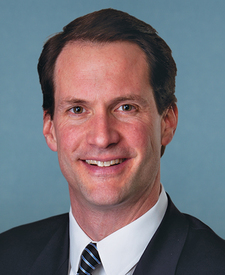
Mr. Himes (for himself, Mr. Pappas, Mr. Harder of California, …
Stakeholder Effects
cui bono?How this legislation distributes effects. Mention counts reflect frequency, not effect magnitude.
Borrowers constructing accessory dwelling units, Borrowers taking larger insured loans, FHA-approved Title I lenders
Congressional housing policymakers, FHA Title I insurance accounts, Federal housing-research accounts
Positive-direction: Congressional housing policymakers
Negative-direction: FHA Title I insurance accounts, Federal housing-research accounts, HUD housing-research staff, HUD loan-policy staff, HUD physical-inspection analysts
Home-improvement contractors, Modular-home builders evaluated by HUD
Bill Structure & Actor Mappings
Who is "The Secretary" in each section?
- "hud"
- → Department of Housing and Urban Development setting and indexing loan terms
- "lender"
- → FHA-approved lender originating a covered loan
- "borrower"
- → Borrower using an FHA-insured property-improvement or manufactured-housing loan
- "hud"
- → Department of Housing and Urban Development conducting the study
- "congress"
- → Congress receiving the comparative report
- "manufacturer"
- → Producer of manufactured or modular housing evaluated by the study
Key Definitions
Terms defined in this bill
FHA-insurable financing for construction of an additional or accessory dwelling unit as HUD defines it.
Manufactured homes and modular homes constructed substantially away from the final building site.
A home built under the federal manufactured-housing construction and safety standards.
A factory-built home assembled from modules that meet applicable state and local codes at its destination.
We use a combination of our own taxonomy and classification in addition to large language models to assess meaning and potential beneficiaries. High confidence means strong textual evidence. Always verify with the original bill text.
Learn more about our methodology