HR7791-119

In Committee

To authorize the Secretary of Housing and Urban Development to prioritize the award of certain housing grants to applicants located in, or serving, low-income communities.

119th Congress Introduced Mar 4, 2026

Summary

What This Bill Does

H.R. 7791 permits the Housing and Urban Development Secretary to give extra weight to certain applicants when awarding a covered competitive grant. The preference is available when the proposed housing activity or project is located in a qualified opportunity zone or substantially and directly benefits such a zone.

A covered grant is any competitive grant related to housing construction, modification, rehabilitation, or preservation, as determined by HUD. The definition gives the Secretary discretion over which grant competitions are included. The opportunity-zone reference uses designations under section 1400Z-1 of the Internal Revenue Code.

The preference is optional: the Secretary "may" give additional weight. The bill does not require selection of an opportunity-zone applicant, reserve a fixed share of funds, create a new grant, appropriate money, change opportunity-zone boundaries, or make an applicant eligible if it fails the underlying program rules. A project outside the zone may qualify only if it can show a substantial and direct benefit to the designated community.

Who Benefits and How

Housing developers, public housing agencies, local governments, and nonprofit applicants serving opportunity zones may receive a scoring advantage. Residents of those communities may gain housing construction, rehabilitation, or preservation investment. Opportunity-zone property owners and construction contractors may benefit from increased project activity.

Who Bears the Burden and How

Applicants serving low-income communities outside qualified zones may lose relative scoring position even when their needs are similar. HUD staff must identify covered competitions, define additional weight, and evaluate whether an off-zone project supplies a substantial and direct benefit. Grant applicants incur documentation costs, and a fixed grant pool can shift awards away from non-zone projects.

Key Provisions

  • Defines covered grants around competitive housing assistance.
  • Includes housing construction grants.
  • Includes modification, rehabilitation, and preservation grants.
  • Authorizes additional scoring weight for opportunity-zone projects.
  • Extends the preference to projects directly benefiting a zone.
  • Preserves HUD discretion over covered competitions and weighting.
  • Requires all applicants to satisfy underlying grant rules.
  • Provides no new appropriation or mandatory set-aside.
  • Limits the preference to federally designated qualified opportunity zones.

Evidence Chain:

This summary is generated from the full bill text using AI analysis. Expand "Detailed Analysis" below for identified beneficiaries/burden bearers with clause-level evidence links.

At a Glance

What This Bill Does

Authorizes the Housing and Urban Development Secretary to give additional weight in competitive housing grants to applicants whose projects are located in or substantially and directly benefit federally designated qualified opportunity zones.

Key Policy Areas

Housing Grants, Opportunity Zones, Community Development, HUD Competitive Awards, Affordable Housing Investment

Primary Purpose

Authorizes the Housing and Urban Development Secretary to give additional weight in competitive housing grants to applicants whose projects are located in or substantially and directly benefit federally designated qualified opportunity zones.

Policy Domains

Housing Grants Opportunity Zones Community Development HUD Competitive Awards Affordable Housing Investment

Section 1 optional HUD preference for opportunity-zone housing projects

Identified Gains
  • Housing developers serving opportunity zones
  • Public housing agencies serving opportunity zones
  • Local governments sponsoring zone projects
  • Nonprofit housing organizations serving zones
  • Opportunity-zone residents
  • Construction contractors working on preferred projects
  • Property owners near funded zone projects
Model: codex-gpt-5 | Version: bill_summary_v2 | Source: ih
Opportunity-zone residents:
Property owners near funded zone projects:
Local governments sponsoring zone projects:
Housing developers serving opportunity zones:
Nonprofit housing organizations serving zones:
Public housing agencies serving opportunity zones:
Construction contractors working on preferred projects:
Identified Costs
  • Housing applicants serving non-zone communities
  • Low-income communities outside opportunity zones
  • HUD grant-design staff
  • HUD project-benefit reviewers
  • Applicants documenting direct zone benefits
  • Existing grantees competing in a fixed funding pool
Model: codex-gpt-5 | Version: bill_summary_v2 | Source: ih
HUD grant-design staff:
HUD project-benefit reviewers:
Applicants documenting direct zone benefits:
Housing applicants serving non-zone communities:
Low-income communities outside opportunity zones:
Existing grantees competing in a fixed funding pool:

Legislative Progress

In Committee
Introduced Committee Passed
Mar 4, 2026

Referred to the House Committee on Financial Services.

Mar 4, 2026

Introduced in House

Mar 4, 2026

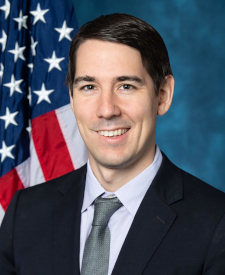
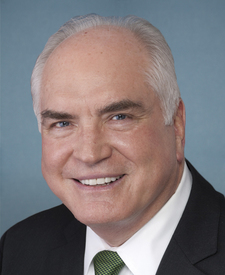
Mr. Harder of California (for himself and Mr. Kelly of …

Stakeholder Effects

cui bono?

How this legislation distributes effects. Mention counts reflect frequency, not effect magnitude.

Real Estate
8 mentions across 1 clause
+4 positive -4 negative

Applicants documenting zone benefits, Existing grantees competing for fixed funds, Housing applicants serving non-zone communities

Positive-direction: Housing developers serving opportunity zones, Opportunity-zone residents, Property owners near funded zone projects, Public housing agencies serving opportunity zones

Negative-direction: Applicants documenting zone benefits, Existing grantees competing for fixed funds, Housing applicants serving non-zone communities, Low-income communities outside opportunity zones

Government
2 mentions across 1 clause
-2 negative

HUD grant-design staff, HUD project-benefit reviewers

State & Local Government
1 mention across 1 clause
+1 positive

Local governments sponsoring zone projects

Nonprofits
1 mention across 1 clause
+1 positive

Nonprofit housing organizations serving zones

Construction
1 mention across 1 clause
+1 positive

Construction contractors on preferred projects

1/1
sections analyzed
Full impact breakdown

Bill Structure & Actor Mappings

Who is "The Secretary" in each section?

Domains
Housing Grants Opportunity Zones Community Development HUD Competitive Awards Affordable Housing Investment
Actor Mappings
"resident"
→ Resident of a qualified opportunity zone
"reviewer"
→ HUD official evaluating substantial direct benefit
"grant_official"
→ Secretary of Housing and Urban Development
"outside_applicant"
→ Housing applicant serving a non-zone community
"preferred_applicant"
→ Housing grant applicant serving an opportunity zone

Note: {'scope_ids': ['opportunity_zone_housing_grant_weight'], 'description': 'The preference is discretionary, applies only to HUD-determined competitive housing grants, and does not guarantee selection, create eligibility, reserve funds, or benefit a low-income community lacking qualified opportunity-zone status.'}

Key Definitions

Terms defined in this bill

3 terms
"covered grant" §covered_grant

A HUD-determined competitive grant related to construction, modification, rehabilitation, or preservation of housing.

"additional weight" §additional_weight

A discretionary scoring preference HUD may apply without guaranteeing an award or establishing a fixed set-aside.

"preferred opportunity-zone project" §preferred_project

A proposed activity located in, or substantially and directly benefiting, a qualified opportunity zone.

We use a combination of our own taxonomy and classification in addition to large language models to assess meaning and potential beneficiaries. High confidence means strong textual evidence. Always verify with the original bill text.

Learn more about our methodology