Stop Sexually Violent Predators Act
Summary
What This Bill Does
The Stop Sexually Violent Predators Act requires each jurisdiction participating in the relevant Adam Walsh Act program to submit an annual list to the Attorney General identifying people convicted of a sexually dangerous offense during the previous fiscal year. The Attorney General must review the list to determine whether each convicted person should be prosecuted for a federal offense. Review does not itself establish guilt or require prosecution.
The bill creates separate health-benefit restrictions for a "specified individual," meaning a person convicted of a sexually violent offense who has also been determined to be a sexually dangerous person under the Act. States may not receive federal Medicaid matching payments for medical assistance furnished to such a person. The person is also deemed ineligible for Medicare Part A hospital insurance and Part B supplementary medical insurance.
Those Medicaid and Medicare restrictions do not apply while the person is an inpatient of a hospital or skilled nursing facility receiving involuntary treatment. The bill also requires sex-offender registry information to include information about any relevant court case. It does not terminate every form of health coverage, require a federal prosecution, or apply the benefit bar based on conviction alone without the additional dangerous-person determination.
Who Benefits and How
The Justice Department receives standardized state lists for prosecution screening. Federal prosecutors and investigators gain leads, while registry users gain relevant court-case information. Public-safety agencies may identify qualifying offenders more readily. Federal Medicare and Medicaid accounts avoid payments for the newly excluded population.
Who Bears the Burden and How
Specified individuals lose Medicare eligibility and access to federally matched Medicaid assistance outside the involuntary-inpatient exception. States must compile lists, update registries, identify affected beneficiaries, and either stop assistance or finance it without federal matching. CMS must coordinate eligibility and payment denials. Hospitals and clinicians may face uncompensated care, and the Attorney General must review every submitted name for possible prosecution.
Key Provisions
- Requires states to submit annual conviction lists to the Attorney General.
- Directs the Attorney General to review each listed person for federal prosecution.
- Prohibits federal Medicaid matching for specified individuals.
- Bars specified individuals from Medicare Part A eligibility.
- Bars specified individuals from Medicare Part B eligibility.
- Protects involuntary inpatient treatment through a statutory exception.
- Defines specified individuals using conviction and dangerousness findings.
- Expands registry information to include relevant court cases.
- Provides no automatic federal prosecution from list placement.
Evidence Chain:
This summary is generated from the full bill text using AI analysis. Expand "Detailed Analysis" below for identified beneficiaries/burden bearers with clause-level evidence links.
At a Glance
What This Bill Does
Requires annual state reporting and Attorney General review of people convicted of sexually dangerous offenses, denies federal Medicaid matching and Medicare Part A and B eligibility to specified sexually dangerous persons except during involuntary inpatient treatment, and adds relevant court cases to sex-offender registry information.
Key Policy Areas
Sex Offender Registration, Federal Criminal Prosecution, Medicaid Federal Matching, Medicare Eligibility, Public Safety Information
Primary Purpose
Requires annual state reporting and Attorney General review of people convicted of sexually dangerous offenses, denies federal Medicaid matching and Medicare Part A and B eligibility to specified sexually dangerous persons except during involuntary inpatient treatment, and adds relevant court cases to sex-offender registry information.
Policy Domains
Section 2 reporting, prosecution review, benefit bars, and registry data
Identified Gains
- Justice Department prosecutors receiving annual lists
- Federal investigators reviewing dangerous-person cases
- Sex offender registry users receiving court information
- Public safety agencies identifying specified individuals
- Federal Medicaid accounts avoiding matching payments
- Medicare accounts avoiding covered payments
- Involuntary-treatment patients retaining an exception
Identified Costs
- Specified individuals losing Medicare eligibility
- Specified individuals losing matched Medicaid assistance
- State agencies compiling annual conviction lists
- State Medicaid programs replacing federal funds
- CMS staff enforcing benefit exclusions
- Hospitals absorbing uncompensated treatment costs
- Attorney General staff reviewing prosecution referrals
- Registry administrators adding court-case information
Sponsors
Legislative Progress
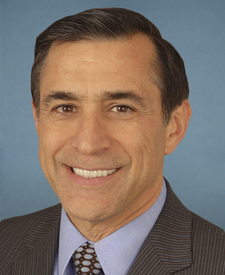
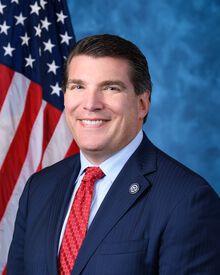
In CommitteeMr. Issa (for himself and Mr. Obernolte) introduced the following …
Referred to the Committee on the Judiciary, and in addition …
Introduced in House
Stakeholder Effects
cui bono?How this legislation distributes effects. Mention counts reflect frequency, not effect magnitude.
Attorney General review staff, CMS eligibility-system staff, Federal Medicaid matching accounts
Positive-direction: Federal Medicaid matching accounts, Federal criminal investigators, Justice Department prosecutors, Medicare program accounts
Negative-direction: Attorney General review staff, CMS eligibility-system staff
Public safety agencies, Sex offender registry administrators, State Medicaid programs
Positive-direction: Public safety agencies
Negative-direction: Sex offender registry administrators, State Medicaid programs, State conviction-list administrators
Specified individuals seeking Medicaid assistance, Specified individuals seeking Medicare coverage, Specified inpatients receiving involuntary treatment
Positive-direction: Specified inpatients receiving involuntary treatment
Negative-direction: Specified individuals seeking Medicaid assistance, Specified individuals seeking Medicare coverage
Families financing excluded medical care, Sex offender registry users
Positive-direction: Sex offender registry users
Negative-direction: Families financing excluded medical care
Bill Structure & Actor Mappings
Who is "The Secretary" in each section?
- "provider"
- → Hospital treating a specified individual
- "reporter"
- → State official submitting annual conviction lists
- "reviewer"
- → Attorney General reviewing listed individuals
- "administrator"
- → CMS official enforcing Medicare and Medicaid restrictions
- "affected_person"
- → Specified individual subject to health-benefit restrictions
Note: {'scope_ids': ['sexually_dangerous_person_reporting_benefits'], 'description': 'The health restrictions require both a sexually violent offense conviction and a dangerous-person determination, preserve involuntary inpatient treatment, and affect federal Medicaid matching plus Medicare Parts A and B rather than every possible health benefit.'}
Key Definitions
Terms defined in this bill
A state submission naming individuals convicted of sexually dangerous offenses during the previous fiscal year for Attorney General review.
An exception preserving the health-benefit rules while a specified individual is hospitalized or in a skilled nursing facility for involuntary treatment.
A person convicted of a sexually violent offense and determined to be a sexually dangerous person under the Adam Walsh Act.
We use a combination of our own taxonomy and classification in addition to large language models to assess meaning and potential beneficiaries. High confidence means strong textual evidence. Always verify with the original bill text.
Learn more about our methodology