HR7681-119

In Committee

HSA’s For All Act

119th Congress Introduced Feb 25, 2026

Summary

What This Bill Does

The HSA's For All Act rewrites health savings account eligibility. For taxable years beginning after December 31, 2026, an individual is eligible for a month when covered on the first day of that month by a covered health plan.

A covered health plan is either a qualified health plan offered through an Affordable Care Act Exchange or a group health plan under the Public Health Service Act. The bill replaces references to high-deductible health plans throughout the HSA statute and related IRA-transfer rules, removes the old high-deductible-plan definition, renumbers remaining definitions, and makes conforming inflation-adjustment edits.

The change allows eligible people with lower-deductible Exchange or employer plans to contribute to HSAs and receive existing HSA tax treatment. It does not make an uninsured person eligible, include every off-Exchange individual plan in the stated definition, change the contribution limits in this text, or provide a refundable contribution to people unable to save.

Who Benefits and How

Employees in conventional group plans and consumers with Exchange qualified plans gain access to deductible or excluded HSA contributions, tax-free growth, and qualifying medical withdrawals under existing law. Employers can offer HSAs alongside more plan designs. HSA banks, custodians, investment managers, and benefit administrators gain accounts and assets.

Who Bears the Burden and How

Federal income-tax receipts decline as more people use HSA exclusions and deductions. IRS, employers, payroll providers, and custodians must update eligibility and reporting systems. People without Exchange or group coverage remain excluded, and lower-income households may gain little if they cannot afford contributions. Existing HSA providers must handle a larger and more varied covered population.

Key Provisions

  • Expands HSA eligibility beyond high-deductible plans.
  • Includes ACA Exchange qualified health plans.
  • Includes group health plans.
  • Requires coverage on the first day of the month.
  • Replaces high-deductible-plan references throughout the HSA statute.
  • Repeals the old high-deductible-plan definition.
  • Amends related IRA-transfer and inflation provisions.
  • Applies to taxable years beginning after 2026.

Evidence Chain:

This summary is generated from the full bill text using AI analysis. Expand "Detailed Analysis" below for identified beneficiaries/burden bearers with clause-level evidence links.

At a Glance

What This Bill Does

Expands health savings account eligibility beginning in 2027 from people with high-deductible health plans to anyone covered on the first day of the month by an ACA Exchange qualified health plan or a group health plan, with conforming tax-code changes.

Key Policy Areas

Health Savings Accounts, Employer Health Plans, ACA Marketplace Coverage, Health Tax Benefits, Consumer Health Finance

Primary Purpose

Expands health savings account eligibility beginning in 2027 from people with high-deductible health plans to anyone covered on the first day of the month by an ACA Exchange qualified health plan or a group health plan, with conforming tax-code changes.

Policy Domains

Health Savings Accounts Employer Health Plans ACA Marketplace Coverage Health Tax Benefits Consumer Health Finance

Section 2 expansion of health savings account eligibility

Identified Gains
  • Employees with lower-deductible group plans
  • Exchange enrollees gaining HSA eligibility
  • Employers offering HSAs with broader plans
  • HSA custodians opening new accounts
  • Investment managers receiving HSA assets
  • Benefit administrators serving expanded eligibility
  • Households seeking tax-advantaged medical savings
Model: codex-gpt-5 | Version: bill_summary_v2 | Source: ih
HSA custodians opening new accounts:
Investment managers receiving HSA assets:
Employers offering HSAs with broader plans:
Exchange enrollees gaining HSA eligibility:
Employees with lower-deductible group plans:
Households seeking tax-advantaged medical savings:
Benefit administrators serving expanded eligibility:
Identified Costs
  • Federal individual-income-tax accounts
  • IRS HSA eligibility administrators
  • Employer payroll reporting teams
  • HSA custodians updating eligibility systems
  • Uninsured people remaining ineligible
  • Off-Exchange individual-plan enrollees outside coverage
  • Low-income households unable to fund accounts
Model: codex-gpt-5 | Version: bill_summary_v2 | Source: ih
Employer payroll reporting teams:
IRS HSA eligibility administrators:
Uninsured people remaining ineligible:
Federal individual-income-tax accounts:
HSA custodians updating eligibility systems:
Low-income households unable to fund accounts:
Off-Exchange individual-plan enrollees outside coverage:

Legislative Progress

In Committee
Introduced Committee Passed
Feb 25, 2026

Referred to the House Committee on Ways and Means.

Feb 25, 2026

Introduced in House

Feb 25, 2026

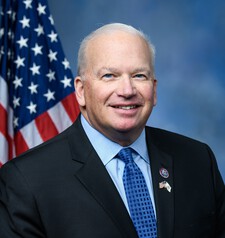
Mr. Bean of Florida (for himself, Mr. Barrett, and Mr. …

Stakeholder Effects

cui bono?

How this legislation distributes effects. Mention counts reflect frequency, not effect magnitude.

Financial Services
7 mentions across 1 clause
+7 positive

Employees with lower-deductible group plans, Exchange enrollees gaining HSA eligibility, HSA custodians opening new accounts

Small Business
2 mentions across 1 clause
+2 positive

Employer payroll reporting teams, Employers offering HSAs with broader plans

Low-Income Households
2 mentions across 1 clause
+2 positive

Households seeking tax-advantaged medical savings, Low-income households unable to fund accounts

Government
2 mentions across 1 clause
+2 positive

Federal individual-income-tax accounts, IRS HSA eligibility administrators

Employee Benefits
1 mention across 1 clause
+1 positive

Benefit administrators serving expanded eligibility

1/2
sections analyzed
Full impact breakdown

Bill Structure & Actor Mappings

Who is "The Secretary" in each section?

Domains
Health Savings Accounts Employer Health Plans ACA Marketplace Coverage Health Tax Benefits Consumer Health Finance
Actor Mappings
"employer"
→ Employer sponsoring a group health plan
"custodian"
→ Financial institution administering health savings accounts
"administrator"
→ Secretary of the Treasury acting through IRS
"excluded_person"
→ Individual lacking a statutorily covered health plan
"eligible_individual"
→ Individual covered by an Exchange or group health plan

Note: {'scope_ids': ['broad_hsa_eligibility'], 'description': 'The expansion covers Exchange qualified plans and group plans, not uninsured individuals or every off-Exchange individual plan, and it preserves existing contribution limits rather than creating a refundable federal deposit.'}

Key Definitions

Terms defined in this bill

3 terms
"effective taxable year" §effective_year

A taxable year beginning after December 31, 2026.

"covered health plan" §covered_health_plan

An ACA Exchange qualified health plan or a group health plan under the Public Health Service Act.

"eligible individual" §eligible_individual

An individual covered by a covered health plan on the first day of the month.

We use a combination of our own taxonomy and classification in addition to large language models to assess meaning and potential beneficiaries. High confidence means strong textual evidence. Always verify with the original bill text.

Learn more about our methodology