Preventing Research Ownership Transfer to External Competitive Threats (PROTECT) Act of 2026
Summary
What This Bill Does
This bill blocks U.S. university research ownership transfers to governments of prohibited nations. It defines covered research broadly to include research, inventions, discoveries, and intellectual property developed or conducted by a U.S. university or its affiliated faculty, staff, or students. It then bars contracts, licenses, sales, transfers, or other transactions that grant intellectual property rights in that research to covered foreign governments. Prohibited nations include Russia, China, Iran, nations in armed conflict with the United States, nations supporting foreign terrorist organizations, State Sponsors of Terrorism, and any other nation the Secretary of State determines threatens U.S. national security.
Who Benefits and How
U.S. national-security agencies, research sponsors, university technology-transfer offices, and taxpayers benefit because federally connected university research is less likely to be conveyed to hostile foreign governments. The United States Government also gains forfeiture authority over money or consideration universities receive from prohibited transfers.
Who Bears the Burden and How
United States universities, university faculty members, university staff members, and university students must avoid transactions that convey covered research IP rights to covered foreign governments. Violating universities face civil penalties of up to $500,000 per violation, or up to $5 million when national security, critical energy, or defense research is affected, plus seizure and forfeiture of received consideration. The Secretary of State must make threat and research determinations, and the Attorney General must enforce penalties.
Key Provisions
- Defines covered research, covered foreign government, intellectual property rights, prohibited nation, designated foreign terrorist organization, and United States university.
- Prohibits U.S. universities and affiliated faculty, staff, and students from granting covered research IP rights to covered foreign governments.
- Blocks transfers involving Russia, China, Iran, armed-conflict nations, terrorist-organization supporters, State Sponsors of Terrorism, and other State Department-designated threats.
- Requires civil penalties up to $500,000 per violation or $5 million for national-security, critical-energy, or defense research violations.
- Limits judicial review of State Department determinations while preserving constitutionally required review for colorable constitutional claims.
Evidence Chain:
This summary is generated from the full bill text using AI analysis. Expand "Detailed Analysis" below for identified beneficiaries/burden bearers with clause-level evidence links.
At a Glance
What This Bill Does
Prohibits U.S. universities and affiliated faculty, staff, and students from transferring intellectual property rights in covered research to prohibited foreign governments, backed by civil penalties and forfeiture.
Key Policy Areas
Education, Research & Science, Intellectual Property, National Security
Primary Purpose
Prohibits U.S. universities and affiliated faculty, staff, and students from transferring intellectual property rights in covered research to prohibited foreign governments, backed by civil penalties and forfeiture.
Policy Domains
Substantive provisions
Identified Gains
- United States research sponsors
- University technology transfer offices
- Department of State
- Department of Justice
Identified Costs
- United States universities
- University faculty members
- University staff members
- University students
- Covered foreign governments
Sponsors

Legislative Progress
In CommitteeReferred to the House Committee on Education and Workforce.
Introduced in House
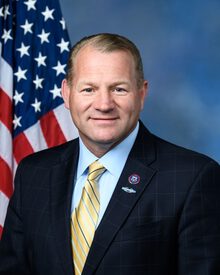
Mr. Nehls (for himself and Mr. Gill of Texas) introduced …
Stakeholder Effects
cui bono?How this legislation distributes effects. Mention counts reflect frequency, not effect magnitude.
United States universities, University faculty members, University staff members
Department of Justice, Department of State, Federal courts
Department of State faces effects in multiple directions
Positive-direction: Federal courts
Negative-direction: Department of Justice
Covered foreign governments, Islamic Republic of Iran government, People's Republic of China government
Bill Structure & Actor Mappings
Who is "The Secretary" in each section?
- "attorney_general"
- → Attorney General
- "secretary_of_state"
- → Secretary of State
- "covered_foreign_government"
- → Government, agency, instrumentality, or controlled entity of a prohibited nation
We use a combination of our own taxonomy and classification in addition to large language models to assess meaning and potential beneficiaries. High confidence means strong textual evidence. Always verify with the original bill text.
Learn more about our methodology