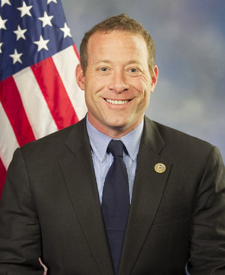
HR7506-119

In Committee

Decreasing Russian Oil Profits Act of 2026

119th Congress Introduced Feb 11, 2026

Summary

What This Bill Does

This bill makes Russian-origin petroleum trade a sanctions trigger. Starting 90 days after enactment, the President must block property under the International Emergency Economic Powers Act for foreign persons the Treasury Secretary, in consultation with the State Department, determines bought or imported Russian crude oil or petroleum products, facilitated related financial transactions, materially supported those activities, or served as a chief executive officer or board member of a covered entity. The bill permits no more than two exception types: a certified local-country account used only for food, agricultural, medicine, or medical-device transactions while purchases fall significantly, and a per-barrel payment account for Ukraine.

Who Benefits and How

Ukraine benefits because one exception channels per-barrel payments into an account for REPO for Ukrainians Act purposes and defense-article purchases, with significant disbursements at least every 90 days. U.S. sanctions agencies and congressional committees also get clearer statutory authority and notice around Russian oil revenue restrictions.

Who Bears the Burden and How

Foreign oil purchasers, petroleum traders, financial intermediaries, corporate officers, and board members face blocked-property sanctions if they buy, import, finance, or materially support Russian-origin petroleum trade outside the exceptions. Treasury, State, and the President must administer determinations, written certifications, guidance, implementation tools, and congressional notifications.

Key Provisions

  • Requires the President to impose IEEPA blocking sanctions 90 days after enactment on covered Russian-origin petroleum trade.
  • Covers foreign purchasers, importers, financial facilitators, material supporters, chief executive officers, and board members tied to sanctioned petroleum activity.
  • Allows a certified escrow-style exception for food, agricultural commodities, medicine, or medical devices only if the country significantly reduces Russian petroleum purchases.
  • Allows a Ukraine-payment exception when a per-barrel payment is deposited into an account benefiting Ukraine and used for REPO for Ukrainians Act purposes or defense articles.
  • Requires recurring certifications, State Department notifications, and private-sector guidance to verify qualifying Ukraine-account payments.

Evidence Chain:

This summary is generated from the full bill text using AI analysis. Expand "Detailed Analysis" below for identified beneficiaries/burden bearers with clause-level evidence links.

At a Glance

What This Bill Does

Requires sanctions on foreign persons involved in purchases, imports, financing, or support for Russian-origin crude oil and petroleum products, while allowing narrow escrow and Ukraine-payment exceptions.

Key Policy Areas

Trade, Energy, Foreign Policy, National Security

Primary Purpose

Requires sanctions on foreign persons involved in purchases, imports, financing, or support for Russian-origin crude oil and petroleum products, while allowing narrow escrow and Ukraine-payment exceptions.

Policy Domains

Trade Energy Foreign Policy National Security

Substantive provisions

Identified Gains
  • Government of Ukraine
  • Department of the Treasury
  • Department of State
  • Congressional sanctions committees
Model: codex-gpt-5 | Version: bill_summary_v2 | Source: ih
Department of State:
Government of Ukraine:
Department of the Treasury:
Congressional sanctions committees:
Identified Costs
  • Foreign oil purchasers
  • Russian petroleum exporters
  • Financial institutions facilitating Russian petroleum trade
  • Corporate officers of sanctioned petroleum entities
Model: codex-gpt-5 | Version: bill_summary_v2 | Source: ih
Foreign oil purchasers:
Russian petroleum exporters:
Corporate officers of sanctioned petroleum entities:
Financial institutions facilitating Russian petroleum trade:

Legislative Progress

In Committee
Introduced Committee Passed
Feb 11, 2026

Referred to the House Committee on Foreign Affairs.

Feb 11, 2026

Introduced in House

Feb 11, 2026

Mr. McCaul (for himself, Mr. Keating, Mr. Lawler, Ms. Kaptur, …

Stakeholder Effects

cui bono?

How this legislation distributes effects. Mention counts reflect frequency, not effect magnitude.

Foreign Entities
2 mentions across 1 clause
+1 positive -1 negative

Foreign oil purchasers, Government of Ukraine

Positive-direction: Government of Ukraine

Negative-direction: Foreign oil purchasers

Government
2 mentions across 1 clause
-2 negative

Department of State, Department of the Treasury

Oil & Gas
1 mention across 1 clause
-1 negative

Russian petroleum exporters

Financial Services
1 mention across 1 clause
-1 negative

Financial institutions facilitating Russian petroleum trade

1/2
sections analyzed
Full impact breakdown

Bill Structure & Actor Mappings

Who is "The Secretary" in each section?

Domains
Trade Energy Foreign Policy National Security
Actor Mappings
"president"
→ President of the United States
"state_secretary"
→ Secretary of State
"treasury_secretary"
→ Secretary of the Treasury
"appropriate_congressional_committees"
→ Congressional committees overseeing sanctions and foreign affairs

We use a combination of our own taxonomy and classification in addition to large language models to assess meaning and potential beneficiaries. High confidence means strong textual evidence. Always verify with the original bill text.

Learn more about our methodology