Rebuild America’s Schools Act of 2026
Summary
What This Bill Does
This bill is a large school facilities package. Title I authorizes $20 billion for each fiscal year 2027 through 2031, available through fiscal year 2036, for long-term improvements to public school facilities. The Department of Education would allocate funds to states using Title I-A shares, reserve 0.5 percent for outlying areas and 0.5 percent for Bureau-funded schools, require state plans, allow state administrative reservations up to 5 percent, and require need-based grants to qualified local educational agencies serving high-poverty students, schools with severe health and safety threats, schools with limited bonding capacity, and schools needing broadband for digital learning. Title II revives qualified zone academy bonds at $1.4 billion annually from 2027 onward and creates school infrastructure bonds with 100 percent tax credits for interest, a $10 billion national bond limitation for each calendar year 2027, 2028, and 2029, six-year expenditure rules, allocations for possessions and Bureau of Indian Affairs schools, and Treasury reporting. Title III defines allowed school projects, bars routine maintenance, vehicles, central offices, fee-charging athletic facilities, and certain for-profit charter facilities, and imposes building-code, energy, water, green-building, and American iron, steel, and manufactured-product requirements. Later titles create federal school-facility reporting, an Office of School Infrastructure and Sustainability, data standards, an energy-financing clearinghouse, $100 million per year in Impact Aid construction authorization for 2027 through 2031, and grants for pyrrhotite-damaged school foundations with federal and state cost shares.
Who Benefits and How
Public school students, low-income students, students with disabilities, rural students, Bureau-funded schools, Indian Tribes, outlying areas, qualified local educational agencies, Impact Aid school districts, and pyrrhotite-affected schools benefit from capital grants, bond financing, foundation repair aid, safer facilities, broadband, cleaner air, accessibility upgrades, and energy or water savings. Construction contractors, qualified foundation contractors, professional engineers, domestic steel manufacturers, domestic building-product manufacturers, energy retrofit contractors, small businesses, minority-owned businesses, veteran-owned businesses, and women-owned businesses benefit from school construction and reporting attention to contract awards.
Who Bears the Burden and How
State educational agencies, local educational agencies, the Department of Education, the Interior Department, the Treasury Department, IRS, GAO, the Institute of Education Sciences, EPA, DOE, CDC, NIOSH, and new Education Department school-infrastructure staff must administer allocations, review state plans and applications, maintain facility databases, report project demographics and contracts, apply Buy America waivers, conduct national studies, and operate clearinghouses. Federal taxpayers and state taxpayers bear the funding cost, while for-profit charter school operators, charter-school facility landlords, foreign construction-material suppliers, vehicle purchases, central-office projects, and fee-charging athletic facilities are excluded or disadvantaged.
Key Provisions
- Authorizes $20 billion per year for fiscal years 2027 through 2031 for state-administered public school facility grants, with reservations for outlying areas and Bureau-funded schools.
- Revives qualified zone academy bonds at $1.4 billion annually and creates school infrastructure bonds with 100 percent interest tax credits and $10 billion annual national limits for 2027 through 2029.
- Requires need-based grants to prioritize high-poverty local educational agencies, schools with severe health and safety threats, limited capital-raising capacity, broadband gaps, and free-or-reduced-price lunch thresholds.
- Limits grant uses to school facility construction, renovation, retrofit, broadband, safety, accessibility, energy, water, air-quality, toxic-substance, and community-service projects while excluding routine maintenance, vehicles, central offices, fee-charging athletic facilities, and certain for-profit charter facilities.
- Requires federal reporting, GAO and IES studies, an Education Department school-infrastructure office, data standards, an energy-financing clearinghouse, $100 million per year in Impact Aid construction funding, and grants for pyrrhotite-damaged school foundations.
Evidence Chain:
This summary is generated from the full bill text using AI analysis. Expand "Detailed Analysis" below for identified beneficiaries/burden bearers with clause-level evidence links.
At a Glance
What This Bill Does
Creates a national school-infrastructure program combining $20 billion per year in Education Department grants, revived tax-credit bond financing, domestic-content and green-building rules, federal data infrastructure, Impact Aid construction funding, and pyrrhotite foundation repair grants.
Key Policy Areas
Education, Infrastructure, Tax, Environment, Government Oversight
Primary Purpose
Creates a national school-infrastructure program combining $20 billion per year in Education Department grants, revived tax-credit bond financing, domestic-content and green-building rules, federal data infrastructure, Impact Aid construction funding, and pyrrhotite foundation repair grants.
Policy Domains
Substantive provisions
Identified Gains
- Public school students
- Low-income students
- Students with disabilities
- Rural students
- Bureau-funded schools
- Indian Tribes
- Qualified local educational agencies
- Impact Aid school districts
- Pyrrhotite-affected schools
- Construction contractors
- Domestic steel manufacturers
Identified Costs
- State educational agencies
- Local educational agencies
- Department of Education
- Interior Department
- Treasury Department
- IRS
- GAO
- Institute of Education Sciences
- EPA
- DOE
- CDC
- NIOSH
- Federal taxpayers
- State taxpayers
- For-profit charter school operators
Sponsors
Legislative Progress
In CommitteeReferred to the Committee on Education and Workforce, and in …
Introduced in House
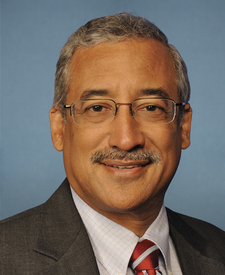
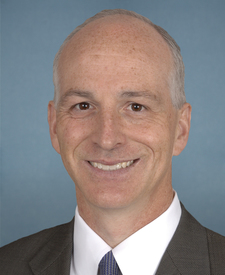
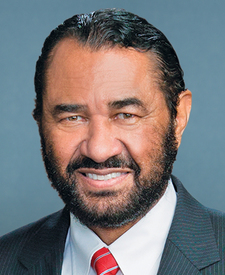
Mr. Scott of Virginia (for himself, Mr. Norcross, Mr. Smith …
Stakeholder Effects
cui bono?How this legislation distributes effects. Mention counts reflect frequency, not effect magnitude.
Athletic facility projects, Department of Education, For-profit charter school operators
Department of Education, Local educational agencies face effects in multiple directions
Positive-direction: High-need schools, Impact Aid school districts, Low-income students, Office of School Infrastructure, Public school students, Pyrrhotite-affected schools, Qualified local educational agencies, Qualified zone academy bond issuers, Rural schools, Students with disabilities
Negative-direction: Athletic facility projects, For-profit charter school operators, Institute of Education Sciences
School infrastructure bond issuers, State educational agencies, State grant agencies
State educational agencies faces effects in multiple directions
Positive-direction: School infrastructure bond issuers, States
Negative-direction: State grant agencies
Congress, FEMA, GAO
Positive-direction: Congress, Outlying areas
Negative-direction: GAO, IRS, Interior Department, Treasury Department
Bureau-funded schools, Indian Tribes, Indian tribal governments
DOE, Energy retrofit contractors
Positive-direction: Energy retrofit contractors
Negative-direction: DOE
Domestic building product manufacturers, Domestic steel manufacturers, Vehicle vendors
Positive-direction: Domestic building product manufacturers, Domestic steel manufacturers, WaterSense product manufacturers
Negative-direction: Vehicle vendors
Bill Structure & Actor Mappings
Who is "The Secretary" in each section?
- "Secretary"
- → Secretary of Education unless a title assigns the role to Treasury or Interior
- "Comptroller General"
- → Comptroller General of the United States
- "Secretary of the Interior"
- → Interior Department
- "Secretary of the Treasury"
- → Treasury Department
Key Definitions
Terms defined in this bill
Funds received under Title I, from a school infrastructure bond, or from a qualified zone academy bond.
A school with a concrete foundation containing pyrrhotite that a qualified engineer finds structurally unsound or likely to become unsound within five years.
A bond whose proceeds are used for allowed Rebuild America school facility projects and whose holder receives federal tax credits for interest.
We use a combination of our own taxonomy and classification in addition to large language models to assess meaning and potential beneficiaries. High confidence means strong textual evidence. Always verify with the original bill text.
Learn more about our methodology