Cost of Police Misconduct Act of 2026
Summary
What This Bill Does
The Cost of Police Misconduct Act creates a detailed public reporting system for law-enforcement misconduct costs. The Attorney General must identify all federal law enforcement agencies and publish the list annually. Federal agencies must collect yearly data on judgments and settlements involving misconduct allegations, including demographics, allegation type, personnel actions, payment amounts, funding sources, injunctive relief, and total agency payments, then report it to DOJ. State and local governments receiving Byrne JAG funds must collect substantially similar data for their law enforcement agencies, disclose payment sources such as operating budgets, agency budgets, bonds, insurance, and risk pools, publish the information locally, and report it to DOJ. Noncompliant State or local recipients can lose up to 10 percent of Byrne JAG funds, COPS on the Beat funds, or both, with money reallocated to compliant recipients. DOJ must verify submissions with open-source data when practicable, create a public searchable database within one year, and report annually; GAO must study two full years of data and report publicly after the third year begins.
Who Benefits and How
Civil rights organizations, journalists, taxpayers, and community members benefit because settlement and judgment costs, allegation types, payment sources, and agency responses become easier to compare across federal, State, and local law enforcement agencies. Victims of misconduct and their attorneys benefit from public data on patterns of force, racial profiling, negligence, sexual harassment or assault, false testimony, wrongful death, failure to intervene, and wrongful imprisonment. Compliant States and local governments benefit because reallocated Byrne JAG or COPS funds can flow away from noncompliant jurisdictions. Congress and GAO benefit from standardized data for oversight and recommendations to reduce misconduct costs.
Who Bears the Burden and How
Federal law enforcement agencies must collect and report detailed yearly misconduct judgment and settlement data to DOJ. State and local governments receiving Byrne JAG funds must collect agency-level data, disclose insurance, bond, budget, and risk-pool payment sources, submit reports within 60 days after each year, and publish the information on their own websites within 30 days after submitting to DOJ. The Attorney General must issue guidelines, manage extensions, verify data, create and update a public searchable database without officer personally identifiable information, and prepare annual reports. Noncompliant grant recipients risk up to 10 percent reductions in Byrne JAG or COPS funds, and GAO must perform a multi-year study and public report.
Key Provisions
- Requires federal law enforcement agencies to collect and report misconduct judgment and settlement data to the Attorney General each year.
- Requires Byrne JAG State and local recipients to collect, submit, and publicly post substantially similar law-enforcement misconduct cost data.
- Provides up to 10 percent Byrne JAG or COPS funding reductions for noncompliant State or local governments and reallocates withheld funds to compliant recipients.
- Directs DOJ to create a public searchable database and GAO to study two full years of misconduct-cost data and report publicly.
Evidence Chain:
This summary is generated from the full bill text using AI analysis. Expand "Detailed Analysis" below for identified beneficiaries/burden bearers with clause-level evidence links.
At a Glance
What This Bill Does
Requires federal, State, and local law-enforcement misconduct judgment and settlement reporting, public DOJ and local websites, a searchable DOJ database, GAO review, and possible Byrne JAG or COPS funding reductions for noncompliant State or local recipients.
Key Policy Areas
Law Enforcement, Government Oversight, Civil Rights
Primary Purpose
Requires federal, State, and local law-enforcement misconduct judgment and settlement reporting, public DOJ and local websites, a searchable DOJ database, GAO review, and possible Byrne JAG or COPS funding reductions for noncompliant State or local recipients.
Policy Domains
Substantive provisions
Identified Gains
- Civil rights organizations
- Journalists
- Taxpayers
- Misconduct victims
- Compliant Byrne JAG recipients
Identified Costs
- Federal law enforcement agencies
- State governments
- Local governments
- Department of Justice
- Government Accountability Office
Sponsors

Legislative Progress
In CommitteeReferred to the House Committee on the Judiciary.
Introduced in House
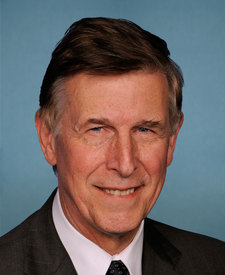
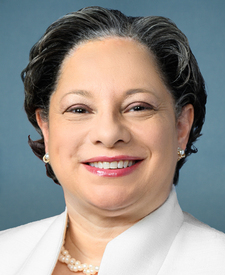
Mr. Beyer (for himself, Ms. McClellan, and Ms. Norton) introduced …
Stakeholder Effects
cui bono?How this legislation distributes effects. Mention counts reflect frequency, not effect magnitude.
Local governments, State governments
Department of Justice, Government Accountability Office
Bill Structure & Actor Mappings
Who is "The Secretary" in each section?
We use a combination of our own taxonomy and classification in addition to large language models to assess meaning and potential beneficiaries. High confidence means strong textual evidence. Always verify with the original bill text.
Learn more about our methodology