HR7238-119

In Committee

Commission on Equity and Reconciliation in the Uniformed Services Act

119th Congress Introduced Jan 23, 2026

Summary

What This Bill Does

The Commission on Equity and Reconciliation in the Uniformed Services Act creates a temporary federal commission focused on the uniformed services' treatment of sexual orientation and gender identity. The Commission must compile documentation on LGBTQ+ policing from World War II forward, including the history of policies and their effects on eligibility for Veterans Affairs benefits. It must hold public hearings, conduct outreach, gather anonymous and named testimony from LGBTQ+ servicemembers and veterans, examine physical and mental health impacts, long-term psychological, financial, and professional harms, suicidality, homelessness, disparate impacts on racial minorities and women, harms to people targeted because of perceived identity, dependent harms, denial of medically necessary care such as gender dysphoria treatment, force-readiness costs from separating people, and effects of demographic-marker changes in DOD and VA systems. The Commission has 15 members appointed by congressional committee leaders and the Secretaries of Defense, Veterans Affairs, Homeland Security, Commerce for NOAA, and HHS for the Public Health Service. It can hold hearings, request testimony and documents, invoke district court aid, obtain executive-branch information, hire staff and consultants, contract for research, receive GSA administrative support, and use appropriated sums until termination 90 days after the final report.

Who Benefits and How

LGBTQ+ servicemembers, LGBTQ+ veterans, veterans discharged because of sexual orientation, veterans discharged because of gender identity, dependents of affected servicemembers, civil-rights researchers, veterans advocates, and policymakers benefit from a formal record, public hearings, testimony collection, benefit-impact analysis, readiness-cost analysis, and recommendations that could support future benefit, discharge-review, health-care, or reconciliation policy. DOD, VA, DHS, NOAA, and Public Health Service appointees gain a structured venue to review agency history and current data gaps.

Who Bears the Burden and How

DOD personnel offices, VA benefits staff, uniformed service records offices, commission members, commission staff, GSA administrative staff, federal agencies holding relevant records, congressional appointing offices, and federal taxpayers face appointment, hearing, records-production, research, contracting, travel, compensation, report-writing, and appropriations burdens. Agencies may have to surface records and data about discriminatory policies, benefit denials, separations, health-care denials, and readiness costs.

Key Provisions

  • Establishes the Commission on Equity and Reconciliation in the Uniformed Services.
  • Requires documentation of sexual-orientation and gender-identity policing in the uniformed services from World War II onward.
  • Requires public hearings, community outreach, and testimony from LGBTQ+ servicemembers and veterans.
  • Directs examination of benefits access, mental health, homelessness, suicidality, professional harm, dependents, health-care denial, demographic data, and force-readiness costs.
  • Creates a 15-member appointment structure involving congressional leaders and Defense, VA, Homeland Security, Commerce, and HHS officials.
  • Authorizes hearings, document requests, district court aid, federal information access, staff, consultants, contracts, GSA support, and appropriations.
  • Terminates the Commission 90 days after submission of the final report.

Evidence Chain:

This summary is generated from the full bill text using AI analysis. Expand "Detailed Analysis" below for identified beneficiaries/burden bearers with clause-level evidence links.

At a Glance

What This Bill Does

Creates a 15-member Commission on Equity and Reconciliation in the Uniformed Services to document the policing of sexual orientation and gender identity from World War II onward, collect testimony from LGBTQ+ servicemembers and veterans, examine harms to benefits, health, careers, readiness, homelessness, suicidality, dependents, and demographic-data systems, hold public hearings, obtain federal records, hire staff and experts, contract for research, issue reports, and terminate 90 days after the final report.

Key Policy Areas

Defense, Veterans, Civil Rights

Primary Purpose

Creates a 15-member Commission on Equity and Reconciliation in the Uniformed Services to document the policing of sexual orientation and gender identity from World War II onward, collect testimony from LGBTQ+ servicemembers and veterans, examine harms to benefits, health, careers, readiness, homelessness, suicidality, dependents, and demographic-data systems, hold public hearings, obtain federal records, hire staff and experts, contract for research, issue reports, and terminate 90 days after the final report.

Policy Domains

Defense Veterans Civil Rights

Substantive provisions

Identified Gains
  • LGBTQ+ servicemembers
  • LGBTQ+ veterans
  • Veterans discharged for sexual orientation
  • Veterans discharged for gender identity
  • Dependents of affected servicemembers
  • Veterans advocates
Model: codex-gpt-5 | Version: bill_summary_v2 | Source: ih
LGBTQ+ veterans: , , , , ,
Veterans advocates: , , , , ,
LGBTQ+ servicemembers: , , , , ,
Dependents of affected servicemembers: , , , , ,
Veterans discharged for gender identity: , , , , ,
Veterans discharged for sexual orientation: , , , , ,
Identified Costs
  • DOD personnel offices
  • VA benefits staff
  • Uniformed service records offices
  • Commission members
  • Commission staff
  • GSA administrative staff
  • Federal taxpayers
Model: codex-gpt-5 | Version: bill_summary_v2 | Source: ih
Commission staff: , , , , ,
Federal taxpayers: , , , , ,
VA benefits staff: , , , , ,
Commission members: , , , , ,
DOD personnel offices: , , , , ,
GSA administrative staff: , , , , ,
Uniformed service records offices: , , , , ,

Legislative Progress

In Committee
Introduced Committee Passed
Jan 23, 2026

Referred to the Committee on Armed Services, and in addition …

Jan 23, 2026

Introduced in House

Jan 23, 2026

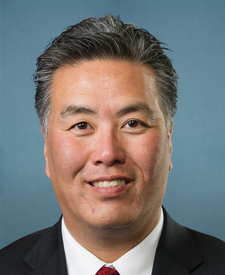
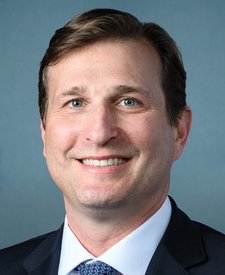
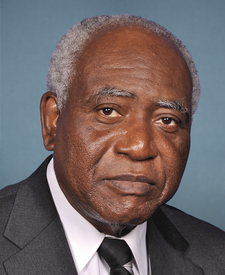
Mr. Takano (for himself, Ms. Norton, Mr. Peters, Mr. Pocan, …

Stakeholder Effects

cui bono?

How this legislation distributes effects. Mention counts reflect frequency, not effect magnitude.

Government
12 mentions across 6 clauses
+5 positive -7 negative

Commission members, Commission procurement staff, Commission staff

Commission members faces effects in multiple directions

Positive-direction: Commission staff, Congressional oversight committees

Negative-direction: Commission procurement staff, Congressional appointing offices, Federal agencies holding records, Federal district courts, GSA administrative staff

Veterans
5 mentions across 2 clauses
+3 positive -2 negative

LGBTQ+ veterans, VA Secretary staff, VA benefits staff

Positive-direction: LGBTQ+ veterans, Veterans discharged for gender identity, Veterans discharged for sexual orientation

Negative-direction: VA Secretary staff, VA benefits staff

Defense
4 mentions across 3 clauses
+1 positive -3 negative

DOD personnel offices, Defense Secretary staff, LGBTQ+ servicemembers

Positive-direction: LGBTQ+ servicemembers

Negative-direction: DOD personnel offices, Defense Secretary staff, Uniformed service records offices

Research & Science
3 mentions across 3 clauses
+3 positive

Civil-rights researchers, Research contractors

Taxpayers
3 mentions across 3 clauses
-3 negative

Taxpayers

6/8
sections analyzed
Full impact breakdown

Bill Structure & Actor Mappings

Who is "The Secretary" in each section?

Domains
Defense Veterans Civil Rights

We use a combination of our own taxonomy and classification in addition to large language models to assess meaning and potential beneficiaries. High confidence means strong textual evidence. Always verify with the original bill text.

Learn more about our methodology