PUBLIC SAFETY Act
Summary
What This Bill Does
The PUBLIC SAFETY Act amends Public Law 119-21 reconciliation funding. Section 2 changes a section heading from U.S. Immigration and Customs Enforcement to COPS Hiring Program, changes the recipient from the Secretary of Homeland Security for ICE to the Attorney General, and extends availability to September 30, 2030 for grants under the COPS Hiring Program's hiring and rehiring authorities. It waives the usual section 1701(g) requirements for local governments and Tribal governments that employ fewer than 175 law-enforcement officers, making small agencies eligible on easier terms. Section 3 rewrites a separate reconciliation section to appropriate $45 billion to the Attorney General for the Department of Justice in fiscal year 2025, available through September 30, 2029, for the Edward Byrne Memorial Justice Assistance Grant Program.
Who Benefits and How
Small local police departments, sheriffs' offices, municipal law-enforcement agencies, Tribal police departments, and local governments benefit because money that had been framed for ICE is redirected to COPS hiring grants with a waiver for agencies under 175 officers. State and local criminal-justice agencies benefit from the $45 billion Byrne JAG appropriation, which can support law enforcement, prosecution, prevention, corrections, technology, and other eligible public-safety uses under that program. The Department of Justice benefits from control over the appropriated funds through the Attorney General.
Who Bears the Burden and How
ICE and Department of Homeland Security enforcement priorities lose access to the redirected reconciliation funding. Federal taxpayers bear the cost of the $45 billion Byrne JAG appropriation and the COPS Hiring Program funds. Department of Justice grant staff must administer the COPS and Byrne JAG money, implement the waiver, track eligibility for small local and Tribal agencies, and oversee spending through 2029 or 2030. Local and Tribal grantees must comply with DOJ grant rules and reporting.
Key Provisions
- Amends reconciliation funding language to replace U.S. Immigration and Customs Enforcement with the COPS Hiring Program.
- Provides Attorney General administration in place of Secretary of Homeland Security administration.
- Extends COPS Hiring Program funding availability through September 30, 2030.
- Waives COPS requirements for local and Tribal jurisdictions employing fewer than 175 law-enforcement officers.
- Appropriates $45 billion for the Edward Byrne Memorial Justice Assistance Grant Program through September 30, 2029.
Evidence Chain:
This summary is generated from the full bill text using AI analysis. Expand "Detailed Analysis" below for identified beneficiaries/burden bearers with clause-level evidence links.
At a Glance
What This Bill Does
Redirects reconciliation funding from U.S. Immigration and Customs Enforcement to Department of Justice public-safety grants by converting one provision into COPS Hiring Program funding through September 30, 2030, waiving local-match rules for small local and Tribal law-enforcement agencies, and appropriating $45 billion for Byrne JAG grants through September 30, 2029.
Key Policy Areas
Law Enforcement, State & Local Government, Appropriations
Primary Purpose
Redirects reconciliation funding from U.S. Immigration and Customs Enforcement to Department of Justice public-safety grants by converting one provision into COPS Hiring Program funding through September 30, 2030, waiving local-match rules for small local and Tribal law-enforcement agencies, and appropriating $45 billion for Byrne JAG grants through September 30, 2029.
Policy Domains
Substantive provisions
Identified Gains
- Small local police departments
- Tribal police departments
- Local governments
- State justice agencies
- Department of Justice grant staff
- Byrne JAG recipients
Identified Costs
- U.S. Immigration and Customs Enforcement
- Department of Homeland Security budget staff
- Federal taxpayers
- Department of Justice grant staff
- Local grantees
Sponsors


Legislative Progress
In CommitteeReferred to the Committee on Appropriations, and in addition to …
Introduced in House
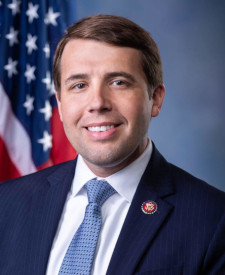
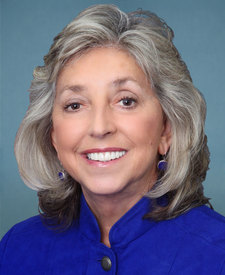
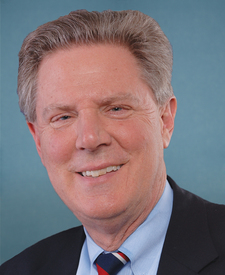
Mr. Pappas (for himself, Mr. Stanton, and Ms. Lee of …
Stakeholder Effects
cui bono?How this legislation distributes effects. Mention counts reflect frequency, not effect magnitude.
Byrne JAG recipients, Immigration and Customs Enforcement, Local law-enforcement agencies
Positive-direction: Byrne JAG recipients, Local law-enforcement agencies, Small local police departments
Negative-direction: Immigration and Customs Enforcement
Local governments, State justice agencies
Bill Structure & Actor Mappings
Who is "The Secretary" in each section?
We use a combination of our own taxonomy and classification in addition to large language models to assess meaning and potential beneficiaries. High confidence means strong textual evidence. Always verify with the original bill text.
Learn more about our methodology