Expanding AI Voices Act
Summary
What This Bill Does
The Expanding AI Voices Act amends the National AI Initiative Act to add a new expanding capacity in artificial intelligence subsection. The National Science Foundation Director, in consultation with appropriate federal agencies, must make competitive merit-reviewed awards to eligible institutions of higher education, eligible nonprofit organizations, or consortia. Eligible institutions include universities outside the average top 100 in federal research and development expenditures over the prior three years, historically Black colleges and universities, minority-serving institutions, Tribal Colleges and Universities, and consortia of those entities. Awardees may partner with higher-education institutions, nonprofits, federal agencies, State, local, Tribal, and territorial governments, private-sector entities, AI research institutes, and other NSF award recipients. Funds can support AI research programs, faculty recruitment, faculty professional development, bridge programs for post-baccalaureate students, access to computing and data resources, software engineering support, public-private community building, workshops, responsible and ethical AI education, and other AI workforce pathways. NSF must conduct outreach to eligible institutions and nonprofits, engage all regions of the country, especially underserved communities and STEM-underrepresented groups, avoid duplication with existing programs, and may consider student diversity, geographic diversity, and resource constraints.
Who Benefits and How
HBCUs, minority-serving institutions, Tribal Colleges, regional universities outside the top 100 research spenders, eligible nonprofits, first-generation students, underserved communities, and underrepresented STEM students benefit from new AI capacity-building awards. Faculty and post-baccalaureate students benefit from recruitment, professional development, bridge programs, computing resources, and AI research partnerships. AI research institutes, federal laboratories, private companies, and public agencies benefit from broader partnership networks and a more diverse AI workforce pipeline.
Who Bears the Burden and How
National Science Foundation program staff must design the award competition, conduct outreach, apply merit review, avoid duplication with existing awards, and assess geographic, diversity, and resource-constraint factors. Applicant institutions and nonprofits must prepare proposals, manage consortia, document eligible activities, and comply with award rules. Established research universities could face more competition for AI partnerships or see capacity-building funds steered toward historically under-resourced institutions. Federal taxpayers bear the cost of any appropriated awards.
Key Provisions
- Creates NSF competitive merit-reviewed awards for AI research, education, and workforce capacity.
- Targets awards to lower-research-spending universities, HBCUs, minority-serving institutions, Tribal Colleges, nonprofits, and consortia.
- Allows partnerships with AI research institutes, federal agencies, governments, private-sector entities, federal laboratories, universities, and nonprofits.
- Funds AI research programs, faculty development, bridge programs, computing access, software support, workshops, and responsible AI education.
- Requires NSF outreach to eligible institutions and underrepresented regions, communities, and STEM groups.
- Directs NSF to avoid duplicating existing programs and consider diversity, geography, and resource constraints.
Evidence Chain:
This summary is generated from the full bill text using AI analysis. Expand "Detailed Analysis" below for identified beneficiaries/burden bearers with clause-level evidence links.
At a Glance
What This Bill Does
Directs the National Science Foundation to make competitive, merit-reviewed awards to lower-research-spending universities, HBCUs, minority-serving institutions, Tribal Colleges, eligible nonprofits, and consortia to expand artificial-intelligence research, education, workforce pipelines, computing access, partnerships, outreach, and responsible AI training.
Key Policy Areas
Technology, Education, Research & Science
Primary Purpose
Directs the National Science Foundation to make competitive, merit-reviewed awards to lower-research-spending universities, HBCUs, minority-serving institutions, Tribal Colleges, eligible nonprofits, and consortia to expand artificial-intelligence research, education, workforce pipelines, computing access, partnerships, outreach, and responsible AI training.
Policy Domains
Substantive provisions
Identified Gains
- Historically Black colleges
- Minority-serving institutions
- Tribal Colleges
- Regional universities
- Nonprofit AI education organizations
- First-generation students
- Underserved STEM students
- AI faculty researchers
Identified Costs
- National Science Foundation award staff
- AI grant applicants
- Federal taxpayers
- Established research universities
Sponsors
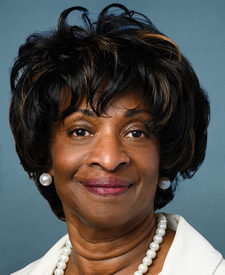
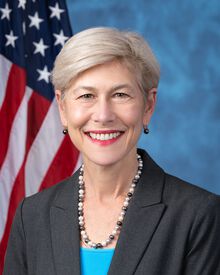
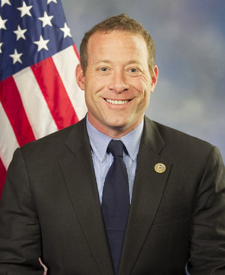
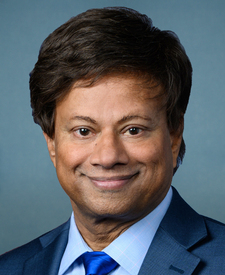
Legislative Progress
In CommitteeReferred to the House Committee on Science, Space, and Technology.
Introduced in House
Mrs. Foushee (for herself and Mr. Nunn of Iowa) introduced …
Stakeholder Effects
cui bono?How this legislation distributes effects. Mention counts reflect frequency, not effect magnitude.
Historically Black colleges, Minority-serving institutions, Regional universities
Bill Structure & Actor Mappings
Who is "The Secretary" in each section?
We use a combination of our own taxonomy and classification in addition to large language models to assess meaning and potential beneficiaries. High confidence means strong textual evidence. Always verify with the original bill text.
Learn more about our methodology