Expanding Veterans’ Access to Emerging Treatments Act
Summary
What This Bill Does
The Expanding Veterans' Access to Emerging Treatments Act requires the Secretary of Veterans Affairs to develop, within 90 days, an investigational research program for veterans diagnosed with covered conditions. The program may run clinical trials and compassionate or extended-access protocols using innovative treatments and emerging therapies consistent with federal law on investigational medical products and controlled substances. Within 60 days, VA must designate a lead administrator. Veterans with covered conditions must have a process to participate in trials or be considered for compassionate or extended access when clinically appropriate. The bill lists possible innovative treatments such as MDMA, 5-MeO-DMT, 5-MeO-2-aminoindane, ibogaine, ketamine, psilocybin, and other Secretary-designated treatments. Emerging therapies include investigational pharmaceuticals, devices such as deep brain neurostimulation or hyperbaric oxygen therapy, and other designated interventions. Covered conditions include anxiety, chronic pain, depression, post-traumatic stress disorder, substance use disorders, traumatic brain injury, and other Secretary-designated conditions.
Who Benefits and How
Veterans with PTSD, depression, chronic pain, anxiety, traumatic brain injury, or substance use disorders benefit from a VA pathway to participate in clinical trials or be considered for compassionate access to emerging therapies. VA researchers, academic medical partners, psychedelic and device researchers, veterans service organizations, and congressional veterans committees benefit from structured data on safety, efficacy, cost, regulatory barriers, clinic locations, and expected veteran participation.
Who Bears the Burden and How
VA medical centers, research administrators, clinical investigators, Institutional Review Boards, pharmacy staff, controlled-substance compliance officers, and the lead program administrator must design protocols, recruit veterans, monitor safety, comply with FDA and DEA rules, and report to Congress within one year. VA leadership must review the program after two years and decide whether to extend or terminate it.
Key Provisions
- Requires VA to develop an investigational research program for covered veteran conditions within 90 days.
- Requires VA to designate a lead administrator within 60 days.
- Authorizes clinical trials and compassionate or extended-access protocols using innovative treatments and emerging therapies.
- Requires a veteran access process for trial participation or clinically appropriate compassionate access.
- Requires a one-year report to the House and Senate Veterans' Affairs Committees and a two-year program review.
- Defines covered conditions to include PTSD, depression, chronic pain, anxiety, substance use disorders, and traumatic brain injury.
Evidence Chain:
This summary is generated from the full bill text using AI analysis. Expand "Detailed Analysis" below for identified beneficiaries/burden bearers with clause-level evidence links.
At a Glance
What This Bill Does
Directs the Department of Veterans Affairs to create an investigational research program for veterans with covered conditions using innovative treatments and emerging therapies, including clinical trials, compassionate access, reporting, and a two-year program review.
Key Policy Areas
Veterans, Healthcare, Research & Science
Primary Purpose
Directs the Department of Veterans Affairs to create an investigational research program for veterans with covered conditions using innovative treatments and emerging therapies, including clinical trials, compassionate access, reporting, and a two-year program review.
Policy Domains
Substantive provisions
Identified Gains
- Veterans with PTSD
- Veterans with depression
- Veterans with chronic pain
- Veterans with traumatic brain injury
- VA researchers
- Veterans service organizations
Identified Costs
- VA medical centers
- VA research administrators
- Clinical investigators
- Institutional Review Boards
- Controlled-substance compliance officers
- VA program leadership
Sponsors



Legislative Progress
In CommitteeReferred to the Subcommittee on Health.
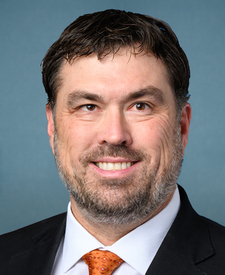
Mr. Bergman (for himself and Mr. Correa) introduced the following …
Referred to the House Committee on Veterans' Affairs.
Introduced in House
Stakeholder Effects
cui bono?How this legislation distributes effects. Mention counts reflect frequency, not effect magnitude.
VA program leadership, Veterans with PTSD, Veterans with chronic pain
Positive-direction: Veterans with PTSD, Veterans with chronic pain
Negative-direction: VA program leadership
Controlled-substance compliance officers, VA medical centers, VA researchers
Positive-direction: VA researchers
Negative-direction: Controlled-substance compliance officers, VA medical centers
Bill Structure & Actor Mappings
Who is "The Secretary" in each section?
We use a combination of our own taxonomy and classification in addition to large language models to assess meaning and potential beneficiaries. High confidence means strong textual evidence. Always verify with the original bill text.
Learn more about our methodology