Unsubscribe Act of 2025
Summary
What This Bill Does
The Unsubscribe Act of 2025 regulates negative-option contracts, including automatic renewals, continuity plans, free-to-pay conversion contracts, and pre-notification negative option plans. Merchants of record may not charge a credit card, debit card, bank account, or other financial account through a negative option unless they clearly disclose all material terms before payment and obtain express informed consent. Merchants must keep consent verification for at least three years unless their process prevents completion without consent. After a preliminary period, merchants cannot automatically renew or continue a contract for a longer period unless they obtain renewed express informed consent. Electronic contracts must include a simple cancellation mechanism, including a direct link to an electronic form, without forcing the consumer to use non-electronic steps. Non-electronic contracts must provide cancellation in the same manner or another simple mechanism. Free-to-pay conversions require pre-transaction disclosures, consent to post-trial terms, and notice before the first paid charge or price increase. Merchants must send regular reminders at least annually and deadline notices 2 to 7 days before the last cancellation day. The Federal Trade Commission enforces the Act as an unfair or deceptive act or practice, receives rulemaking authority, and State attorneys general or agencies may sue for residents subject to notice and intervention rules. State laws are preempted only to the extent of direct conflict, and stronger consumer protections remain allowed.
Who Benefits and How
Consumers benefit because subscription sellers must disclose material terms, obtain affirmative consent, provide easy cancellation, and send reminders before renewal or post-trial charges. Bank-account, debit-card, and credit-card users benefit from fewer surprise charges. State attorneys general and State consumer protection agencies benefit from explicit federal civil-action authority. The Federal Trade Commission benefits from direct rulemaking and enforcement authority. Honest subscription businesses benefit if competitors can no longer rely on hidden renewals, dark patterns, or hard-to-cancel workflows.
Who Bears the Burden and How
Merchants of record, subscription services, continuity-plan sellers, free-trial businesses, ecommerce platforms, billing processors, and customer-service teams must redesign checkout flows, consent records, cancellation links, reminder systems, deadline notices, and compliance documentation. Companies using pre-checked boxes, silence-based consent, confusing interfaces, or dark patterns face enforcement risk and penalties. The Federal Trade Commission must write rules, enforce violations, handle State notices, and decide whether to intervene in State actions. State enforcers must provide notice to the FTC and coordinate with federal actions.
Key Provisions
- Requires clear disclosure of all material negative-option contract terms before charging consumers.
- Requires express informed consent and three-year consent-verification records for negative-option charges.
- Requires simple cancellation through electronic links for electronic contracts and comparable simple mechanisms for other contracts.
- Requires free-to-pay conversion notices before the first paid charge or price increase after an introductory period.
- Requires recurring reminders at least annually and final cancellation-window notices 2 to 7 days before deadline.
- Authorizes FTC enforcement, FTC rulemaking, and State attorney general civil actions.
- Limits federal preemption to directly conflicting State law and preserves stronger State consumer protections.
Evidence Chain:
This summary is generated from the full bill text using AI analysis. Expand "Detailed Analysis" below for identified beneficiaries/burden bearers with clause-level evidence links.
At a Glance
What This Bill Does
Creates federal negative-option subscription rules requiring clear disclosures, express informed consent, three-year consent records, simple cancellation, free-trial conversion notices, annual reminders, Federal Trade Commission enforcement, State attorney general enforcement, limited conflict preemption, and detailed definitions for automatic renewals and related contracts.
Key Policy Areas
Consumer Protection, Financial Services, Retail
Primary Purpose
Creates federal negative-option subscription rules requiring clear disclosures, express informed consent, three-year consent records, simple cancellation, free-trial conversion notices, annual reminders, Federal Trade Commission enforcement, State attorney general enforcement, limited conflict preemption, and detailed definitions for automatic renewals and related contracts.
Policy Domains
Substantive provisions
Identified Gains
- Consumers
- Credit card users
- Debit card users
- State attorneys general
- Federal Trade Commission staff
- Honest subscription businesses
Identified Costs
- Merchants of record
- Subscription services
- Free trial businesses
- Ecommerce platforms
- Billing processors
- Customer service teams
- FTC rulemaking staff
Sponsors



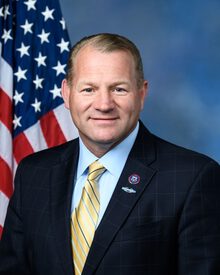
Legislative Progress
In CommitteeMr. Takano (for himself, Mr. Amodei of Nevada, and Mr. …
Referred to the House Committee on Energy and Commerce.
Introduced in House
Stakeholder Effects
cui bono?How this legislation distributes effects. Mention counts reflect frequency, not effect magnitude.
State attorneys general, State consumer protection agencies
Bill Structure & Actor Mappings
Who is "The Secretary" in each section?
We use a combination of our own taxonomy and classification in addition to large language models to assess meaning and potential beneficiaries. High confidence means strong textual evidence. Always verify with the original bill text.
Learn more about our methodology