Upward Mobility Act of 2026
Summary
What This Bill Does
The Upward Mobility Act of 2026 creates a large antipoverty-program consolidation pilot. HHS, acting through the Assistant Secretary for Children and Families, may allow up to five States to run five-year pilot projects funded by Upward Mobility Grants. The grants consolidate covered federal amounts from SNAP administration and benefits, TANF State family assistance grants, child care programs, LIHEAP programs, dislocated-worker assistance, community development funding, housing vouchers, public housing capital and operating funds, and rural housing assistance, while excluding amounts directed to Indian Tribes. States may seek full or limited-scope pilots. Grant amounts are based on prior-year covered funding, adjusted by the Personal Consumption Expenditures Price Index, and paid quarterly. Approved States can receive waivers to consolidate, replace, or alter eligibility requirements, program design, delivery, and funding use, but not civil rights, health and safety, labor standards, environmental protections, religious freedom, appropriations restrictions, maintenance of effort, or requirements to distribute funds to sub-State entities. Applications must explain eligibility criteria, data privacy, fraud prevention, auditable records, work requirement enforcement, local nonprofit and faith-based engagement, independent evaluation, benefit-cliff reduction, marginal effective tax rate measures, employment outcomes, poverty reduction, marriage penalty reduction, and use of savings. A savings provision transfers administrative funding and selected federal agency functions to the Administration for Children and Families, preserves pending proceedings, and lets HHS issue rules and delegate transferred functions.
Who Benefits and How
States selected for pilots benefit from flexible consolidated grants and waiver authority over multiple antipoverty programs. Low-income families in pilot States could benefit if States reduce benefit cliffs, coordinate housing, nutrition, child care, energy assistance, and employment services, and improve earnings outcomes. Local service providers can receive roles in customized case management. HHS and ACF benefit from centralized authority to test cross-program antipoverty models and evaluate results.
Who Bears the Burden and How
SNAP recipients, TANF families, child care subsidy recipients, LIHEAP households, housing voucher users, public housing residents, dislocated workers, and rural housing recipients face risk if a State redesigns eligibility, benefit structures, or service delivery. State pilot administrators must build privacy controls, fraud prevention, auditable records, work-requirement enforcement, independent evaluation contracts, and benchmark reporting. Federal agencies that currently run covered programs must transfer administrative funding, functions, personnel, assets, records, and proceedings as OMB and HHS direct. Federal taxpayers fund the grants and oversight.
Key Provisions
- Establishes up to five five-year State Upward Mobility Grant pilot projects.
- Consolidates covered federal funding from SNAP, TANF, child care, LIHEAP, workforce, community development, public housing, housing voucher, and rural housing programs.
- Authorizes waivers for eligibility rules, program design, delivery, and funding use while preserving civil rights, health, safety, labor, environmental, religious-freedom, appropriations, and maintenance-of-effort protections.
- Requires State applications to address benefit cliffs, marginal effective tax rates, employment outcomes, poverty reduction, data privacy, fraud prevention, work requirements, local service delivery, and independent evaluation.
- Transfers selected federal antipoverty functions and administrative funding to the Administration for Children and Families for pilot implementation.
Evidence Chain:
This summary is generated from the full bill text using AI analysis. Expand "Detailed Analysis" below for identified beneficiaries/burden bearers with clause-level evidence links.
At a Glance
What This Bill Does
Creates a five-State Upward Mobility Grant pilot allowing HHS to consolidate specified SNAP, TANF, child care, LIHEAP, workforce, community development, public housing, housing voucher, and rural housing assistance funding into five-year State pilots with waivers, work requirements, independent evaluations, administrative transfers, and federal oversight through the Administration for Children and Families.
Key Policy Areas
Social Services, Labor, Government
Primary Purpose
Creates a five-State Upward Mobility Grant pilot allowing HHS to consolidate specified SNAP, TANF, child care, LIHEAP, workforce, community development, public housing, housing voucher, and rural housing assistance funding into five-year State pilots with waivers, work requirements, independent evaluations, administrative transfers, and federal oversight through the Administration for Children and Families.
Policy Domains
Substantive provisions
Identified Gains
- Selected State pilot governments
- Low-income families in pilot States
- Local nonprofit service providers
- Faith-based service providers
- ACF antipoverty program staff
Identified Costs
- SNAP recipients in pilot States
- TANF families in pilot States
- Child care subsidy recipients
- LIHEAP households
- Housing voucher users
- Public housing residents
- State pilot administrators
- Federal antipoverty agencies
- Federal taxpayers
Sponsors
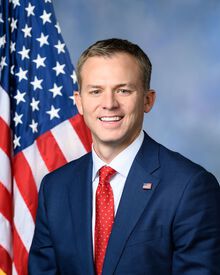

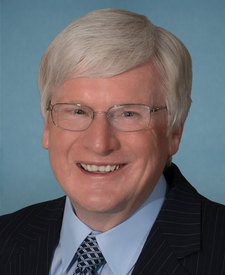

Legislative Progress
In CommitteeReferred to the Subcommittee on Nutrition and Foreign Agriculture.
Mr. Moore of Utah introduced the following bill; which was …
Referred to the Committee on Ways and Means, and in …
Introduced in House
Stakeholder Effects
cui bono?How this legislation distributes effects. Mention counts reflect frequency, not effect magnitude.
Child care subsidy recipients, Low-income families in pilot States, Pending assistance applicants
ACF antipoverty program staff, Federal antipoverty agencies, Federal rulemaking staff
Selected State pilot governments, State pilot administrators
Positive-direction: Selected State pilot governments
Negative-direction: State pilot administrators
Bill Structure & Actor Mappings
Who is "The Secretary" in each section?
We use a combination of our own taxonomy and classification in addition to large language models to assess meaning and potential beneficiaries. High confidence means strong textual evidence. Always verify with the original bill text.
Learn more about our methodology