Climate Pollution Standard and Community Investment Act of 2025
Summary
What This Bill Does
This bill creates a large climate cap-and-invest framework. It would establish enforceable greenhouse gas emissions targets, create tradable emission allowances, auction or distribute those allowances, and use the resulting value for household clean-energy rebates, community air-quality programs, negative-emissions activities, and clean-energy innovation. It also creates a separate system of studies, offices, funds, grants, and direct assistance for workers and communities disrupted by the shift away from fossil fuel industries.
Who Benefits and How
Households could receive quarterly clean-energy rebates. States, Tribes, and local governments could receive allowance value, grants, and transition assistance. Farmers, forest landowners, clean-energy developers, transit-oriented development projects, and communities facing local pollution or economic disruption could gain new funding streams. Workers affected by energy transition could receive planning support, direct assistance, and job guarantees through the National Employment Corps.
Who Bears the Burden and How
Covered greenhouse gas emitters and some importers would face binding emissions limits, allowance costs, registry duties, penalties, and border-adjustment-style obligations. Federal agencies would have heavy rulemaking, auction, oversight, and grant-administration duties. Taxpayers and regulated industries would finance the new funds, market infrastructure, and assistance programs.
Key Provisions
- Creates a Clean Air Act climate pollution reduction program with enforceable emissions caps and tradable allowances.
- Creates auctions, state and tribal distributions, industry assistance, compliance penalties, and market oversight.
- Creates clean-energy household rebates, cleaner-air community funding, negative-emissions funding, and an energy innovation fund.
- Creates studies, an Office of Energy and Economic Transition, an interagency task force, community assistance, transition hubs, and worker assistance programs tied to the move toward net-zero emissions.
Evidence Chain:
This summary is generated from the full bill text using AI analysis. Expand "Detailed Analysis" below for identified beneficiaries/burden bearers with clause-level evidence links.
At a Glance
What This Bill Does
Create a federal climate cap-and-invest system for greenhouse gas emissions, channel allowance value into household rebates and targeted climate funds, and build a parallel transition-assistance system for workers and communities disrupted by the move to net-zero emissions.
Key Policy Areas
Climate, Energy, Labor, Transportation, Housing
Primary Purpose
Create a federal climate cap-and-invest system for greenhouse gas emissions, channel allowance value into household rebates and targeted climate funds, and build a parallel transition-assistance system for workers and communities disrupted by the move to net-zero emissions.
Policy Domains
Sections 101-107 and CAA Title VII - Climate cap-and-invest program and funds
Identified Gains
- Households receiving clean-energy rebates
- State, Tribal, and local governments receiving allowance value or climate-related assistance
- Clean energy, transit-oriented development, and negative-emissions project sponsors
Identified Costs
- Covered greenhouse gas emitters and importers
- Federal agencies administering auctions, oversight, and grant programs
Title II - Worker and community transition assistance
Identified Gains
- Workers and communities disrupted by the transition away from fossil fuel industries
- Local and Tribal governments and community organizations coordinating transition support
Identified Costs
- Federal agencies and the Executive Office of the President administering the transition system
- The federal budget financing revenue replacement, grants, and worker assistance
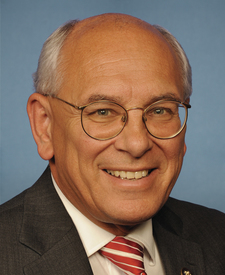
Sponsors
Legislative Progress
In CommitteeReferred to the Committee on Energy and Commerce, and in …
Introduced in House
Mr. Tonko introduced the following bill; which was referred to …
Stakeholder Effects
cui bono?How this legislation distributes effects. Mention counts reflect frequency, not effect magnitude.
Department of Energy, Department of Labor and affected state governments, Environmental Protection Agency
Covered entities purchasing auctioned allowances, Covered greenhouse gas emitters, Emission allowance market participants
Positive-direction: Entities holding emission allowances, Holders of emission allowances
Negative-direction: Covered entities purchasing auctioned allowances, Covered greenhouse gas emitters, Emission allowance market participants, Noncompliant covered entities, Reporting entities covered by the greenhouse gas registry
Adversely affected workers certified for transition assistance, Cleaner Air Communities receiving targeted assistance, Communities affected by greenhouse gas pollution
Producers applying for negative emissions contracts, Producers carrying out eligible agricultural and forest management practices, Producers carrying out negative emissions activities
Positive-direction: Producers carrying out eligible agricultural and forest management practices, Producers carrying out negative emissions activities, Producers seeking payment for negative emissions practices, Producers under negative emissions contracts
Negative-direction: Producers applying for negative emissions contracts
Eligible local governments losing employer revenue, Local government applicants, States and Indian Tribes receiving allocated emission allowances
Positive-direction: Eligible local governments losing employer revenue, States and Indian Tribes receiving allocated emission allowances, States and Indian Tribes receiving annual distributions
Negative-direction: Local government applicants
Domestic producers competing with higher-emissions imports, Energy-intensive, trade-exposed industries, Importers of carbon-intensive covered goods
Positive-direction: Domestic producers competing with higher-emissions imports, Energy-intensive, trade-exposed industries
Negative-direction: Importers of carbon-intensive covered goods
Bill Structure & Actor Mappings
Who is "The Secretary" in each section?
- "the_secretary"
- → Secretary responsible for the specific rebate or innovation program
- "the_administrator"
- → Administrator of the Environmental Protection Agency
- "the_secretary_of_treasury"
- → Secretary of the Treasury
- "the_director"
- → Director of the Office of Energy and Economic Transition
- "the_secretary_of_labor"
- → Secretary of Labor
- "the_secretary_of_energy"
- → Secretary of Energy
Key Definitions
Terms defined in this bill
An entity whose attributable greenhouse gas emissions are regulated under the climate pollution reduction program, including specified fuel producers, importers, and other large emitters.
A community designated to receive assistance from the Cleaner Air Community Fund under the Clean Air Act climate program.
An individual who has been, or is at risk of being, totally or partially separated from an impacted employer because of the transition to net-zero emissions.
We use a combination of our own taxonomy and classification in addition to large language models to assess meaning and potential beneficiaries. High confidence means strong textual evidence. Always verify with the original bill text.
Learn more about our methodology