Shelter Act
Summary
What This Bill Does
The Shelter Act uses the tax code to subsidize disaster-hardening work. For individuals, it creates a nonrefundable credit equal to 25 percent of qualified disaster mitigation expenditures on a qualified dwelling unit, capped at $3,750 per year, or $7,500 for joint filers, and $15,000 cumulatively per dwelling after 2025. The personal credit phases down for higher-income taxpayers, reduces basis, and applies to taxable years after 2025. For businesses, it creates a general business credit equal to 25 percent of qualified disaster mitigation expenditures, capped at $5,000 annually, with a phaseout as average gross receipts rise above $5 million and indexation after 2026. The bill also requires reporting by businesses that receive payments supporting mitigation expenditures so the IRS can verify claims.
Who Benefits and How
Homeowners in disaster-prone areas benefit because qualifying mitigation work becomes cheaper through a 25 percent personal tax credit. Joint filers and households making repeated improvements benefit from the higher annual and cumulative dwelling limits. Small businesses benefit because mitigation investments can qualify for a 25 percent business credit before gross-receipts phaseouts apply. Contractors selling flood, fire, wind, or other resilience improvements benefit from stronger customer incentives to pay for eligible projects.
Who Bears the Burden and How
Treasury and IRS tax administrators must write forms, verify eligible expenditures, apply annual and cumulative caps, enforce basis reductions, and administer income or gross-receipts phaseouts. Businesses receiving support payments must report payment and expenditure information for IRS matching. Higher-income households and larger businesses receive reduced credits because the bill phases out benefits. Federal taxpayers bear the revenue cost of credits that reduce federal receipts.
Key Provisions
- Establishes a 25 percent personal disaster-mitigation tax credit for qualified dwelling expenditures.
- Limits the personal credit to $3,750 per year, $7,500 for joint filers, and $15,000 cumulatively per dwelling.
- Requires income phaseouts, basis reductions, and post-2025 effective dates for individual claims.
- Establishes a 25 percent business disaster-mitigation credit with a $5,000 annual cap.
- Requires gross-receipts phaseouts, inflation adjustments, and IRS reporting for business-related support payments.
Evidence Chain:
This summary is generated from the full bill text using AI analysis. Expand "Detailed Analysis" below for identified beneficiaries/burden bearers with clause-level evidence links.
At a Glance
What This Bill Does
Creates personal and business tax credits covering 25 percent of qualified disaster-mitigation expenditures, with annual caps, cumulative dwelling limits, income and gross-receipts phaseouts, inflation adjustments, basis reductions, and IRS reporting rules.
Key Policy Areas
Tax, Disaster Mitigation, Housing, Small Business
Primary Purpose
Creates personal and business tax credits covering 25 percent of qualified disaster-mitigation expenditures, with annual caps, cumulative dwelling limits, income and gross-receipts phaseouts, inflation adjustments, basis reductions, and IRS reporting rules.
Policy Domains
Substantive provisions
Identified Gains
- Homeowners in disaster-prone areas
- Joint-filing households
- Small businesses
- Disaster mitigation contractors
Identified Costs
- Treasury tax administrators
- IRS compliance staff
- Businesses receiving support payments
- Higher-income households
- Federal taxpayers
Sponsors


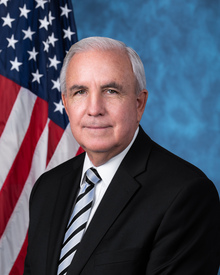

Legislative Progress
In CommitteeMs. Salazar (for herself, Ms. Pettersen, Mr. Gimenez, and Mr. …
Referred to the House Committee on Ways and Means.
Introduced in House
Stakeholder Effects
cui bono?How this legislation distributes effects. Mention counts reflect frequency, not effect magnitude.
Businesses making qualified disaster mitigation expenditures
Homeowners making qualified disaster mitigation expenditures
Bill Structure & Actor Mappings
Who is "The Secretary" in each section?
- "agencies"
- → ['Department of the Treasury', 'Internal Revenue Service']
- "affected_groups"
- → ['Homeowners', 'Joint filers', 'Small businesses', 'Disaster mitigation contractors', 'Federal taxpayers']
We use a combination of our own taxonomy and classification in addition to large language models to assess meaning and potential beneficiaries. High confidence means strong textual evidence. Always verify with the original bill text.
Learn more about our methodology