To amend title 49, United States Code, to clarify airport revenue use of local general sales taxes, and for other purposes.
Summary
What This Bill Does
The bill amends title 49 so federal airport revenue-use restrictions do not apply to local general sales tax revenues when a narrow three-part test is met: the local government had a generally applicable sales tax before December 9, 2014 that did not exclude aviation fuel, the local government is not a public airport sponsor, and a large hub airport with more than 35 million 2021 enplanements sits inside the jurisdiction.
Who Benefits and How
Qualifying local governments benefit because they can keep using generally applicable sales tax revenue for general local purposes instead of treating it as restricted airport revenue. Local budget officials gain statutory clarity for legacy tax systems that include aviation fuel.
Who Bears the Burden and How
Public airports and airport users in the affected jurisdiction may lose some protection that would otherwise keep aviation-related sales tax revenue tied to airport purposes. FAA compliance staff must apply a narrow exemption with date, sponsor, fuel-tax, and enplanement conditions.
Key Provisions
- Amends title 49 airport grant assurances to cross-reference the new local sales tax exemption.
- Exempts certain local general sales tax revenues from airport revenue-use restrictions.
- Requires the local tax to have existed before December 9, 2014 and not excluded aviation fuel.
- Limits the exemption to non-airport-sponsor local governments with a large hub airport over 35 million 2021 enplanements in the jurisdiction.
Evidence Chain:
This summary is generated from the full bill text using AI analysis. Expand "Detailed Analysis" below for identified beneficiaries/burden bearers with clause-level evidence links.
At a Glance
What This Bill Does
Clarifies that certain local general sales tax revenues are exempt from federal airport revenue-use restrictions.
Key Policy Areas
Transportation, State & Local Government, Tax
Primary Purpose
Clarifies that certain local general sales tax revenues are exempt from federal airport revenue-use restrictions.
Policy Domains
Substantive provisions
Identified Gains
- qualifying local governments
- local budget officials
Identified Costs
- public airports
- airport users
- Federal Aviation Administration compliance staff
Sponsors
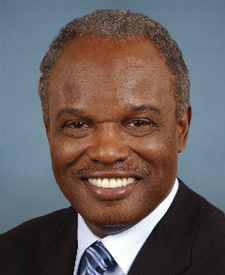
Legislative Progress
In CommitteeReferred to the Subcommittee on Aviation.
Mr. David Scott of Georgia introduced the following bill; which …
Referred to the House Committee on Transportation and Infrastructure.
Introduced in House
Stakeholder Effects
cui bono?How this legislation distributes effects. Mention counts reflect frequency, not effect magnitude.
qualifying local governments using general sales tax revenue
public airports affected by diverted local sales tax revenue
Federal Aviation Administration airport compliance staff
Bill Structure & Actor Mappings
Who is "The Secretary" in each section?
- "Subsection (a)"
- → Airport revenue-use restriction in 49 U.S.C. 47133(a)
We use a combination of our own taxonomy and classification in addition to large language models to assess meaning and potential beneficiaries. High confidence means strong textual evidence. Always verify with the original bill text.
Learn more about our methodology