CommonGround for Affordable Health Care Act
Summary
What This Bill Does
The CommonGround for Affordable Health Care Act combines five health-insurance provisions. It extends and modifies enhanced ACA premium tax credits for taxable year 2026, including premium-percentage tables and substituting eligibility up to 1000 percent of the federal poverty level instead of 400 percent. It adds Exchange fraud guardrails: agents or brokers that negligently or knowingly provide incorrect information face civil penalties, broker commissions are delayed until inconsistencies are resolved, brokers must document consumer consent, individuals must receive notices of enrollment, coverage, agent-of-record, or premium-tax-credit changes, and field marketing organizations plus third-party marketing organizations become regulated participants in the chain of enrollment. HHS must set criteria by 2029 for agent, broker, FMO, and TPMO participation, including best-interest duties, termination reporting, marketing standards, licensure, registration, and limits on referral compensation. The bill extends plan-year 2026 Exchange open enrollment from November 1, 2025, through March 19, 2026, with HHS outreach. For Medicare Part D beginning in 2029, PBMs working for prescription drug plan sponsors must generally receive only bona fide service fees, pass through rebates and remuneration, meet reporting and audit rules, avoid certain affiliate steering or spread-pricing practices, and comply with HHS and OIG oversight. Finally, it creates expedited House and Senate procedures for an enhanced premium tax credit reform bill that has at least 10 cosponsors from each party.
Who Benefits and How
ACA Exchange consumers benefit from one more year of enhanced premium tax credits and a longer 2026 open-enrollment window. Lower-income and middle-income households benefit from reduced premium contributions up to the 1000-percent-of-poverty cap. Consumers affected by unauthorized broker activity benefit from consent documentation, notices, cancellation instructions, and continuity-of-coverage protections. Independent pharmacies and Medicare Part D beneficiaries benefit from PBM rules aimed at reducing conflicted remuneration and steering. Health insurance issuers benefit from subsidized enrollment stability. Congress benefits from expedited procedures for a bipartisan premium-tax-credit reform bill.
Who Bears the Burden and How
Federal taxpayers bear the premium-tax-credit cost for 2026 and the administrative cost of enforcement. HHS and CMS must administer consent verification, broker rules, outreach, open enrollment, PBM contract standards, audits, reports, and data systems. Agents, brokers, field marketing organizations, and third-party marketing organizations must meet best-interest, documentation, marketing, licensure, registration, termination-reporting, and compensation rules. PBMs and affiliated pharmacies must change remuneration, rebate, audit, reporting, and steering practices for Part D plans. PDP sponsors must include compliant PBM agreements in contracts.
Key Provisions
- Extends enhanced ACA premium tax credits for 2026 and raises the income range to 1000 percent of poverty.
- Requires broker consent documentation, delayed commissions, consumer notices, and continuity protections for Exchange enrollments.
- Regulates agents, brokers, field marketing organizations, and third-party marketing organizations in the Exchange chain of enrollment by 2029.
- Extends plan-year 2026 Exchange open enrollment through March 19, 2026, with HHS outreach.
- Requires Medicare Part D PBM accountability rules on remuneration, rebates, reporting, audits, affiliate practices, and steering beginning in 2029.
- Creates expedited congressional procedures for a bipartisan enhanced premium tax credit reform bill.
Evidence Chain:
This summary is generated from the full bill text using AI analysis. Expand "Detailed Analysis" below for identified beneficiaries/burden bearers with clause-level evidence links.
At a Glance
What This Bill Does
Extends enhanced ACA premium tax credits for 2026 with an income cap up to 1000 percent of poverty, adds Exchange fraud guardrails for agents, brokers, field marketing organizations, and third-party marketing organizations, extends 2026 open enrollment through March 19, adds Medicare Part D PBM accountability rules for 2029, and creates expedited procedures for a bipartisan premium-tax-credit reform bill.
Key Policy Areas
Health Care, Tax, Insurance, Medicare
Primary Purpose
Extends enhanced ACA premium tax credits for 2026 with an income cap up to 1000 percent of poverty, adds Exchange fraud guardrails for agents, brokers, field marketing organizations, and third-party marketing organizations, extends 2026 open enrollment through March 19, adds Medicare Part D PBM accountability rules for 2029, and creates expedited procedures for a bipartisan premium-tax-credit reform bill.
Policy Domains
Substantive provisions
Identified Gains
- ACA Exchange consumers
- Lower-income households
- Middle-income households
- Independent pharmacies
- Medicare Part D beneficiaries
- Health insurance issuers
- Congressional health committees
Identified Costs
- Federal taxpayers
- HHS Exchange staff
- CMS Medicare staff
- Insurance agents
- Insurance brokers
- Field marketing organizations
- Third-party marketing organizations
- Pharmacy benefit managers
- PDP sponsors
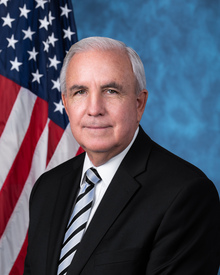
Sponsors




Legislative Progress
In CommitteeMrs. Kiggans of Virginia (for herself, Mr. Gottheimer, Mr. Lawler, …
Referred to the Committee on Energy and Commerce, and in …
Introduced in House
Stakeholder Effects
cui bono?How this legislation distributes effects. Mention counts reflect frequency, not effect magnitude.
Health insurance issuers, Independent pharmacies, Mail-order pharmacies
Positive-direction: Health insurance issuers, Independent pharmacies, Medicare Part D beneficiaries
Negative-direction: Mail-order pharmacies, PBM affiliated specialty pharmacies, PDP sponsors, Pharmacy benefit managers
CMS Medicare staff, Congressional health committees, HHS Exchange staff
Positive-direction: Premium tax credit reform sponsors
Negative-direction: CMS Medicare staff, Congressional health committees, HHS Exchange staff, HHS Inspector General staff, HHS outreach staff, IRS premium tax credit staff
ACA Exchange consumers, Exchange plan shoppers, Lower-income Exchange consumers
Field marketing organizations, Insurance agents, Insurance brokers
Insurance brokers faces effects in multiple directions
Bill Structure & Actor Mappings
Who is "The Secretary" in each section?
- "agencies"
- → ['HHS', 'CMS', 'HHS Office of Inspector General']
- "industry"
- → ['Pharmacy benefit managers', 'Health insurance issuers']
We use a combination of our own taxonomy and classification in addition to large language models to assess meaning and potential beneficiaries. High confidence means strong textual evidence. Always verify with the original bill text.
Learn more about our methodology