Merger Agreement Approvals Clarity and Predictability Act
Summary
What This Bill Does
The Merger Agreement Approvals Clarity and Predictability Act directs the Comptroller General to review how federal depository institution regulators handle commitments, conditions, and merger-review procedures when banks or credit unions seek approval to acquire insured depository institutions, equity interests, assets, or deposits. The study covers the Federal Reserve Board, the Comptroller of the Currency, the Federal Deposit Insurance Corporation, and the National Credit Union Administration Board.
The GAO study must evaluate quantifiable metrics, test whether commitments and conditions align with statutory requirements, and examine whether regulators are relying on extrastatutory issues or considerations. The House-reported version broadens the review to compare different lawful merger-review approaches and measure effects on safety and soundness, financial stability, competition, and availability of financial products and services. GAO must report the findings to Congress within one year.
Who Benefits and How
Bank merger applicants benefit because the study may expose unclear or extrastatutory conditions that slow approvals or make merger terms less predictable. Credit union merger applicants benefit from the same scrutiny of NCUA procedures. Community banks benefit if future oversight discourages merger-review conditions that go beyond statutory standards. Congressional banking committees benefit from a GAO record on how each regulator uses commitments, metrics, and review procedures. Financial-service customers benefit if the report identifies merger-review practices that affect competition or product availability.
Who Bears the Burden and How
GAO audit staff must conduct the study, compare regulator practices, and produce the report. Federal Reserve merger-review staff, OCC licensing staff, FDIC resolution and merger staff, and NCUA merger-review staff must provide information on commitments, conditions, metrics, and approval procedures. Regulators that have used extrastatutory or inconsistent conditions may face oversight pressure after the report. Large merger applicants may face continued scrutiny if GAO finds that conditions protect safety and soundness or competition.
Key Provisions
- Requires GAO to study commitments and conditions in insured depository institution merger applications.
- Directs GAO to evaluate quantifiable merger-review metrics.
- Requires review of whether commitments and conditions align with statutory requirements.
- Requires review of whether extrastatutory issues influence merger conditions.
- Expands the House-reported study to compare lawful merger-review approaches and procedures.
- Requires GAO to assess effects on safety and soundness, financial stability, competition, and availability of financial products and services.
- Requires a report to Congress within one year.
Evidence Chain:
This summary is generated from the full bill text using AI analysis. Expand "Detailed Analysis" below for identified beneficiaries/burden bearers with clause-level evidence links.
At a Glance
What This Bill Does
Requires the Government Accountability Office to study how the Federal Reserve Board, Comptroller of the Currency, FDIC, and NCUA Board use commitments, conditions, and other merger-review procedures in insured depository institution merger applications, then report to Congress on statutory alignment, extrastatutory considerations, safety and soundness, financial stability, competition, and financial-product availability.
Key Policy Areas
Banking, Financial Regulation, Federal Oversight
Primary Purpose
Requires the Government Accountability Office to study how the Federal Reserve Board, Comptroller of the Currency, FDIC, and NCUA Board use commitments, conditions, and other merger-review procedures in insured depository institution merger applications, then report to Congress on statutory alignment, extrastatutory considerations, safety and soundness, financial stability, competition, and financial-product availability.
Policy Domains
House resolution provisions
Identified Gains
- Bank merger applicants
- Credit union merger applicants
- Community banks
- Congressional banking committees
- Financial-service customers
Identified Costs
- GAO audit staff
- Federal Reserve merger-review staff
- OCC licensing staff
- FDIC merger staff
- NCUA merger-review staff
- Large merger applicants
Sponsors
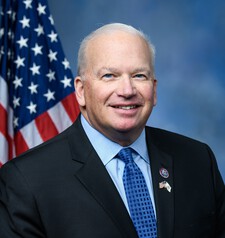

Legislative Progress
ReportedPlaced on the Union Calendar, Calendar No. 460.
Reported (Amended) by the Committee on Financial Services. H. Rept. …
Additional sponsor: Mr. Lawler
Reported (Amended) by the Committee on Financial Services. H. Rept. …
Ordered to be Reported (Amended) by the Yeas and Nays: …
Committee Consideration and Mark-up Session Held
Committee Consideration and Mark-up Session Held
Introduced in House
Referred to the House Committee on Financial Services.
Mr. Fitzgerald introduced the following bill; which was referred to …
Stakeholder Effects
cui bono?How this legislation distributes effects. Mention counts reflect frequency, not effect magnitude.
Bank merger applicants, Credit union merger applicants, NCUA merger-review staff
Positive-direction: Bank merger applicants, Credit union merger applicants
Negative-direction: NCUA merger-review staff
FDIC merger-review staff, OCC licensing staff
Bill Structure & Actor Mappings
Who is "The Secretary" in each section?
- "fed"
- → Board of Governors of the Federal Reserve System
- "gao"
- → Government Accountability Office
- "occ"
- → Comptroller of the Currency
- "fdic"
- → Federal Deposit Insurance Corporation
- "ncua"
- → National Credit Union Administration Board
We use a combination of our own taxonomy and classification in addition to large language models to assess meaning and potential beneficiaries. High confidence means strong textual evidence. Always verify with the original bill text.
Learn more about our methodology