Military in Law Enforcement Accountability Act
Summary
What This Bill Does
The Military in Law Enforcement Accountability Act adds new limits on military support for civilian law enforcement under title 10 sections 272, 273, and 274. Before the Secretary of Defense may provide support, the President must notify Congress and submit a written justification naming the recipient agency, budget, timeline, delivery schedule, completion date, funding source, sustainment arrangements, objectives, evaluation metrics, and prior three fiscal years of support. DOD support lasting more than 30 days requires enactment of a joint resolution of approval, with special House and Senate procedures and a three-fifths Senate vote. The bill also bars people serving in the Department of Defense, whether military or civilian, from simultaneously serving in civilian law enforcement outside DOD, except reserve component members serving in civilian capacity; reservists called to active duty must formally recuse from civilian law-enforcement duties. It broadens title 10 section 723 procedural requirements by removing the limitation to civil-disturbance responses, and it lets any person, State, or local government harmed by a violation sue in federal district court for injunctive relief, equitable relief, and damages.
Who Benefits and How
Communities affected by military support to policing benefit from advance congressional notice, written objectives, performance metrics, funding transparency, and a 30-day limit without congressional approval. Civil-liberties organizations benefit from a litigation mechanism to challenge violations. Congress benefits from a formal approval role for longer deployments. States and local governments benefit from a statutory cause of action if federal officials violate the limits. Reserve component members keep a civilian-law-enforcement exception when not on active duty.
Who Bears the Burden and How
The President and DOD officials must prepare detailed justifications before support is provided. The Secretary of Defense must stop support after 30 days unless Congress enacts approval. Civilian law-enforcement agencies receiving DOD support may face delays, documentation requirements, and loss of support without approval. DOD personnel must avoid simultaneous civilian law-enforcement service, and activated reservists must recuse from civilian law-enforcement duties. Federal officials face litigation exposure, damages, and injunctions for violations.
Key Provisions
- Requires presidential notification and written justification before DOD support to civilian law enforcement.
- Limits DOD support beyond 30 days unless Congress enacts a joint resolution of approval.
- Establishes expedited congressional procedures and a three-fifths Senate vote for approval resolutions.
- Prohibits most simultaneous service in DOD and civilian law enforcement, with a reserve-component exception.
- Expands procedural requirements for Armed Forces and federal law-enforcement personnel assisting civil authorities.
- Authorizes persons, States, and local governments to sue the federal government for violations.
Evidence Chain:
This summary is generated from the full bill text using AI analysis. Expand "Detailed Analysis" below for identified beneficiaries/burden bearers with clause-level evidence links.
At a Glance
What This Bill Does
Requires presidential notification and congressional approval for prolonged DOD support to civilian law enforcement, bars most simultaneous DOD and civilian law-enforcement service, expands procedural requirements for assistance to civil authorities, and creates a private right of action.
Key Policy Areas
Defense, Law Enforcement, Civil Liberties, Congressional Oversight
Primary Purpose
Requires presidential notification and congressional approval for prolonged DOD support to civilian law enforcement, bars most simultaneous DOD and civilian law-enforcement service, expands procedural requirements for assistance to civil authorities, and creates a private right of action.
Policy Domains
Substantive provisions
Identified Gains
- Communities affected by federal deployments
- Civil-liberties organizations
- Congressional oversight committees
- State governments bringing lawsuits
- Local governments bringing lawsuits
- Reserve component members
Identified Costs
- President support-notification staff
- Secretary of Defense
- Department of Defense officials
- Civilian law enforcement agencies
- DOD personnel
- Activated reservists
- Federal officials exposed to lawsuits
Sponsors




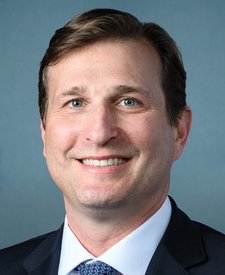
Legislative Progress
In CommitteeMr. Liccardo (for himself, Ms. Houlahan, Mr. Jackson of Illinois, …
Referred to the Committee on Armed Services, and in addition …
Introduced in House
Stakeholder Effects
cui bono?How this legislation distributes effects. Mention counts reflect frequency, not effect magnitude.
Armed Forces personnel, DOD civilian employees, DOD military personnel
Congressional oversight committees, Federal officials exposed to lawsuits, President support-notification staff
Positive-direction: Congressional oversight committees
Negative-direction: Federal officials exposed to lawsuits, President support-notification staff, United States district courts
Civilian law enforcement agencies, Federal law enforcement personnel
Civil authorities receiving federal assistance, Local governments bringing lawsuits, State governments bringing lawsuits
Communities affected by federal deployments, Persons harmed by violations
Bill Structure & Actor Mappings
Who is "The Secretary" in each section?
- "courts"
- → ['United States district courts']
- "agencies"
- → ['Department of Defense', 'Congress']
- "affected_groups"
- → ['Communities affected by federal deployments', 'Civilian law enforcement agencies']
We use a combination of our own taxonomy and classification in addition to large language models to assess meaning and potential beneficiaries. High confidence means strong textual evidence. Always verify with the original bill text.
Learn more about our methodology