Immigration Court Due Process Protection Act of 2025
Summary
What This Bill Does
The Immigration Court Due Process Protection Act limits immigration enforcement activity around immigration courts and DHS check-ins. DHS officers or agents may not arrest or detain an individual while physically present at an EOIR immigration court facility to attend or participate in a hearing, or immediately upon arrival or departure for that purpose, unless they have a judicial warrant. The restriction applies to individuals whose immigration judge or Board of Immigration Appeals proceedings have not resulted in a final removal order and to individuals during appeals or motions to reopen, reconsider, or otherwise challenge a final removal order. The bill preserves authority to act when necessary to prevent an imminent act of violence or a specific, articulable threat to life, public safety, or national security. It also bars DHS officers or agents from arresting or detaining an individual appearing for a scheduled DHS appointment or check-in, or arriving or departing for one, unless senior field management or higher approves written authorization specifying the legal basis, and the arrest or detention is reported to the Inspector General within 30 days. One year after the effective date and annually after that, the DHS Inspector General must report to Congress on compliance, including attempted and completed arrests, legal bases, procedural posture of each arrested individual case, and training or guidance used by DHS to ensure compliance.
Who Benefits and How
Individuals attending immigration court benefit because they can appear for hearings without ordinary courthouse arrests unless DHS has a judicial warrant or an emergency threat exception applies. People attending DHS check-ins benefit from senior-level written authorization and Inspector General reporting before appointment-based arrests can proceed. Immigration attorneys and court administrators benefit if fewer courthouse arrests discourage hearing attendance. Congress benefits from annual Inspector General data on attempted and completed arrests and DHS compliance steps.
Who Bears the Burden and How
DHS officers and field managers must follow location-based arrest restrictions, obtain judicial warrants at immigration courts, secure senior-field-management written authorization for appointment arrests, and report those arrests to the Inspector General within 30 days. DHS Inspector General staff must produce annual compliance reports. DHS training officials must issue guidance and training to ensure compliance. Immigration enforcement operations may be delayed or redirected when the bill requires warrants, written approvals, or reporting.
Key Provisions
- Prohibits DHS arrests or detention at EOIR immigration court facilities for hearing attendance without a judicial warrant.
- Extends protection to arrival and departure from immigration court for hearing participation.
- Applies protections during pending proceedings, appeals, and motions challenging removal orders.
- Preserves emergency action for imminent violence or specific threats to life, public safety, or national security.
- Requires senior-field-management written authorization and Inspector General reporting for DHS appointment or check-in arrests.
- Requires annual DHS Inspector General reports to Congress on compliance, arrest counts, legal bases, case posture, and training.
Evidence Chain:
This summary is generated from the full bill text using AI analysis. Expand "Detailed Analysis" below for identified beneficiaries/burden bearers with clause-level evidence links.
At a Glance
What This Bill Does
Restricts DHS arrests and detention at immigration courts and DHS appointments by requiring judicial warrants or senior-field-management written authorization, preserving emergency exceptions for imminent threats, and requiring DHS Inspector General annual compliance reports to Congress.
Key Policy Areas
Immigration, Law Enforcement, Courts
Primary Purpose
Restricts DHS arrests and detention at immigration courts and DHS appointments by requiring judicial warrants or senior-field-management written authorization, preserving emergency exceptions for imminent threats, and requiring DHS Inspector General annual compliance reports to Congress.
Policy Domains
Substantive provisions
Identified Gains
- Individuals attending immigration court
- People attending DHS check-ins
- Immigration attorneys
- Immigration court administrators
- Congressional oversight committees
Identified Costs
- DHS officers
- DHS field managers
- DHS Inspector General staff
- DHS training officials
- Immigration enforcement operations
Sponsors
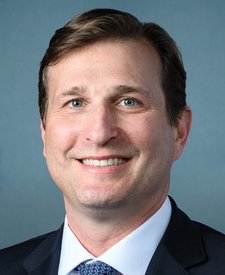
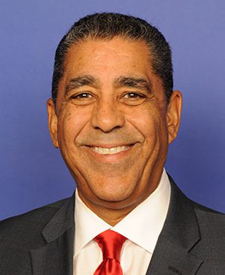


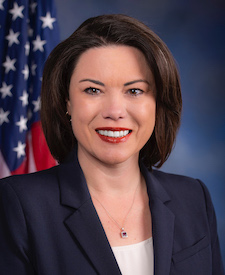
Legislative Progress
In CommitteeMr. Goldman of New York (for himself, Mr. Espaillat, Ms. …
Referred to the House Committee on the Judiciary.
Introduced in House
Stakeholder Effects
cui bono?How this legislation distributes effects. Mention counts reflect frequency, not effect magnitude.
Congressional oversight committees, DHS Inspector General staff, Immigration court administrators
Positive-direction: Congressional oversight committees, Immigration court administrators
Negative-direction: DHS Inspector General staff
DHS field managers, DHS officers, DHS training officials
Individuals attending immigration court, People attending DHS check-ins
Bill Structure & Actor Mappings
Who is "The Secretary" in each section?
We use a combination of our own taxonomy and classification in addition to large language models to assess meaning and potential beneficiaries. High confidence means strong textual evidence. Always verify with the original bill text.
Learn more about our methodology