SAFE Drugs Act of 2025
Summary
What This Bill Does
The SAFE Drugs Act updates Food, Drug, and Cosmetic Act compounding rules. Section 2 amends section 503A so a pharmacy or practitioner may not compound more than 20 times in a single month any drug product that is essentially a copy of a commercially available drug. It defines essentially a copy as a product containing an active ingredient found in a commercially available drug with no patient-specific change that a prescriber determines makes a significant difference for the identified patient. It also defines commercially available drug product as a product sold in the United States marketplace, made in facilities subject to current good manufacturing practice requirements, and not listed as discontinued. Section 3 requires a pharmacy, facility, or physician to report for calendar year 2025 and each later year if it compounds more than 20 times in a single month for out-of-state patients any drug product containing an active ingredient found in a commercially available drug. Reports must identify each product type and monthly totals, be submitted by year end, and follow the form and manner set by FDA. Hospital pharmacies compounding for hospital patients on hospital premises are excluded. Section 4 defines a large-scale outsourcing facility as one that compounds more than 100 times in a calendar year, requires inspection before first compounding and reinspection at least biennially, and removes the registration exemption for outsourcing facilities beginning six months after enactment. Section 5 replaces the fixed $15,000 base establishment fee with an amount the Secretary deems appropriate to fund compounded-drug safety activities.
Who Benefits and How
Patients benefit from tighter limits on repeated copy-like compounding, more federal visibility into interstate compounding, and required inspection of large-scale outsourcing facilities. FDA drug safety regulators benefit from annual data on product types and monthly volumes and from a fee base tied to safety oversight costs. Manufacturers of commercially available drugs benefit if fewer copy-like compounded products compete without a patient-specific significant difference. Hospital pharmacies benefit from a clear exclusion for compounding hospital-patient drugs on hospital premises.
Who Bears the Burden and How
Compounding pharmacies, facilities, and physicians must track monthly copy-like compounding, determine when out-of-state patient reporting is triggered, and submit annual reports. Large-scale outsourcing facilities must undergo inspection before first compounding and at least every two years, register despite the prior exemption, and may pay higher establishment fees. Prescribing practitioners must support patient-specific significant-difference determinations if compounded copies are used. FDA inspectors and fee staff must administer the new reports, inspections, registration treatment, and fee level.
Key Provisions
- Limits section 503A compounders to no more than 20 monthly copies of commercially available drugs without patient-specific significant differences.
- Defines essentially a copy and commercially available drug product for compounded-drug restrictions.
- Requires annual reports for pharmacies, facilities, or physicians exceeding 20 monthly interstate compounds of products with commercially available active ingredients.
- Excludes hospital-premises pharmacies compounding for hospital patients from the new reporting subsection.
- Requires pre-compounding inspection and biennial reinspection of large-scale outsourcing facilities.
- Removes the registration exemption for outsourcing facilities and lets FDA set a base establishment fee for compounded-drug safety work.
Evidence Chain:
This summary is generated from the full bill text using AI analysis. Expand "Detailed Analysis" below for identified beneficiaries/burden bearers with clause-level evidence links.
At a Glance
What This Bill Does
Tightens federal oversight of compounded drugs by limiting repeated copies of commercially available products, requiring annual reports for certain interstate compounding, mandating pre-opening and biennial inspections for large-scale outsourcing facilities, ending an outsourcing-facility registration exemption, and letting FDA set a safety-funded base establishment fee.
Key Policy Areas
Healthcare, Pharmaceuticals, Consumer Protection
Primary Purpose
Tightens federal oversight of compounded drugs by limiting repeated copies of commercially available products, requiring annual reports for certain interstate compounding, mandating pre-opening and biennial inspections for large-scale outsourcing facilities, ending an outsourcing-facility registration exemption, and letting FDA set a safety-funded base establishment fee.
Policy Domains
Substantive provisions
Identified Gains
- Patients receiving compounded drugs
- FDA drug safety regulators
- Commercial drug manufacturers
- Hospital pharmacies
Identified Costs
- Compounding pharmacies
- Compounding physicians
- Large-scale outsourcing facilities
- Prescribing practitioners
- FDA inspectors
- Outsourcing facilities
Sponsors


Legislative Progress
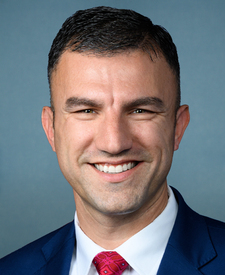
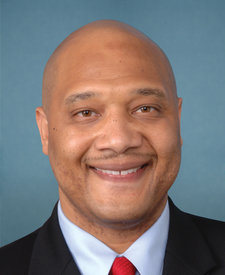
In CommitteeMr. Yakym (for himself and Mr. Carson) introduced the following …
Referred to the House Committee on Energy and Commerce.
Introduced in House
Stakeholder Effects
cui bono?How this legislation distributes effects. Mention counts reflect frequency, not effect magnitude.
Compounding facilities, Compounding pharmacies, Compounding physicians
Positive-direction: Hospital pharmacies
Negative-direction: Compounding facilities, Compounding pharmacies, Compounding physicians
Commercial drug manufacturers, Large-scale outsourcing facilities, Outsourcing facilities
Positive-direction: Commercial drug manufacturers
Negative-direction: Large-scale outsourcing facilities, Outsourcing facilities
FDA drug safety regulators, FDA fee administrators, FDA inspectors
Positive-direction: FDA drug safety regulators
Negative-direction: FDA fee administrators, FDA inspectors
Bill Structure & Actor Mappings
Who is "The Secretary" in each section?
We use a combination of our own taxonomy and classification in addition to large language models to assess meaning and potential beneficiaries. High confidence means strong textual evidence. Always verify with the original bill text.
Learn more about our methodology