Federal Building Threat Notification Act
Summary
What This Bill Does
The Federal Building Threat Notification Act requires the General Services Administration and Federal Protective Service to create guidance for emergency communications when life-safety events threaten federal buildings that are owned or operated by GSA and protected by FPS. The GSA Administrator and FPS Director must develop and disseminate the guidance within one year.
The guidance must include standard operating procedures for informing building tenants about threats and instructions on safety practices when a threat exists or risk is elevated. Each covered building's facility security committee designated official must implement the guidance locally. GSA must report to Congress within 18 months on best practices and protocols implemented in covered buildings.
Who Benefits and How
Federal building tenants benefit because they would receive clearer threat notices and safety-practice instructions during life-safety events. Federal employees working in GSA buildings benefit from more consistent emergency communication protocols. Facility security committees benefit from a federal template for who communicates, when, and how. Federal Protective Service officers benefit because tenant communication expectations are set before a crisis. Congressional oversight committees benefit from a report on which protocols and best practices were actually implemented.
Who Bears the Burden and How
The GSA Administrator must develop and disseminate the guidance and report to Congress. The Federal Protective Service Director must help create emergency communication procedures for buildings under FPS protection. Facility security committee designated officials must implement the guidance at each covered building. Building managers must coordinate tenant notifications and safety instructions during threats. Agencies occupying covered buildings may need to update local emergency communication plans.
Key Provisions
- Requires GSA and FPS to develop emergency communication guidance within one year.
- Covers GSA-owned or operated federal buildings under Federal Protective Service protection.
- Requires procedures to inform building tenants about life-safety threats.
- Requires safety-practice instructions for threats or heightened risk.
- Requires facility security committee designated officials to implement the guidance locally.
- Requires a congressional report within 18 months on implemented best practices and protocols.
Evidence Chain:
This summary is generated from the full bill text using AI analysis. Expand "Detailed Analysis" below for identified beneficiaries/burden bearers with clause-level evidence links.
At a Glance
What This Bill Does
Requires the GSA Administrator and Federal Protective Service Director to develop emergency communication guidance for facility security committees in GSA-owned or operated federal buildings protected by FPS, including tenant threat notices, safety-practice instructions, committee implementation, and a congressional report on adopted protocols.
Key Policy Areas
Federal Buildings, Emergency Management, Public Safety, Federal Workforce
Primary Purpose
Requires the GSA Administrator and Federal Protective Service Director to develop emergency communication guidance for facility security committees in GSA-owned or operated federal buildings protected by FPS, including tenant threat notices, safety-practice instructions, committee implementation, and a congressional report on adopted protocols.
Policy Domains
House resolution provisions
Identified Gains
- Federal building tenants
- Federal employees in GSA buildings
- Facility security committees
- Federal Protective Service officers
- Congressional oversight committees
Identified Costs
- GSA Administrator
- Federal Protective Service Director
- Facility security committee designated officials
- Federal building managers
- Tenant agencies
Sponsors
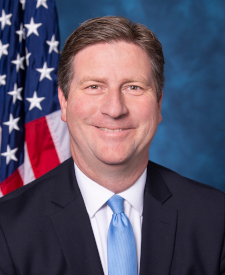
Greg Stanton
D-AZ | Primary Sponsor
Legislative Progress
ReportedReceived in the Senate and Read twice and referred to …
Received; read twice and referred to the Committee on Homeland …
Motion to reconsider laid on the table Agreed to without …
On motion to suspend the rules and pass the bill …
Passed/agreed to in House: On motion to suspend the rules …
DEBATE - The House proceeded with forty minutes of debate …
Considered under suspension of the rules. (consideration: CR H2649-2650)
Mr. Taylor moved to suspend the rules and pass the …
Placed on the Union Calendar, Calendar No. 476.
Reported by the Committee on Transportation and Infrastructure. H. Rept. …
Stakeholder Effects
cui bono?How this legislation distributes effects. Mention counts reflect frequency, not effect magnitude.
Facility security committee designated officials, GSA Administrator
Federal building tenants, Federal employees in GSA buildings
Bill Structure & Actor Mappings
Who is "The Secretary" in each section?
- "fps"
- → Federal Protective Service
- "fsc"
- → Facility Security Committee
- "gsa"
- → General Services Administration
We use a combination of our own taxonomy and classification in addition to large language models to assess meaning and potential beneficiaries. High confidence means strong textual evidence. Always verify with the original bill text.
Learn more about our methodology