American Water Stewardship Act
Summary
What This Bill Does
The American Water Stewardship Act extends several Clean Water Act water-restoration and beach-water programs through 2031. It continues the Great Lakes Restoration Initiative, Long Island Sound program, Columbia River Basin restoration program, National Estuary Program, and coastal recreation water-quality monitoring authority. The bill also updates the San Francisco Bay restoration program by changing it from a narrower grant program to broader program implementation authority that can use interagency agreements, contracts, or other funding mechanisms with federal, state, local, special district, public nonprofit, and other public or private entities.
The San Francisco Bay section sets project funding rules: federal support cannot exceed 75 percent of a project, activity, or study, and non-federal recipients must supply at least 25 percent from non-federal sources. The bill adds Mississippi Sound, Mississippi, to the National Estuary Program but blocks EPA from using FY2026 funds for that new estuary work and blocks FY2027 funds unless the National Estuary Program receives at least $850,000 more than its FY2024 appropriation. For coastal recreation waters, states and local governments may use grants to identify specific contamination sources near beaches and public access points, must report source data when they do so, and EPA guidance must reflect newer water-contamination testing technology. The definition of coastal recreation waters is expanded to include coastal estuaries, river and stream mouths, nearby shallow waters, and water present on beaches.
The bill also bars FY2026 through FY2031 funds under covered Clean Water Act sections from going to non-federal entities domiciled in, headquartered in, organized under the laws of, or principally based in a foreign country of concern, and in some versions bars projects conducted with or entities partnered with such countries. GAO must report to the House Transportation and Infrastructure Committee and Senate Environment and Public Works Committee on EPA geographic programs, including fund management, measurable outcomes, obstacles, coordination, duplication, ethics practices, and recommendations for efficiency and accountability.
Who Benefits and How
Great Lakes restoration grantees benefit because GLRI authorization continues through 2031. Long Island Sound restoration partners and Columbia River Basin restoration recipients benefit from extended program authority. San Francisco Bay restoration agencies, special districts, nonprofit organizations, contractors, and private entities benefit because EPA can support projects through more funding mechanisms than grants alone. Mississippi Sound communities benefit from possible National Estuary Program inclusion, but only if Congress provides enough additional FY2027 funding to avoid taking money from existing estuary work. State beach-water monitoring agencies and local health departments benefit because federal beach grants can support source tracking for contamination. Beachgoers benefit if better source identification and modern testing guidance produce faster warnings and cleaner recreation waters.
Who Bears the Burden and How
EPA geographic program offices must administer extended authorities, manage broader San Francisco Bay funding tools, apply foreign-country-of-concern restrictions, and update guidance for testing technology. Non-federal San Francisco Bay recipients must provide at least 25 percent of project costs from non-federal sources. EPA National Estuary Program staff cannot spend FY2026 funds on Mississippi Sound implementation and must observe the $850,000 FY2027 funding guardrail. Foreign-country-of-concern entities and covered partners lose eligibility for funds under the listed Clean Water Act sections. GAO auditors must evaluate EPA geographic program management, coordination, measurable outcomes, ethics practices, and duplication across programs. Congressional oversight staff must review the GAO recommendations and funding tradeoffs.
Key Provisions
- Extends the Great Lakes Restoration Initiative authorization through fiscal years 2026 through 2031.
- Extends Long Island Sound and Columbia River Basin restoration authority through 2031.
- Expands San Francisco Bay restoration support from a grant program to broader program implementation using agreements, contracts, or other funding mechanisms.
- Limits San Francisco Bay federal support to 75 percent of project cost and requires at least 25 percent non-federal cost share for non-federal recipients.
- Adds Mississippi Sound to the National Estuary Program while restricting FY2026 funds and requiring an $850,000 FY2027 funding increase before FY2027 implementation funds may be used.
- Allows beach-water grants to identify specific contamination sources and requires source data reporting when grants are used that way.
- Expands the coastal recreation water definition and directs EPA guidance to reflect water-testing technology innovations.
- Bars covered Clean Water Act funds from specified foreign-country-of-concern entities or projects.
- Requires GAO to report on EPA geographic program efficiency, accountability, outcomes, coordination, ethics practices, and duplication.
Evidence Chain:
This summary is generated from the full bill text using AI analysis. Expand "Detailed Analysis" below for identified beneficiaries/burden bearers with clause-level evidence links.
At a Glance
What This Bill Does
Reauthorizes and expands multiple Clean Water Act geographic and beach-water programs through fiscal year 2031, broadens San Francisco Bay restoration funding tools with a 75 percent federal-share cap and 25 percent non-federal match, adds Mississippi Sound to the National Estuary Program with an $850,000 FY2027 funding guardrail, bars certain foreign-country-of-concern entities from receiving program funds, and requires a GAO report on EPA geographic programs.
Key Policy Areas
Water Quality, Environmental Restoration, Federal Grants, Government Oversight
Primary Purpose
Reauthorizes and expands multiple Clean Water Act geographic and beach-water programs through fiscal year 2031, broadens San Francisco Bay restoration funding tools with a 75 percent federal-share cap and 25 percent non-federal match, adds Mississippi Sound to the National Estuary Program with an $850,000 FY2027 funding guardrail, bars certain foreign-country-of-concern entities from receiving program funds, and requires a GAO report on EPA geographic programs.
Policy Domains
House resolution provisions
Identified Gains
- Great Lakes restoration grantees
- Long Island Sound restoration partners
- Columbia River Basin restoration recipients
- San Francisco Bay restoration agencies
- Mississippi Sound communities
- State beach-water monitoring agencies
- Beachgoers
- Congressional oversight committees
Identified Costs
- EPA geographic program offices
- Non-federal San Francisco Bay recipients
- EPA National Estuary Program staff
- Foreign-country-of-concern entities
- GAO auditors
- Congressional oversight staff
Sponsors
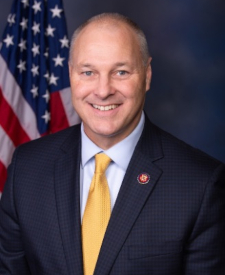
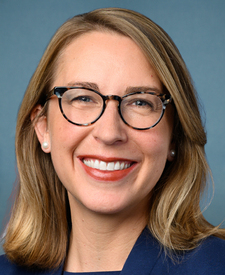

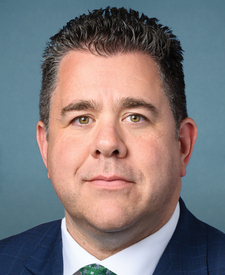
Legislative Progress
ReportedReceived in the Senate and Read twice and referred to …
Received; read twice and referred to the Committee on Environment …
Motion to reconsider laid on the table Agreed to without …
DEBATE - The House proceeded with forty minutes of debate …
Motion to reconsider laid on the table Agreed to without …
Considered as unfinished business. (consideration: CR H2665-2666)
At the conclusion of debate, the Yeas and Nays were …
Passed/agreed to in House: On motion to suspend the rules …
On motion to suspend the rules and pass the bill, …
Considered under suspension of the rules. (consideration: CR H2662-2665)
Stakeholder Effects
cui bono?How this legislation distributes effects. Mention counts reflect frequency, not effect magnitude.
Beachgoers at coastal recreation waters, Columbia River Basin communities, Columbia River Basin restoration recipients
Positive-direction: Beachgoers at coastal recreation waters, Columbia River Basin communities, Columbia River Basin restoration recipients, Domestic water-restoration applicants, Existing National Estuary Program grantees, Great Lakes coastal communities, Great Lakes restoration grantees, Long Island Sound coastal communities, Long Island Sound restoration partners, Mississippi Sound coastal communities, San Francisco Bay restoration agencies, State beach-water monitoring agencies
Negative-direction: Non-federal San Francisco Bay recipients, Non-federal water-restoration applicants
EPA Columbia River Basin program office, EPA Great Lakes program office, EPA Long Island Sound program office
Positive-direction: Mississippi Sound conservation organizations, San Francisco Bay nonprofit restoration organizations, San Francisco Bay restoration contractors, Water quality testing laboratories
Negative-direction: EPA Columbia River Basin program office, EPA Great Lakes program office, EPA Long Island Sound program office, EPA National Estuary Program staff, EPA San Francisco Bay program office, EPA beach-water guidance staff, EPA grant compliance staff
Foreign-country-of-concern environmental entities
Bill Structure & Actor Mappings
Who is "The Secretary" in each section?
- "epa"
- → Environmental Protection Agency
- "gao"
- → Government Accountability Office
We use a combination of our own taxonomy and classification in addition to large language models to assess meaning and potential beneficiaries. High confidence means strong textual evidence. Always verify with the original bill text.
Learn more about our methodology