Defense Health Agency Prevention Services Enhancement Act
Summary
What This Bill Does
The Defense Health Agency Prevention Services Enhancement Act requires the Secretary of Defense, after consulting military department Secretaries, to brief the House Armed Services Committee within 180 days on whether covered prevention services should be consolidated into one facility at each United States military installation. Covered services include programs to prevent sexual assault, suicide, harassment, domestic violence, and related community prevention harms for service members and dependents. The briefing must assess feasibility and advisability, estimate costs, and evaluate each military department experience, successes, and lessons learned. It does not itself order consolidation, but it creates a planning and oversight step toward a one-stop prevention services model.
Who Benefits and How
Service members and dependents benefit if prevention services become easier to find and navigate on installations. Installation prevention offices benefit from a formal review of whether co-location would reduce fragmentation. The House Armed Services Committee benefits from cost and feasibility information before deciding whether to legislate a broader consolidation mandate.
Who Bears the Burden and How
The Defense Secretary, military department Secretaries, and Defense Health Agency staff must collect program data, estimate costs, and prepare the briefing within 180 days. Installation prevention offices may need to document current operations and lessons learned. Federal taxpayers fund the review and any later consolidation decisions that Congress or the Pentagon chooses to pursue.
Key Provisions
- Requires a 180-day briefing to the House Armed Services Committee.
- Covers sexual assault, suicide, harassment, domestic violence, and related community prevention services.
- Requires feasibility and advisability analysis for a single prevention facility at each U.S. military installation.
- Requires a cost estimate and service-by-service evaluation of efforts, successes, and lessons learned.
Evidence Chain:
This summary is generated from the full bill text using AI analysis. Expand "Detailed Analysis" below for identified beneficiaries/burden bearers with clause-level evidence links.
At a Glance
What This Bill Does
Requires the Defense Secretary to brief Congress on the feasibility, costs, and service-level lessons of consolidating sexual assault, suicide, harassment, domestic violence, and related prevention services into a single prevention facility at each U.S. military installation.
Key Policy Areas
Defense, Health Care, Veterans
Primary Purpose
Requires the Defense Secretary to brief Congress on the feasibility, costs, and service-level lessons of consolidating sexual assault, suicide, harassment, domestic violence, and related prevention services into a single prevention facility at each U.S. military installation.
Policy Domains
Substantive provisions
Identified Gains
- Service members
- Military dependents
- Installation prevention offices
- House Armed Services Committee
Identified Costs
- Defense Secretary
- Military department Secretaries
- Defense Health Agency
- Installation prevention program staff
- Federal taxpayers
Legislative Progress
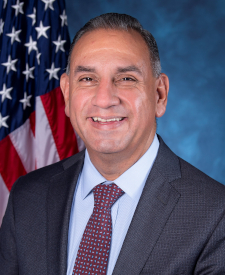
In CommitteeMr. Cisneros introduced the following bill; which was referred to …
Referred to the House Committee on Armed Services.
Introduced in House
Stakeholder Effects
cui bono?How this legislation distributes effects. Mention counts reflect frequency, not effect magnitude.
Installation prevention offices, Service members
Positive-direction: Service members
Negative-direction: Installation prevention offices
Defense Secretary, House Armed Services Committee
Positive-direction: House Armed Services Committee
Negative-direction: Defense Secretary
Bill Structure & Actor Mappings
Who is "The Secretary" in each section?
We use a combination of our own taxonomy and classification in addition to large language models to assess meaning and potential beneficiaries. High confidence means strong textual evidence. Always verify with the original bill text.
Learn more about our methodology