To amend title 28, United States Code, to provide for the appointment of additional Federal circuit judges, to divide the Ninth Judicial Circuit of the United States into two judicial circuits, and for other purposes.
Analysis under review: This bill has generated analysis that may be too generic or incomplete. Clause-level evidence remains available below.
Summary
What This Bill Does
The Ninth Circuit Court of Appeals Judgeship and Reorganization Act of 2025 splits the current Ninth Circuit Court of Appeals -- the largest and most geographically sprawling federal appellate court -- into two separate circuits. The new Ninth Circuit would cover California, Guam, Hawaii, and the Northern Mariana Islands. A new Twelfth Circuit would cover Alaska, Arizona, Idaho, Montana, Nevada, Oregon, and Washington. The bill also authorizes 5 new circuit judgeships (2 temporary, 3 permanent for the new Ninth Circuit) and creates a detailed transition framework for reassigning sitting judges, transferring pending cases, and coordinating administrative functions between the two courts.
Who Benefits and How
Conservative legal interests and litigants in the Pacific Northwest and Mountain West states are primary beneficiaries. The Ninth Circuit has long been perceived as ideologically liberal, and splitting off Alaska, Arizona, Idaho, Montana, Nevada, Oregon, and Washington into a separate Twelfth Circuit would create a court with a more conservative ideological composition. Litigants in those states would no longer have their appeals decided by panels drawn from the full Ninth Circuit bench, which includes a large number of California-based judges. The bill also benefits the federal judiciary administration by reducing the Ninth Circuit unwieldy caseload and geographic scope. The President benefits from the opportunity to appoint 5 new circuit judges, shaping the ideological direction of both circuits.
Who Bears the Burden and How
The existing Ninth Circuit judicial infrastructure bears the administrative burden of the split: reassigning judges, transferring pending cases, establishing new administrative systems for the Twelfth Circuit, and coordinating a 2-year transition period. Litigants with pending cases face potential delays and uncertainty as their matters are transferred between circuits. The federal government bears fiscal costs for new court facilities, additional judges, and duplicated administrative functions. Parties who previously benefited from the Ninth Circuit ideological composition and its large en banc panels (which diluted outlier decisions) may find the split disadvantageous.
Key Provisions
- Splits the Ninth Circuit into a new Ninth Circuit (CA, GU, HI, MP) and a new Twelfth Circuit (AK, AZ, ID, MT, NV, OR, WA)
- Authorizes 5 new circuit judgeships: 2 temporary for the former Ninth Circuit (duty stations in AZ, CA, or NV) and 3 permanent for the new Ninth Circuit (not before January 21, 2025)
- Sets new Ninth Circuit at 25 judges and Twelfth Circuit at 9 judges
- Assigns sitting judges to new circuits based on duty station location, with seniority-based overflow mechanism
- Provides transition rules for pending cases: submitted cases stay with former court; unsubmitted cases transfer to the appropriate new circuit
- Authorizes temporary cross-circuit assignment of both circuit and district judges
- Allows joint administrative functions between contiguous circuits
- Establishes a 2-year administrative transition period
- Effective date tied to Senate confirmation of 5 of the new judges
Evidence Chain:
This summary is generated from the full bill text using AI analysis. Expand "Detailed Analysis" below for identified beneficiaries/burden bearers.
At a Glance
What This Bill Does
Splits the Ninth Judicial Circuit into two circuits (a new Ninth covering California and Pacific territories, and a new Twelfth covering Pacific Northwest and Mountain West states), authorizes 5 new circuit judgeships, and establishes a comprehensive transition framework for reassigning judges, transferring cases, and coordinating administrative functions.
Key Policy Areas
Judiciary, Government Operations
Primary Purpose
Splits the Ninth Judicial Circuit into two circuits (a new Ninth covering California and Pacific territories, and a new Twelfth covering Pacific Northwest and Mountain West states), authorizes 5 new circuit judgeships, and establishes a comprehensive transition framework for reassigning judges, transferring cases, and coordinating administrative functions.
Policy Domains
Whole Bill -- Ninth Circuit Reorganization
Identified Gains
Contextual inference, no direct clause citation- Conservative legal interests and litigants in Pacific Northwest/Mountain West states
- The appointing President (5 new circuit judge appointments)
- Federal judiciary administration (reduced caseload per circuit)
Contextual inference, no direct clause citation
Identified Costs
Contextual inference, no direct clause citation- Existing Ninth Circuit judicial infrastructure (2-year transition)
- Federal government (new court facilities and duplicated administration)
- Litigants with pending cases (transfer uncertainty)
Contextual inference, no direct clause citation
Sponsors
Legislative Progress
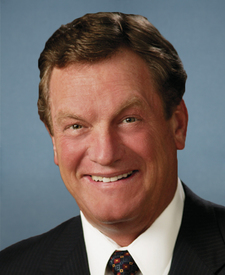
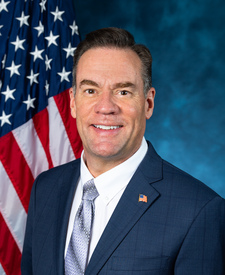
IntroducedMr. Simpson (for himself and Mr. Fulcher) introduced the following …
Stakeholder Effects
cui bono?How this legislation distributes effects. Mention counts reflect frequency, not effect magnitude.
Administrative Office of the former Ninth Circuit, Chief judges of the Ninth and Twelfth circuits, Federal appellate courts (Ninth and Twelfth circuits)
Positive-direction: Chief judges of the Ninth and Twelfth circuits, Federal judiciary (new Ninth and Twelfth circuits), Federal judiciary (new court facilities and operations)
Negative-direction: Administrative Office of the former Ninth Circuit, Federal appellate courts (Ninth and Twelfth circuits), Federal district judges in the Ninth and Twelfth circuits
Litigants in states assigned to the Twelfth Circuit, Litigants with pending Ninth Circuit appeals
Bill Structure & Actor Mappings
Who is "The Secretary" in each section?
- "the_director"
- → Director of the Administrative Office of the United States Courts
- "the_president"
- → President of the United States
Key Definitions
Terms defined in this bill
The ninth judicial circuit of the United States as in existence on the day before the effective date of this Act
The ninth judicial circuit established by the amendment made by section 3(2)(A), covering California, Guam, Hawaii, and Northern Mariana Islands
The twelfth judicial circuit established by the amendment made by section 3(2)(B), covering Alaska, Arizona, Idaho, Montana, Nevada, Oregon, and Washington
We use a combination of our own taxonomy and classification in addition to large language models to assess meaning and potential beneficiaries. High confidence means strong textual evidence. Always verify with the original bill text.
Learn more about our methodology