To amend title 28, United States Code, to provide for the appointment of additional Federal circuit judges, to divide the Ninth Judicial Circuit of the United States into two judicial circuits, and for other purposes.
Summary
What This Bill Does
The bill defines key terms for the circuit court reorganization: former ninth circuit (pre-split Ninth Circuit), new ninth circuit (post-split covering CA, GU, HI, MP), and twelfth circuit (new circuit covering AK, AZ, ID, MT, authorizes the President to appoint 5 new circuit judges: 2 additional temporary judges for the former ninth circuit (duty stations in AZ, CA, or NV), and 3 permanent judges for the new ninth circuit (not before January, and creates assigns sitting Ninth Circuit judges to the new circuits based on their official duty station location: judges stationed in California, Guam, Hawaii, or Northern Mariana Islands go to the new Ninth Circuit. It relies on governance structure and spending auth. The main policy areas are Judiciary, Finance, and Housing.
Who Benefits and How
Federal judiciary (new court facilities and operations) could gain revenue opportunities, Federal judiciary (new Ninth and Twelfth circuits) could gain revenue opportunities, and The appointing President would be affected.
Who Bears the Burden and How
Administrative Office of the former Ninth Circuit would take on compliance duties, Federal taxpayers could face higher costs, and Federal district judges in the Ninth and Twelfth circuits would take on compliance duties.
Key Provisions
- Defines key terms for the circuit court reorganization: former ninth circuit (pre-split Ninth Circuit), new ninth circuit (post-split covering CA, GU, HI, MP), and twelfth circuit (new circuit covering AK, AZ, ID, MT...
- Authorizes the President to appoint 5 new circuit judges: 2 additional temporary judges for the former ninth circuit (duty stations in AZ, CA, or NV), and 3 permanent judges for the new ninth circuit (not before January...
- Creates assigns sitting Ninth Circuit judges to the new circuits based on their official duty station location: judges stationed in California, Guam, Hawaii, or Northern Mariana Islands go to the new Ninth Circuit...
- Establishes transition rules for pending cases during the circuit split.
- Amends 28 U.S.C. section 292 to allow the chief judges of the Ninth and Twelfth circuits to temporarily assign district judges to sit on the other circuit Court of Appeals or hold district court in the other circuit...
Evidence Chain:
This summary is generated from the full bill text using AI analysis. Expand "Detailed Analysis" below for identified beneficiaries/burden bearers with clause-level evidence links.
At a Glance
What This Bill Does
The bill defines key terms for the circuit court reorganization: former ninth circuit (pre-split Ninth Circuit), new ninth circuit (post-split covering CA, GU, HI, MP), and twelfth circuit (new circuit covering AK, AZ, ID, MT, authorizes the President to appoint 5 new circuit judges: 2 additional temporary judges for the former ninth circuit (duty stations in AZ, CA, or NV), and 3 permanent judges for the new ninth circuit (not before January, and creates assigns sitting Ninth Circuit judges to the new circuits based on their official duty station location: judges stationed in California, Guam, Hawaii, or Northern Mariana Islands go to the new Ninth Circuit.
Key Policy Areas
Judiciary, Finance, Housing
Primary Purpose
The bill defines key terms for the circuit court reorganization: former ninth circuit (pre-split Ninth Circuit), new ninth circuit (post-split covering CA, GU, HI, MP), and twelfth circuit (new circuit covering AK, AZ, ID, MT, authorizes the President to appoint 5 new circuit judges: 2 additional temporary judges for the former ninth circuit (duty stations in AZ, CA, or NV), and 3 permanent judges for the new ninth circuit (not before January, and creates assigns sitting Ninth Circuit judges to the new circuits based on their official duty station location: judges stationed in California, Guam, Hawaii, or Northern Mariana Islands go to the new Ninth Circuit.
Policy Domains
Whole Bill -- Ninth Circuit Reorganization
Identified Gains
- Federal judiciary (new court facilities and operations)
- Federal judiciary (new Ninth and Twelfth circuits)
- The appointing President
- Chief judges of the Ninth and Twelfth circuits
- Construction and facilities contractors
Identified Costs
- Administrative Office of the former Ninth Circuit
- Federal taxpayers
- Federal district judges in the Ninth and Twelfth circuits
- Federal appellate courts (Ninth and Twelfth circuits)
Sponsors
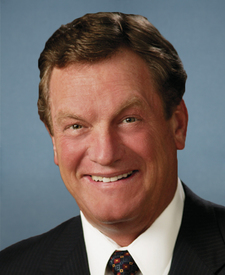
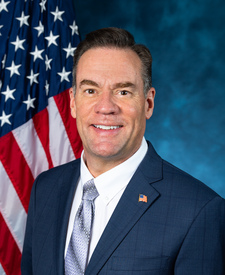
Legislative Progress
IntroducedMr. Simpson (for himself and Mr. Fulcher) introduced the following …
Stakeholder Effects
cui bono?How this legislation distributes effects. Mention counts reflect frequency, not effect magnitude.
Administrative Office of the former Ninth Circuit, Chief judges of the Ninth and Twelfth circuits, Federal appellate courts (Ninth and Twelfth circuits)
Positive-direction: Chief judges of the Ninth and Twelfth circuits, Federal judiciary (new Ninth and Twelfth circuits), Federal judiciary (new court facilities and operations)
Negative-direction: Administrative Office of the former Ninth Circuit, Federal appellate courts (Ninth and Twelfth circuits), Federal district judges in the Ninth and Twelfth circuits
Litigants in states assigned to the Twelfth Circuit, Litigants with pending Ninth Circuit appeals
Bill Structure & Actor Mappings
Who is "The Secretary" in each section?
- "the_director"
- → Director of the Administrative Office of the United States Courts
- "the_president"
- → President of the United States
Key Definitions
Terms defined in this bill
The ninth judicial circuit of the United States as in existence on the day before the effective date of this Act
The ninth judicial circuit established by the amendment made by section 3(2)(A), covering California, Guam, Hawaii, and Northern Mariana Islands
The twelfth judicial circuit established by the amendment made by section 3(2)(B), covering Alaska, Arizona, Idaho, Montana, Nevada, Oregon, and Washington
We use a combination of our own taxonomy and classification in addition to large language models to assess meaning and potential beneficiaries. High confidence means strong textual evidence. Always verify with the original bill text.
Learn more about our methodology