No GOUGE Act
Summary
What This Bill Does
The No GOUGE Act defines tariffed goods to include final goods, U.S.-assembled goods with tariffed components, components subject to tariffs imposed after January 20, 2025, and goods tied to planned tariffs announced by senior Federal officials. For five years after the tariff or planned tariff applies, sellers may not sell tariffed goods at unreasonably high prices. A price is unreasonable when it rises more than tariff-generated costs and legitimate additional costs, excluding executive compensation and share repurchases. The rule applies only to sellers whose ultimate parent entity earned at least $100 million from U.S. goods sales in the prior 12 months, indexed annually. The bill creates presumptions around tariff-related shock dates, FTC enforcement, State enforcement, recordkeeping, and defenses, and requires annual public reports by the International Trade Commission and BLS on tariffed-good prices for billion-dollar companies and by FTC on enforcement effects.
Who Benefits and How
Consumers benefit from a Federal price-gouging rule intended to stop large firms from marking up goods beyond tariff-driven costs. Smaller sellers under the $100 million threshold benefit from an exemption. Congress and the public benefit from annual ITC, BLS, and FTC reporting on tariffed-good prices and enforcement.
Who Bears the Burden and How
Large manufacturers, importers, wholesalers, and retailers selling tariffed goods face price-justification, recordkeeping, enforcement, and litigation risk for five years after tariffs or planned tariffs. FTC, State attorneys general, ITC, and BLS must enforce or report on the regime. Firms with tariffed components must separate tariff costs from unrelated price increases.
Key Provisions
- Defines tariffed goods, planned tariffs, tariff-related shock dates, components, final goods, and ultimate parent entities.
- Prohibits large sellers from charging unreasonably high prices for tariffed goods for five years after a tariff or planned tariff applies.
- Limits permissible price increases to tariff-generated costs and legitimate additional costs excluding executive compensation and share repurchases.
- Exempts sellers whose ultimate parent entity has under $100 million in U.S. goods revenue, indexed annually.
- Requires annual public ITC-BLS price reports and FTC enforcement reports.
Evidence Chain:
This summary is generated from the full bill text using AI analysis. Expand "Detailed Analysis" below for identified beneficiaries/burden bearers with clause-level evidence links.
At a Glance
What This Bill Does
Prohibits large sellers from using tariffs or planned tariffs as a pretext for excessive price increases on tariffed goods and requires public price and enforcement reports.
Key Policy Areas
Consumer Protection, Trade, Antitrust
Primary Purpose
Prohibits large sellers from using tariffs or planned tariffs as a pretext for excessive price increases on tariffed goods and requires public price and enforcement reports.
Policy Domains
Substantive provisions
Identified Gains
- Consumers buying tariffed goods
- Small sellers below the revenue threshold
- Congressional trade committees
- State attorneys general
Identified Costs
- Large sellers of tariffed goods
- Federal Trade Commission
- International Trade Commission
- Bureau of Labor Statistics
- Importers using tariffed components
Sponsors
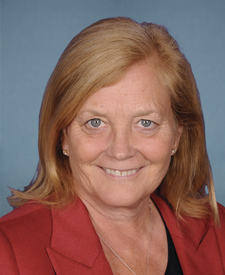
Legislative Progress
In CommitteeMs. DeLauro (for herself, Ms. Craig, Ms. Ocasio-Cortez, Mr. McGovern, …
Referred to the Committee on Energy and Commerce, and in …
Introduced in House
Stakeholder Effects
cui bono?How this legislation distributes effects. Mention counts reflect frequency, not effect magnitude.
Bureau of Labor Statistics, Congressional trade committees, Federal Trade Commission
Positive-direction: Congressional trade committees
Negative-direction: Bureau of Labor Statistics, Federal Trade Commission, International Trade Commission
Large sellers of tariffed goods, Small sellers below the revenue threshold
Positive-direction: Small sellers below the revenue threshold
Negative-direction: Large sellers of tariffed goods
Bill Structure & Actor Mappings
Who is "The Secretary" in each section?
We use a combination of our own taxonomy and classification in addition to large language models to assess meaning and potential beneficiaries. High confidence means strong textual evidence. Always verify with the original bill text.
Learn more about our methodology