Tri-Share Child Care Pilot Act of 2025
Summary
What This Bill Does
The Tri-Share Child Care Pilot Act amends Social Security Act child care funding rules to let State lead agencies apply for grants to run a program where eligible child care costs are split equally among a parent, the parent’s participating employer, and the State lead agency. HHS approves State applications based on unmet demand for affordable quality child care, State capacity, committed employers, plans to recruit more employers, and equitable statewide access. Federal payments reimburse approved States quarterly based on the State’s FMAP, with no more than 10 percent for administration and no more than $20 million payable to a State. Employers may apply to participate, HHS must allow consolidated employer applications across States, and parents employed by participating employers apply with a joint employer-parent attestation that each non-State party will pay one-third. The bill includes eligibility, provider health and safety, payment, reporting, evaluation, and definitions across the pilot program.
Who Benefits and How
Working parents benefit from a child care model that shifts two-thirds of eligible costs to employers and State agencies. Participating employers benefit from a workforce retention and recruitment tool tied to child care affordability. State lead agencies and child care providers benefit from Federal reimbursement and a structured pilot for expanding affordable care.
Who Bears the Burden and How
Parents still pay one-third of eligible costs and must apply with employer attestations. Participating employers take on one-third of child care costs and application coordination. State lead agencies must apply, recruit employers, approve parents and providers, pay shares, meet health and safety certifications, administer caps, and report outcomes. HHS must approve and evaluate State pilots.
Key Provisions
- Authorizes State lead agencies to apply for tri-share child care pilot grants.
- Requires parents, participating employers, and State lead agencies to each pay one-third of eligible child care costs.
- Provides Federal quarterly reimbursement to States based on FMAP, capped at $20 million per State and 10 percent administration.
- Requires HHS to prioritize unmet demand, State capacity, employer commitments, recruitment plans, and equitable statewide access.
- Requires employer and parent applications, provider health and safety certification, reporting, and evaluation.
Evidence Chain:
This summary is generated from the full bill text using AI analysis. Expand "Detailed Analysis" below for identified beneficiaries/burden bearers with clause-level evidence links.
At a Glance
What This Bill Does
Creates a tri-share child care pilot in which parents, participating employers, and State lead agencies each pay one-third of eligible child care costs, with Federal reimbursement to States.
Key Policy Areas
Child Care, Workforce, State & Local Government
Primary Purpose
Creates a tri-share child care pilot in which parents, participating employers, and State lead agencies each pay one-third of eligible child care costs, with Federal reimbursement to States.
Policy Domains
Substantive provisions
Identified Gains
- Working parents needing child care
- Participating employers
- State child care lead agencies
- Eligible child care providers
Identified Costs
- Parents paying one-third of child care costs
- Employers paying one-third of child care costs
- Department of Health and Human Services
- State lead agencies
Sponsors
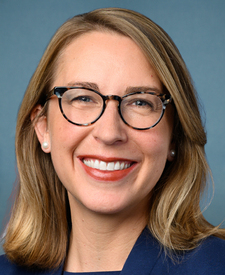


Legislative Progress
In CommitteeMs. Scholten (for herself and Mr. James) introduced the following …
Referred to the Committee on Ways and Means, and in …
Introduced in House
Stakeholder Effects
cui bono?How this legislation distributes effects. Mention counts reflect frequency, not effect magnitude.
Eligible child care providers, Working parents needing child care
Bill Structure & Actor Mappings
Who is "The Secretary" in each section?
We use a combination of our own taxonomy and classification in addition to large language models to assess meaning and potential beneficiaries. High confidence means strong textual evidence. Always verify with the original bill text.
Learn more about our methodology