To increase penalties for the commission of financial crimes using artificial intelligence.
Analysis under review: This bill has generated analysis that may be too generic or incomplete. Clause-level evidence remains available below.
Summary
What This Bill Does
Raises penalties for several fraud and money-laundering offenses when artificial intelligence is used and adds AI-specific treatment for impersonation of federal officials.
Who Benefits and How
Fraud victims, financial institutions, and federal officials gain stronger deterrence against AI-enabled scams and impersonation.
Who Bears the Burden and How
People using AI to commit fraud or impersonate officials face higher criminal exposure, and prosecutors and courts must apply the new enhancements.
Key Provisions
- Increases penalties for mail fraud, wire fraud, bank fraud, and money laundering when committed with AI assistance.
- Adds AI-related language and definitions to the relevant criminal statutes.
- Raises penalties for AI-assisted impersonation of federal officials while preserving disclosed satire and parody.
Evidence Chain:
This summary is generated from the full bill text using AI analysis. Expand "Detailed Analysis" below for identified beneficiaries/burden bearers.
At a Glance
What This Bill Does
Raises penalties for several fraud and money-laundering offenses when artificial intelligence is used and adds AI-specific treatment for impersonation of federal officials.
Key Policy Areas
Technology, Finance, Crime
Primary Purpose
Raises penalties for several fraud and money-laundering offenses when artificial intelligence is used and adds AI-specific treatment for impersonation of federal officials.
Policy Domains
Main Provisions
Identified Gains
Contextual inference, no direct clause citation- Fraud victims and financial institutions
- Federal officials targeted by AI impersonation
Contextual inference, no direct clause citation
Identified Costs
Contextual inference, no direct clause citation- Bad actors using AI to commit fraud or impersonation
- Federal prosecutors and courts applying enhanced penalties
Contextual inference, no direct clause citation
Sponsors
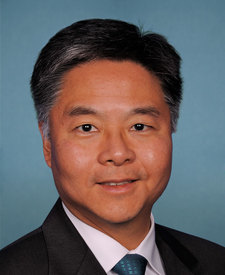
Ted Lieu
D-CA | Primary Sponsor
Legislative Progress
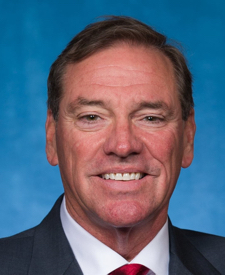
IntroducedMr. Lieu (for himself and Mr. Dunn of Florida) introduced …
Stakeholder Effects
cui bono?How this legislation distributes effects. Mention counts reflect frequency, not effect magnitude.
People using artificial intelligence to impersonate federal officials, Potential fraud perpetrators using artificial intelligence
Federal officials and people contacted through impersonation schemes, Federal prosecutors and courts
Positive-direction: Federal officials and people contacted through impersonation schemes
Negative-direction: Federal prosecutors and courts
Bill Structure & Actor Mappings
Who is "The Secretary" in each section?
We use a combination of our own taxonomy and classification in addition to large language models to assess meaning and potential beneficiaries. High confidence means strong textual evidence. Always verify with the original bill text.
Learn more about our methodology