BOOST Act of 2025
Summary
What This Bill Does
The BOOST Act establishes an Office of Universal Adult Assistance inside the Social Security Administration. Qualifying adults who live in the United States, are U.S. citizens, nationals, or qualified aliens, and are at least 19 but under 68 receive $250 per month beginning after December 31, 2025, with indexing after 2026 and Social Security anti-fraud rules applying to the payments. The program requires applications, eligibility determinations, records, culturally and linguistically competent outreach, fraud prevention, annual reporting, and regulations. The bill also creates a new Internal Revenue Code chapter imposing a 2.5 percent supplemental tax on adjusted gross income above $60,000 for joint returns and $30,000 for other returns, indexed after 2026, and bars credits, deductions, exclusions, refunds, rebates, or carryovers from reducing that supplemental tax once AGI is determined.
Who Benefits and How
Qualifying adults ages 19 through 67 benefit from a predictable $250 monthly payment that is indexed for inflation after 2026. Lower- and moderate-income adults below the supplemental-tax exemption thresholds benefit from the payment without paying the new supplemental AGI tax. SSA program administrators receive statutory authority to run a dedicated adult assistance office.
Who Bears the Burden and How
Higher-income taxpayers with adjusted gross income above $60,000 for joint returns or $30,000 for other returns must pay a new 2.5 percent supplemental tax that cannot be offset by credits or deductions. The Social Security Administration and IRS must build payment, application, withholding, estimated-tax, anti-fraud, reporting, and guidance systems. Federal taxpayers and Treasury cash management bear the fiscal and administrative exposure of a new monthly-payment program.
Key Provisions
- Establishes an Office of Universal Adult Assistance within the Social Security Administration.
- Authorizes $250 monthly payments after December 31, 2025, for qualifying adults ages 19 through 67.
- Requires indexing of the payment amount after 2026 and applies Social Security anti-fraud rules.
- Creates a 2.5 percent supplemental tax on adjusted gross income above $60,000 for joint returns and $30,000 for other returns.
- Bars credits, deductions, exclusions, refunds, rebates, and carryovers from reducing the new supplemental tax.
Evidence Chain:
This summary is generated from the full bill text using AI analysis. Expand "Detailed Analysis" below for identified beneficiaries/burden bearers with clause-level evidence links.
At a Glance
What This Bill Does
Creates a Social Security-administered $250 monthly universal adult assistance payment for qualifying adults and funds it with a new 2.5 percent supplemental adjusted-gross-income tax above indexed exemption amounts.
Key Policy Areas
Social Services, Tax, Income Support
Primary Purpose
Creates a Social Security-administered $250 monthly universal adult assistance payment for qualifying adults and funds it with a new 2.5 percent supplemental adjusted-gross-income tax above indexed exemption amounts.
Policy Domains
Substantive provisions
Identified Gains
- Qualifying adults ages 19 through 67
- Lower-income adults receiving monthly payments
- Social Security Administration payment offices
Identified Costs
- Higher-income individual taxpayers
- Internal Revenue Service
- Social Security Administration
- Treasury tax guidance offices
Sponsors




Legislative Progress
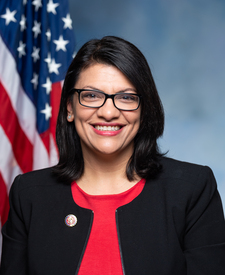
In CommitteeMs. Tlaib (for herself, Ms. Norton, Ms. Lee of Pennsylvania, …
Referred to the House Committee on Ways and Means.
Introduced in House
Stakeholder Effects
cui bono?How this legislation distributes effects. Mention counts reflect frequency, not effect magnitude.
Internal Revenue Service, Social Security Administration, Treasury tax guidance offices
Federal tax revenue, Higher-income individual taxpayers, Taxpayers
Positive-direction: Federal tax revenue
Negative-direction: Higher-income individual taxpayers, Taxpayers
Lower-income adults receiving monthly payments, Qualifying adults ages 19 through 67
Bill Structure & Actor Mappings
Who is "The Secretary" in each section?
We use a combination of our own taxonomy and classification in addition to large language models to assess meaning and potential beneficiaries. High confidence means strong textual evidence. Always verify with the original bill text.
Learn more about our methodology