End Rent Fixing Act of 2025
Summary
What This Bill Does
The End Rent Fixing Act of 2025 targets algorithmic rent-setting coordination in residential rental markets. It defines a coordinating function as collecting price, supply, lease termination, or renewal-date information from two or more rental property owners; analyzing or processing it with a system, software, or formula, including training an algorithm to predict rental prices, lease renewal terms, or occupancy levels; and recommending prices, renewal terms, or occupancy levels to two or more owners. Section 3 makes it unlawful for rental property owners, agents, or subcontractors to subscribe to, contract with, or exchange value for coordinator services, and makes it unlawful for any person to perform a coordinating function. Violations are deemed unfair methods of competition under the FTC Act and per se Sherman Act violations. The FTC may bring civil penalty actions and enforce against nonprofit organizations; DOJ and State attorneys general receive Sherman Act, Clayton Act, and civil investigative powers; and aggrieved private plaintiffs may sue for treble damages, litigation costs, attorney fees, and interest. The bill also invalidates predispute arbitration agreements or joint-action waivers at the plaintiff's election, lowers pleading barriers in certain antitrust cases, and preserves stronger State tenant and antitrust protections.
Who Benefits and How
Renters and tenants benefit if algorithmic rent coordination is deterred and private plaintiffs can recover treble damages. Aggrieved renters benefit from access to federal court, attorney fees, litigation costs, interest, and the ability to avoid predispute arbitration or joint-action waivers. FTC antitrust enforcers benefit from explicit authority to treat violations as unfair methods of competition and seek civil penalties. DOJ antitrust lawyers and State attorneys general benefit from incorporated Sherman Act, Clayton Act, and investigative powers. States with stronger tenant or antitrust protections benefit because the bill preserves greater State-law protections.
Who Bears the Burden and How
Rental property owners must stop subscribing to, contracting with, or paying for prohibited rent-pricing coordinator services. Rent-pricing software companies and coordinators must stop collecting multi-owner rental data and recommending rents, renewals, or occupancy levels. Large property management companies and REITs face civil penalties, treble damages, discovery, and pleading rules that make antitrust claims harder to dismiss. Courts must handle private enforcement actions and apply the bill's arbitration, joint-action waiver, and pleading rules. FTC, DOJ, and State attorney general offices must investigate and enforce the new rent coordination prohibitions.
Key Provisions
- Defines prohibited rent-pricing coordination functions involving multi-owner rental data and algorithmic recommendations.
- Prohibits rental property owners from paying for or subscribing to coordinator services.
- Prohibits coordinators from performing rent-pricing, renewal-term, or occupancy-level coordination.
- Authorizes FTC, DOJ, State attorney general, and private enforcement.
- Provides treble damages, attorney fees, litigation costs, interest, and arbitration-waiver protections for private plaintiffs.
- Preserves stronger State tenant and antitrust protections.
Evidence Chain:
This summary is generated from the full bill text using AI analysis. Expand "Detailed Analysis" below for identified beneficiaries/burden bearers with clause-level evidence links.
At a Glance
What This Bill Does
Prohibits rental property owners from paying for rent-pricing coordination services and prohibits coordinators from performing algorithmic rent-setting coordination, while authorizing FTC, DOJ, State attorney general, and private enforcement with treble damages and preserving stronger State laws.
Key Policy Areas
Housing, Antitrust, Renters, FTC Enforcement
Primary Purpose
Prohibits rental property owners from paying for rent-pricing coordination services and prohibits coordinators from performing algorithmic rent-setting coordination, while authorizing FTC, DOJ, State attorney general, and private enforcement with treble damages and preserving stronger State laws.
Policy Domains
Substantive provisions
Identified Gains
- Renters and tenants
- Aggrieved renters bringing private suits
- FTC antitrust enforcers
- DOJ antitrust lawyers
- State attorneys general
- States with stronger tenant protections
Identified Costs
- Rental property owners
- Rent-pricing software companies
- Rent-pricing coordinators
- Large property management companies
- Real estate investment trusts
- Federal courts handling rent antitrust cases
- FTC enforcement staff
- DOJ antitrust staff
- State attorney general offices
Sponsors


Legislative Progress
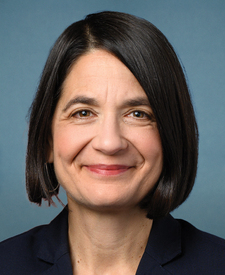
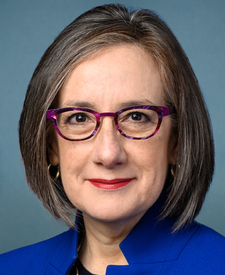
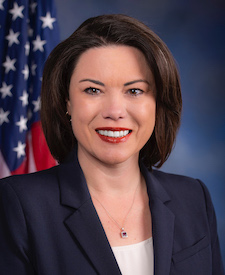
In CommitteeMs. Balint (for herself, Mr. García of Illinois, Ms. Bonamici, …
Referred to the House Committee on the Judiciary.
Introduced in House
Stakeholder Effects
cui bono?How this legislation distributes effects. Mention counts reflect frequency, not effect magnitude.
DOJ antitrust lawyers, FTC antitrust enforcers, Federal courts handling rent antitrust cases
Positive-direction: DOJ antitrust lawyers, FTC antitrust enforcers, Government antitrust enforcers
Negative-direction: Federal courts handling rent antitrust cases
Aggrieved renters bringing private suits, Renters bringing antitrust claims, Renters in states with stronger protections
Rental property owner defendants, Rental property owners
State attorneys general, State legislatures maintaining rent protections, States with stronger tenant protections
Rent-pricing coordinator defendants, Rent-pricing software companies
Bill Structure & Actor Mappings
Who is "The Secretary" in each section?
We use a combination of our own taxonomy and classification in addition to large language models to assess meaning and potential beneficiaries. High confidence means strong textual evidence. Always verify with the original bill text.
Learn more about our methodology