Biomanufacturing Excellence Act of 2025
Summary
What This Bill Does
The Biomanufacturing Excellence Act of 2025 begins with findings that biotechnology can strengthen military capabilities, food security, agricultural resilience, and disease treatment, while reducing foreign supply-chain dependence, but that U.S. commercialization is constrained by scale-up infrastructure. It then amends the NIST Act to create a National Biopharmaceutical Manufacturing Center of Excellence. NIST must competitively award a grant or enter an other transaction agreement with one eligible non-federal entity, such as a public-private partnership, institution of higher education, or consortium, to establish and operate the center. The center's objectives include flexible biopharmaceutical manufacturing technologies, improved upstream and downstream processes, better equipment and capabilities, reduced bottlenecks, supply-chain self-sufficiency, good manufacturing practices, quality by design, standardized chemistry, manufacturing, and controls, workforce training, public-private-nonprofit collaboration, and sharing research and best practices with executive agencies. NIST can fund facility construction, collaborative research for scaling biopharmaceutical manufacturing in the United States, workforce training, and related research or programs. NIST must solicit applications within 180 days and select one entity, require application details on prior research, plans, partnerships, and domestic manufacturing, make research generated by the center publicly available in an accessible electronic format, ensure intellectual-property guidelines before operations, and has $120 million authorized for fiscal year 2026.
Who Benefits and How
Biopharmaceutical manufacturers benefit from a national center focused on scale-up technologies, good manufacturing practices, quality by design, and supply-chain bottlenecks. Public-private partnerships and universities benefit because they are eligible to compete for the NIST grant or other transaction agreement. Biomanufacturing workers benefit from training programs tied to biotechnology tools, equipment, and manufacturing operations. Federal health security, national security, and economic security agencies benefit from shared best practices and research on biopharmaceutical manufacturing. Patients may benefit indirectly if domestic manufacturing capacity improves access to biologic medicines and reduces supply disruptions.
Who Bears the Burden and How
NIST must run a competitive solicitation within 180 days, select one eligible entity, oversee the center, manage research-sharing duties, and ensure intellectual-property guidelines. The selected center operator must build or operate facilities, coordinate manufacturers, universities, governments, nonprofits, and professional organizations, and deliver workforce and research programs. Federal taxpayers bear the $120 million fiscal year 2026 authorization. Applicants not selected bear proposal costs without receiving the center award. Executive agencies receiving center research must evaluate and incorporate best practices where relevant.
Key Provisions
- Establishes the National Biopharmaceutical Manufacturing Center of Excellence in the NIST Act.
- Requires NIST to award a competitive grant or other transaction agreement to one eligible non-federal entity.
- Funds facility construction, collaborative scale-up research, workforce training, and biopharmaceutical manufacturing programs.
- Requires application solicitation within 180 days after enactment.
- Requires public sharing of center-generated research and intellectual-property guidelines before operations.
- Authorizes $120 million for fiscal year 2026.
Evidence Chain:
This summary is generated from the full bill text using AI analysis. Expand "Detailed Analysis" below for identified beneficiaries/burden bearers with clause-level evidence links.
At a Glance
What This Bill Does
Creates a NIST-led National Biopharmaceutical Manufacturing Center of Excellence through a competitive grant or other transaction agreement with a non-federal public-private partnership, institution of higher education, or consortium, funds facility construction, collaborative scale-up research, workforce training, and biopharmaceutical manufacturing programs, requires applications within 180 days, stakeholder engagement, public research sharing, intellectual-property guidelines, and authorizes $120 million for fiscal year 2026.
Key Policy Areas
Biomanufacturing, NIST, Biopharmaceuticals
Primary Purpose
Creates a NIST-led National Biopharmaceutical Manufacturing Center of Excellence through a competitive grant or other transaction agreement with a non-federal public-private partnership, institution of higher education, or consortium, funds facility construction, collaborative scale-up research, workforce training, and biopharmaceutical manufacturing programs, requires applications within 180 days, stakeholder engagement, public research sharing, intellectual-property guidelines, and authorizes $120 million for fiscal year 2026.
Policy Domains
Substantive provisions
Identified Gains
- Biopharmaceutical manufacturers
- Public-private partnerships
- Institutions of higher education
- Biomanufacturing workers
- Federal health security agencies
- Patients relying on biologic medicines
Identified Costs
- NIST program staff
- Selected center operator
- Federal taxpayers
- Unsuccessful center applicants
- Executive agencies using center research
Sponsors


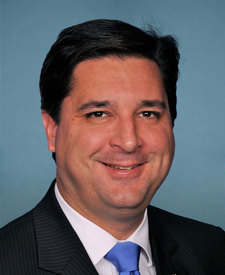


Legislative Progress
In CommitteeMs. Houlahan (for herself, Mr. Baird, Ms. Ross, and Mr. …
Referred to the House Committee on Science, Space, and Technology.
Introduced in House
Stakeholder Effects
cui bono?How this legislation distributes effects. Mention counts reflect frequency, not effect magnitude.
Biopharmaceutical manufacturers, Public-private partnerships applying for the center, Selected center operator
Positive-direction: Biopharmaceutical manufacturers, Public-private partnerships applying for the center
Negative-direction: Selected center operator, Unsuccessful center applicants
Institutions of higher education applying for the center
Bill Structure & Actor Mappings
Who is "The Secretary" in each section?
We use a combination of our own taxonomy and classification in addition to large language models to assess meaning and potential beneficiaries. High confidence means strong textual evidence. Always verify with the original bill text.
Learn more about our methodology