Stop Ballroom Bribery Act
Summary
What This Bill Does
The Stop Ballroom Bribery Act regulates donations for covered projects linked to the President, Vice President, their families, and certain federal public property. Covered projects include maintenance, acquisition, enhancement, improvement, alteration, demolition, or construction of public property on or immediately adjacent to the White House or Number One Observatory Circle, other property intended for the sitting President, Vice President, spouse, or child, federal monuments or structures honoring living current or former Presidents, Vice Presidents, or presidential appointees, and events on covered property. The Federal Government may accept a donation only under existing gift authority and only if the Senate-confirmed NPS Director, with concurrence from the Senate-confirmed OGE Director, determines in writing that the donation complies with restrictions, submits the determination to Senate HSGAC and House Oversight, and publishes it in the Federal Register. Donations may not be accepted if the source is involved in federal litigation, investigations, enforcement, federal contracts, federal grants, executive-branch lobbying, pardon requests, foreign-government status, or other restricted categories. Donors must disclose meetings or communications with covered officials around the donation period. NPS must publish quarterly Federal Register reports listing donations, donors over $200, circumstances, and communications. The bill bans straw donations and anonymous donations. State attorneys general and DOJ can enforce it, with civil penalties up to the greater of $20,000 or the donation value, higher civil penalties for annual violations above $50,000, criminal penalties for knowing and willful violations, disgorgement, and injunctive relief.
Who Benefits and How
Ethics watchdogs benefit from written NPS and OGE determinations, Federal Register publication, quarterly donation reports, and meeting disclosures. The public benefits from stricter controls on donations that could influence presidential or vice-presidential public-property projects and events. Congressional oversight committees benefit from required submission of donation-compliance determinations. State attorneys general and DOJ benefit from explicit enforcement authority for violations.
Who Bears the Burden and How
Potential donors with federal litigation, enforcement actions, contracts, grants, lobbying, pardon requests, foreign-government status, or restricted nonprofit status may be barred from giving. NPS and OGE leadership must review donations, make written determinations, publish notices, and maintain quarterly reporting. Federal officers, employees, and agents involved in covered projects must reject anonymous, straw, or restricted donations. Violators face civil penalties, disgorgement, injunctions, and possible criminal fines or imprisonment for knowing and willful violations.
Key Provisions
- Defines covered presidential and vice-presidential public-property projects, monuments, structures, and events.
- Requires NPS and OGE written determinations before covered donations may be accepted or used.
- Bars donations from sources with specified federal litigation, enforcement, contract, grant, lobbying, pardon, foreign-government, or nonprofit conflicts.
- Requires meeting disclosures and quarterly Federal Register donation reports.
- Prohibits straw donations and anonymous donations for covered projects.
- Authorizes State attorney general and DOJ enforcement with civil penalties, criminal penalties, disgorgement, and injunctive relief.
Evidence Chain:
This summary is generated from the full bill text using AI analysis. Expand "Detailed Analysis" below for identified beneficiaries/burden bearers with clause-level evidence links.
At a Glance
What This Bill Does
Restricts donations for White House, Number One Observatory Circle, presidential-family public-property projects, presidential monuments, and related events by requiring NPS and OGE written determinations, congressional submission, Federal Register publication, bans on donors with federal litigation, enforcement, contracts, grants, lobbying, pardon requests, foreign-government status, or nonprofit limitations, meeting disclosures, quarterly donation reports, straw-donor and anonymous-donation bans, and civil or criminal penalties with disgorgement.
Key Policy Areas
Government Ethics, Federal Property, Transparency
Primary Purpose
Restricts donations for White House, Number One Observatory Circle, presidential-family public-property projects, presidential monuments, and related events by requiring NPS and OGE written determinations, congressional submission, Federal Register publication, bans on donors with federal litigation, enforcement, contracts, grants, lobbying, pardon requests, foreign-government status, or nonprofit limitations, meeting disclosures, quarterly donation reports, straw-donor and anonymous-donation bans, and civil or criminal penalties with disgorgement.
Policy Domains
Substantive provisions
Identified Gains
- Ethics watchdogs
- Members of the public
- Congressional oversight committees
- State attorneys general
- Department of Justice
Identified Costs
- Potential restricted donors
- National Park Service Director
- Office of Government Ethics Director
- Federal project administrators
- Violators of covered donation rules
Sponsors

Legislative Progress
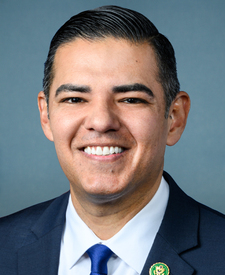
In CommitteeMr. Garcia of California introduced the following bill; which was …
Referred to the Committee on Oversight and Government Reform, and …
Introduced in House
Stakeholder Effects
cui bono?How this legislation distributes effects. Mention counts reflect frequency, not effect magnitude.
Members of the public, Potential restricted donors, Violators of covered donation rules
Positive-direction: Members of the public
Negative-direction: Potential restricted donors, Violators of covered donation rules
Congressional oversight committees, National Park Service Director, Office of Government Ethics Director
Positive-direction: Congressional oversight committees
Negative-direction: National Park Service Director, Office of Government Ethics Director
Bill Structure & Actor Mappings
Who is "The Secretary" in each section?
We use a combination of our own taxonomy and classification in addition to large language models to assess meaning and potential beneficiaries. High confidence means strong textual evidence. Always verify with the original bill text.
Learn more about our methodology