To amend the Public Health Service Act to ensure that medical students, medical residents, and medical faculty receive education and training in the deployment of artificial intelligence in the medical profession, and for other purposes.
Analysis under review: This bill has generated analysis that may be too generic or incomplete. Clause-level evidence remains available below.
Summary
What This Bill Does
The HEAL-AI Act creates a federal grant program to train medical students, residents, and faculty in how to use artificial intelligence in healthcare. The program, administered by the Health Resources and Services Administration (HRSA), provides competitive grants of up to \,000 to accredited medical schools and residency programs.
Who Benefits and How
Medical schools and residency programs benefit from direct grant funding to develop AI curricula, including virtual simulations, case studies, and lab demonstrations. Medical students, residents, and faculty gain training in AI diagnostics, treatment recommendations, predictive analytics, and ethical implications. AI education technology providers and curriculum developers benefit from new demand. Schools serving underserved populations and those in states with existing AI education programs receive priority.
Who Bears the Burden and How
The federal budget bears the cost of \ million annually for five years (2026-2030). Grant recipients must submit annual reports and make educational materials publicly available. Schools must comply with detailed reporting requirements including learner enrollment data, curriculum descriptions, and expenditure accounting.
Key Provisions
- Establishes competitive grants up to \,000 per school for AI medical education and training
- Requires grantees to make funded educational materials publicly available
- Prioritizes grants for schools in states with existing AI education programs and those serving rural/underserved populations
- Authorizes \ million annually for fiscal years 2026 through 2030
Evidence Chain:
This summary is generated from the full bill text using AI analysis. Expand "Detailed Analysis" below for identified beneficiaries/burden bearers with clause-level evidence links.
At a Glance
What This Bill Does
Creates a competitive grant program administered by HRSA to fund artificial intelligence education and training for medical students, residents, and faculty at medical schools and residency programs, authorized at $1 million per year from 2026-2030.
Key Policy Areas
Healthcare, Education, Technology
Primary Purpose
Creates a competitive grant program administered by HRSA to fund artificial intelligence education and training for medical students, residents, and faculty at medical schools and residency programs, authorized at $1 million per year from 2026-2030.
Policy Domains
HEAL-AI Act - AI Medical Education Grants
Identified Gains
- Medical schools and residency programs
- Medical students, residents, and faculty
- AI education technology providers
Identified Costs
- Federal budget (appropriations)
- Grant recipient institutions (reporting and compliance)
Sponsors

Legislative Progress
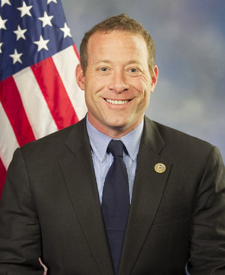
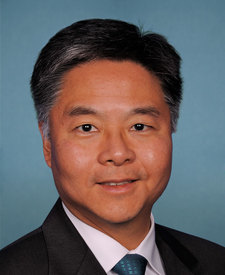
IntroducedMs. Barragán (for herself, Mr. Lieu, and Mr. Gottheimer) introduced …
Stakeholder Effects
cui bono?How this legislation distributes effects. Mention counts reflect frequency, not effect magnitude.
Medical education community (broader public), Medical schools and residency programs, Medical schools and residency programs (especially those serving underserved populations)
Medical students, residents, and faculty
AI health tech curriculum developers and vendors, AI healthcare education technology providers
Bill Structure & Actor Mappings
Who is "The Secretary" in each section?
- "the_secretary"
- → Secretary of Health and Human Services, acting through the Administrator of the Health Resources and Services Administration
Key Definitions
Terms defined in this bill
A machine-based system capable of generating predictions, recommendations, or decisions that influence real medical profession environments, that employs inputs from machine and human sources to perceive and process data
Competency-based medical education and training for skill-building and decisionmaking to improve health outcomes and patient care, including data analysis, virtual simulation, case studies, and student assessment
An institution that sponsors a postgraduate medical residency training program accredited by the Accreditation Council for Graduate Medical Education
An accredited school of medicine or accredited school of osteopathic medicine
We use a combination of our own taxonomy and classification in addition to large language models to assess meaning and potential beneficiaries. High confidence means strong textual evidence. Always verify with the original bill text.
Learn more about our methodology