Tribal Internet Expansion Act of 2025
Summary
What This Bill Does
The Tribal Internet Expansion Act of 2025 amends section 254(b)(3) of the Communications Act of 1934. That universal service principle currently says consumers in all regions, including low-income consumers and consumers in rural, insular, and high-cost areas, should have access to telecommunications and information services reasonably comparable to those in urban areas at reasonably comparable rates. The bill inserts Indian country, as defined in 18 U.S.C. 1151, and areas with high populations of Indian people, as defined by the Indian Reorganization Act, after high-cost areas. The result is a statutory signal that universal service policy must treat Indian country and high-Native-population areas as covered areas for comparable telecommunications and information-service access.
Who Benefits and How
Tribal Nations benefit because Indian country is explicitly named in the universal service principle. Native communities in areas with high populations of Indian people benefit from stronger statutory support for comparable telecommunications and information services. Telecommunications providers serving Tribal areas benefit from clearer universal-service policy direction for planning and support. FCC universal service administrators benefit from statutory text that expressly identifies Native communities in the access principle.
Who Bears the Burden and How
FCC universal service staff must account for Indian country and high-Native-population areas when applying the comparable-access principle. Telecommunications providers may face additional planning or service expectations in Tribal and Native communities. Universal service fund policy analysts must evaluate how the amended principle affects program design and prioritization. Federal broadband administrators must align Tribal broadband policy with the expanded statutory language.
Key Provisions
- Amends the Communications Act universal service principle for rural, insular, and high-cost areas.
- Adds Indian country to the list of areas covered by the comparable-access principle.
- Adds areas with high populations of Indian people to the same statutory principle.
- Uses existing federal definitions from 18 U.S.C. 1151 and the Indian Reorganization Act.
Evidence Chain:
This summary is generated from the full bill text using AI analysis. Expand "Detailed Analysis" below for identified beneficiaries/burden bearers with clause-level evidence links.
At a Glance
What This Bill Does
Amends the universal service principle for rural, insular, and high-cost areas by adding Indian country and areas with high populations of Indian people, strengthening the statutory basis for comparable telecommunications and information-service access in Native communities.
Key Policy Areas
Telecommunications, Tribal Communities, Universal Service
Primary Purpose
Amends the universal service principle for rural, insular, and high-cost areas by adding Indian country and areas with high populations of Indian people, strengthening the statutory basis for comparable telecommunications and information-service access in Native communities.
Policy Domains
Substantive provisions
Identified Gains
- Tribal Nations
- Native communities in high-population areas
- Telecommunications providers serving Tribal areas
- FCC universal service administrators
Identified Costs
- FCC universal service staff
- Telecommunications providers
- Universal service fund policy analysts
- Federal broadband administrators
Sponsors
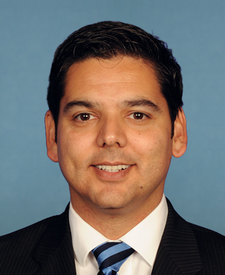
Legislative Progress
In CommitteeMr. Ruiz introduced the following bill; which was referred to …
Referred to the House Committee on Energy and Commerce.
Introduced in House
Stakeholder Effects
cui bono?How this legislation distributes effects. Mention counts reflect frequency, not effect magnitude.
Telecommunications providers serving Tribal areas
Bill Structure & Actor Mappings
Who is "The Secretary" in each section?
We use a combination of our own taxonomy and classification in addition to large language models to assess meaning and potential beneficiaries. High confidence means strong textual evidence. Always verify with the original bill text.
Learn more about our methodology