Ohio River Restoration Program Act
Summary
What This Bill Does
The Ohio River Restoration Program Act adds a new Ohio River Basin restoration section to the Federal Water Pollution Control Act. It defines the basin broadly by reference to portions of Ohio River States containing the watershed and lists States from Ohio, Kentucky, West Virginia, Pennsylvania, Indiana, and Illinois through several Appalachian and Southern States. EPA must establish an Ohio River National Program Office headed by a qualified Program Director. The Program Director must coordinate EPA restoration work, develop and update an Ohio River Basin Restoration Program and action plan, make planning information available on a public website, and consult early and throughout with Tribal Governments and Tribal organizations with help from the Bureau of Indian Affairs. The Program Director must establish an advisory council with representatives of basin States, lower, middle, and upper basin regions, Tribal Governments, and the Ohio River Valley Water Sanitation Commission. EPA must carry out projects and activities for systemic, large-scale restoration and protection, including water quality and drinking water improvements, flood and storm resilience, fish and wildlife habitat restoration, aquatic invasive species prevention and control, harmful algal bloom prevention, public access, environmental education, and other restoration priorities. The bill requires action-plan updates, annual reports, public notice and comment, separate budget-line requests, authority to transfer funds to relevant Federal agencies, and $350 million annually for fiscal years 2026 through 2030.
Who Benefits and How
Ohio River Basin communities benefit because the program funds and coordinates water quality, drinking water, flood resilience, habitat, invasive species, and public access projects. Ohio River State agencies benefit because they receive representation on the advisory council and can participate in restoration planning and grants. Tribal Governments in the Ohio River Basin benefit because the Program Director must consult them early and throughout the planning process. The Ohio River Valley Water Sanitation Commission benefits because it receives an advisory council seat and a formal role in basin planning. Environmental restoration projects benefit because the bill authorizes grants, interagency agreements, and $350 million annually from fiscal years 2026 through 2030.
Who Bears the Burden and How
EPA must establish and staff the Ohio River National Program Office, appoint a Program Director, coordinate restoration work, and issue annual reports. The Program Director must develop action plans, maintain a public website, consult Tribal Governments, run public notice and comment, and coordinate the advisory council. Relevant Federal agencies receiving transfers must carry out Ohio River Basin restoration activities under interagency agreements. Federal taxpayers bear the cost of the authorized $350 million per year from fiscal years 2026 through 2030.
Key Provisions
- Establishes an EPA Ohio River National Program Office and Program Director.
- Creates the Ohio River Basin Restoration Program for systemic, large-scale restoration and protection projects.
- Requires an advisory council with Ohio River States, basin representatives, Tribal Governments, and the Ohio River Valley Water Sanitation Commission.
- Requires action plans, public website updates, annual reports, public notice and comment, and separate EPA budget-line requests.
- Authorizes grants, interagency transfers, and agreements for restoration work.
- Authorizes $350 million for each fiscal year 2026 through 2030.
Evidence Chain:
This summary is generated from the full bill text using AI analysis. Expand "Detailed Analysis" below for identified beneficiaries/burden bearers with clause-level evidence links.
At a Glance
What This Bill Does
Creates an EPA Ohio River National Program Office and Ohio River Basin Restoration Program, establishes an advisory council of basin States, Tribal Governments, basin representatives, and the Ohio River Valley Water Sanitation Commission, requires public action plans and annual reports, authorizes grants, interagency transfers, and restoration projects, and authorizes $350 million per year for fiscal years 2026 through 2030.
Key Policy Areas
Water Quality, EPA, Environmental Restoration
Primary Purpose
Creates an EPA Ohio River National Program Office and Ohio River Basin Restoration Program, establishes an advisory council of basin States, Tribal Governments, basin representatives, and the Ohio River Valley Water Sanitation Commission, requires public action plans and annual reports, authorizes grants, interagency transfers, and restoration projects, and authorizes $350 million per year for fiscal years 2026 through 2030.
Policy Domains
Substantive provisions
Identified Gains
- Ohio River Basin communities
- Ohio River State agencies
- Tribal Governments in the Ohio River Basin
- Ohio River Valley Water Sanitation Commission
- Environmental restoration projects
Identified Costs
- Environmental Protection Agency
- Ohio River Program Director
- Bureau of Indian Affairs consultation staff
- Relevant Federal agencies
- Federal taxpayers
Sponsors



Legislative Progress
In CommitteeReferred to the Subcommittee on Water Resources and Environment.
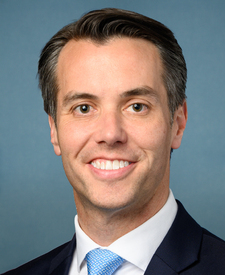
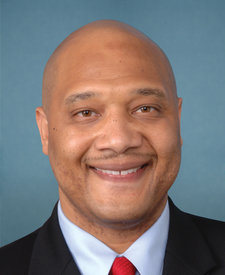
Mr. McGarvey (for himself, Mrs. Houchin, Mr. Rulli, Mrs. Sykes, …
Referred to the House Committee on Transportation and Infrastructure.
Introduced in House
Stakeholder Effects
cui bono?How this legislation distributes effects. Mention counts reflect frequency, not effect magnitude.
Bureau of Indian Affairs consultation staff, Environmental Protection Agency, Ohio River Program Director
Positive-direction: Tribal Governments in the Ohio River Basin
Negative-direction: Bureau of Indian Affairs consultation staff, Environmental Protection Agency, Ohio River Program Director
Environmental restoration projects, Ohio River Basin communities, Ohio River Valley Water Sanitation Commission
Bill Structure & Actor Mappings
Who is "The Secretary" in each section?
We use a combination of our own taxonomy and classification in addition to large language models to assess meaning and potential beneficiaries. High confidence means strong textual evidence. Always verify with the original bill text.
Learn more about our methodology