To authorize the Organized Crime Drug Enforcement Task Forces to combat transnational organized crime and to reduce the availability of illicit narcotics in the United States by using a prosecutor-led, multi-agency approach to enforcement, and for other purposes.
Summary
What This Bill Does
Statutorily structures Organized Crime Drug Enforcement Task Forces as a prosecutor-led interagency tool against transnational organized crime and illicit narcotics and requires a success report to Congress.
Who Benefits and How
Federal, state, and local law-enforcement coordination against transnational organized crime and drug trafficking could gain a more explicit statutory footing.
Who Bears the Burden and How
Covered agencies would need to coordinate under the statutory task-force structure and produce a joint report to Congress.
Key Provisions
- Finds that OCDETF has been a successful multi-agency enforcement model.
- Directs the Attorney General to structure the Task Forces and coordinate covered agencies accordingly.
- Requires a joint report to Congress and public posting of the unclassified portion.
Evidence Chain:
This summary is generated from the full bill text using AI analysis. Expand "Detailed Analysis" below for identified beneficiaries/burden bearers.
At a Glance
What This Bill Does
Statutorily structures Organized Crime Drug Enforcement Task Forces as a prosecutor-led interagency tool against transnational organized crime and illicit narcotics and requires a success report to Congress.
Key Policy Areas
Criminal Justice, Government Operations, Transportation
Primary Purpose
Statutorily structures Organized Crime Drug Enforcement Task Forces as a prosecutor-led interagency tool against transnational organized crime and illicit narcotics and requires a success report to Congress.
Policy Domains
Main Provisions
Identified Gains
Contextual inference, no direct clause citation- Law-enforcement agencies and communities seeking stronger coordinated action against transnational organized crime and narcotics trafficking
Contextual inference, no direct clause citation
Identified Costs
Contextual inference, no direct clause citation- Covered federal agencies responsible for operating under the statutory task-force structure and reporting on results
Contextual inference, no direct clause citation
Legislative Progress
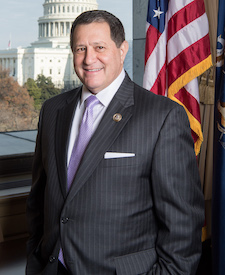
IntroducedMr. Morelle introduced the following bill; which was referred to …
Stakeholder Effects
cui bono?How this legislation distributes effects. Mention counts reflect frequency, not effect magnitude.
Transnational organized-crime enterprises targeted by coordinated task-force enforcement
Department of Justice and covered agencies operating and reporting under the statutory task-force structure
Bill Structure & Actor Mappings
Who is "The Secretary" in each section?
We use a combination of our own taxonomy and classification in addition to large language models to assess meaning and potential beneficiaries. High confidence means strong textual evidence. Always verify with the original bill text.
Learn more about our methodology